The air in the Alborz mountains carries a sharpness that doesn't just chill the skin; it seems to clarify the vision. High above the smog-choked sprawl of Tehran, the world looks manageable. It looks like something that can be ordered, pruned, and purified.
For Ali Khamenei, the view from the top has never been a matter of perspective. It has been a matter of mandate. Expanding on this theme, you can find more in: Why the Green Party Victory in Manchester is a Disaster for Keir Starmer.
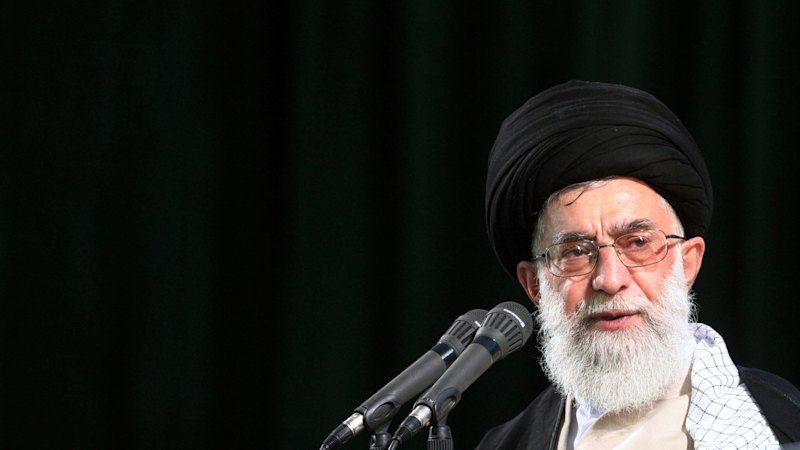
To understand the man who has held the pulse of Iran in his palm for over three decades, you have to look past the grainy footage of state television. You have to look at the shadows. There is a specific kind of stillness in a room where the Supreme Leader is present. It isn't the silence of peace. It is the silence of absolute gravity—the kind that makes everyone in the orbit adjust their posture, their breathing, and eventually, their very thoughts.
He did not start as a titan. In the 1970s, he was a mid-ranking cleric with a penchant for poetry and a deep-seated resentment of the Western-backed Shah. He was a man of the book, a scholar who found himself swept into the fever of a revolution that promised to upend the world. When the dust of 1979 settled, he wasn't the face of the movement—that was the towering, grim-faced Ayatollah Khomeini. Khamenei was the lieutenant, the intellectual soldier, the man who understood that a revolution is won in the streets but maintained in the bureaucracy. Analysts at TIME have shared their thoughts on this trend.
The Architect of the Invisible Wall
The transition from a revolutionary poet to the "iron fist" of the Middle East didn't happen overnight. It was a slow, deliberate hardening. When he ascended to the position of Supreme Leader in 1989, many observers in Washington and London misread the moment. They saw a man who lacked the charismatic thunder of his predecessor. They thought he might be a placeholder, a bridge to a more moderate future.
They were wrong.
Khamenei understood something his enemies didn't: power isn't just about who holds the gun; it’s about who defines the truth. He began to weave a web of influence that bypassed traditional government structures. He empowered the Islamic Revolutionary Guard Corps (IRGC), turning a paramilitary force into a multi-billion-dollar shadow empire. This wasn't just a military move. It was a hedge against the world. By controlling the ports, the telecommunications, and the construction projects, he ensured that the Iranian state could survive even if the Iranian people were starving.
Imagine a father who locks every door and window in the house because he is convinced the neighbors are plotting a home invasion. He tells his children the outside air is poison. He monitors their phone calls. He dictates what they wear. He does this not because he hates them, but because his love is inseparable from his need for control.
This is the central paradox of Khamenei's rule. To his supporters, he is the Rahbar—the guide—the only thing standing between Iran and the "Great Satan" of Western decadence. To those on the other side of the wall, he is the warden of a prison that spans 600,000 square miles.
The Cost of a Conviction
In the narrow alleys of the Grand Bazaar, the price of this conviction is measured in more than just ideology. It’s measured in the price of eggs. It’s measured in the eyes of a twenty-something engineering graduate who drives a taxi because sanctions have hollowed out the industry.
The Western narrative often paints Khamenei as a cartoon villain, a relic of a bygone era. But that misses the human tragedy of his competence. He is a master of the "long game." While Western presidents cycle through every four or eight years, shifting their foreign policy like the wind, Khamenei has remained the constant. He has seen six American presidents come and go. He has watched them promise "red lines" and "maximum pressure," and he has outlasted them all.
But staying in power requires a toll that isn't paid by the leader. It’s paid by the schoolteacher in Mashhad who can no longer afford her blood pressure medication. It’s paid by the artist in Isfahan who has to paint in metaphors because the literal truth is a one-way ticket to Evin Prison.
The stakes became painfully visible during the "Woman, Life, Freedom" protests. This wasn't just a political disagreement. It was a collision of two different centuries. On one side was a generation raised on the internet, yearning for a life that looked like the one they saw on their screens—global, fluid, and free. On the other side was a man who viewed those very screens as windows into a soul-rotting abyss.
When the morality police detained Mahsa Amini, they weren't just enforcing a dress code. They were enforcing a boundary. Khamenei’s Iran is built on the idea that if you give an inch on the hijab, you give a mile on the sovereignty of the Islamic Republic. If the wall cracks, the whole house falls.
So, he didn't blink. He never blinks.
The Poetry of Resistance and the Prose of Power
There is a story, perhaps apocryphal but deeply telling, that Khamenei still enjoys the company of poets. He hosts literary evenings where he critiques verses and discusses the nuances of Persian grammar. It is a jarring image: the man who signs off on the execution of dissidents, sitting in a carpeted room, debating the placement of a comma in a 14th-century ghazal.
This is the psychological core of the man. He views himself as the guardian of a civilization, not just a country. In his mind, he is protecting the Persian soul from being dissolved into a monolithic, Westernized "global culture." He sees the "iron fist" as a protective glove.
But metaphors don't feed families.
The "bitter enemy of the West" label is accurate, but it's also incomplete. Khamenei isn't just an enemy of the West; he is an enemy of the uncertain. He fears the messiness of democracy, the unpredictability of a free press, and the chaotic nature of a society that decides its own path. To him, the West isn't just a collection of countries; it's a virus of instability.
His strategy has been to turn Iran into an island. He built a domestic internet to keep the "poison" out. He pivoted the economy toward China and Russia, trading one kind of dependence for another. He fostered "proxy" forces in Lebanon, Yemen, and Iraq—not just as military assets, but as a "forward defense" meant to keep the battlefield as far from Tehran as possible.
Consider the mental weight of such a life. To live every day for forty years convinced that the most powerful nations on earth are actively conspiring to destroy you. It breeds a specific kind of hardness. It makes a man prioritize survival over flourishing. It makes him see a protest not as a cry for help, but as a Trojan horse.
The Looming Silence
Now, the man is in his eighties. The rumors of his health are a permanent fixture of the Tehran grapevine, whispered in coffee shops and typed into encrypted chats. The question of "after" is the ghost that haunts every government building in the city.
Who follows a man who has made himself the sun around which the entire system orbits?
The tragedy of the "iron fist" is that it leaves the hand cramped. By centralizing so much power, by purging the moderates and the pragmatists, Khamenei has created a vacuum that no one else can fill. He has spent decades ensuring that no one is strong enough to challenge him, which means no one is strong enough to succeed him without a fracture.
The West looks at Iran and sees a nuclear threat, a regional disruptor, a headline. But if you stand on a balcony in North Tehran as the sun sets, you see something else. You see millions of individual lives—vibrant, frustrated, educated, and trapped—caught between a glorious past they can't reclaim and a future they aren't allowed to build.
They are the collateral damage of a singular man's certainty.
Khamenei’s legacy won't be found in the nuclear centrifuges or the rhetoric of "Death to America." It will be found in the silence of the millions who learned to speak in code. It will be found in the maps of the diaspora, the millions of Iran's brightest minds scattered across the globe like seeds blown by a gale.
As the lights of the city flicker on, one by one, they look like stars reflected in a dark pool. Beautiful, distant, and cold. The man in the high house on the hill looks down at them and sees a mandate fulfilled. The people in the streets look up and see a mountain that won't move.
The mountain doesn't care about the wind. It doesn't care about the hikers or the weather. It simply exists, massive and unyielding, until the internal pressures of the earth decide it is time for something else to rise.
The tragedy of Iran is that it is a country of poets being governed by a man who decided that the only poem worth writing was a law. And laws, unlike poems, eventually break under the weight of the people who have to live inside them.