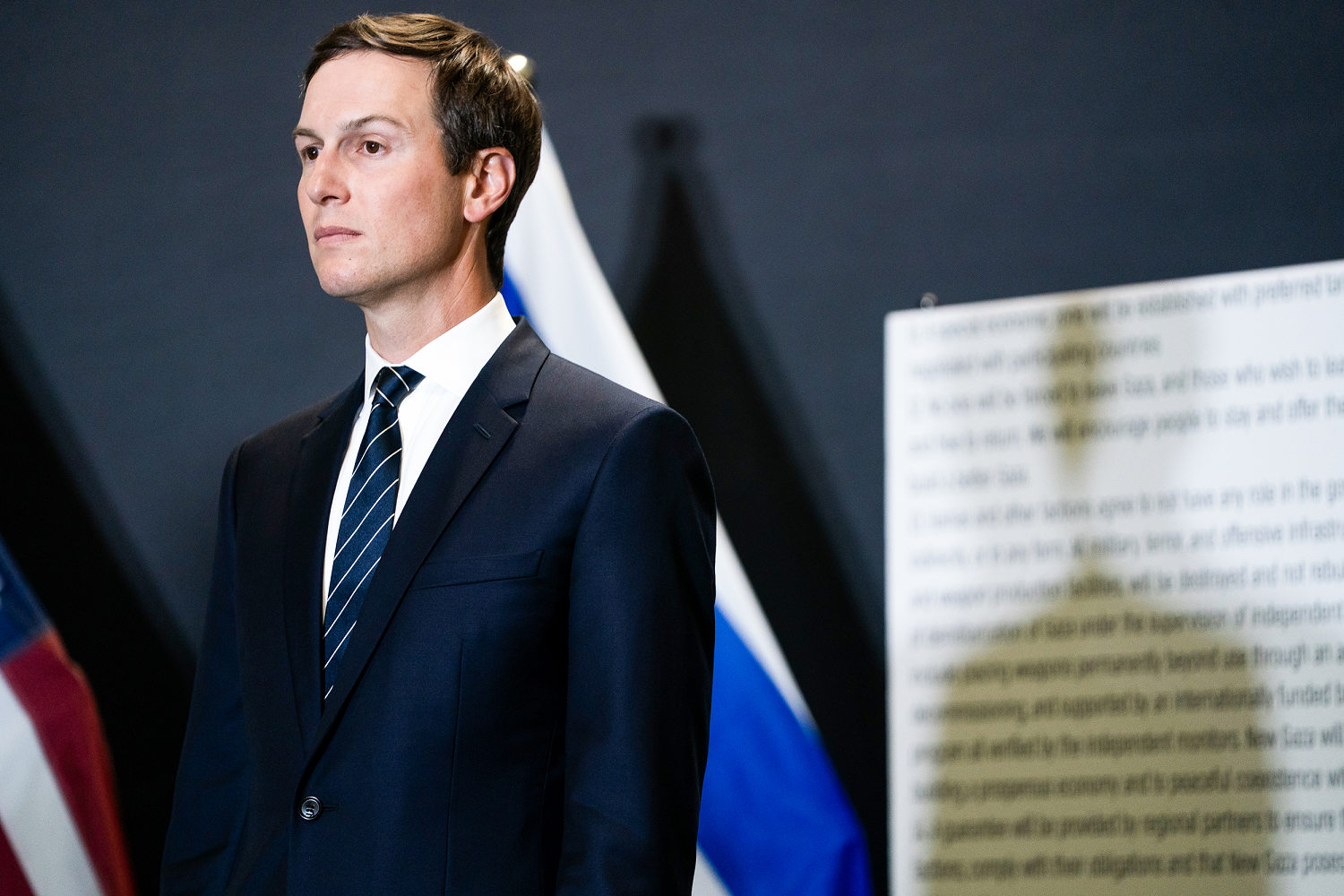
Consider a room in Moscow. The table is long, polished mahogany, standard issue for high-stakes geopolitical brinkmanship. On one side sits a career diplomat, a person who spent thirty years rising through the ranks of statecraft, meticulously filing conflict-of-interest forms, logging every dinner, and answering to congressional subcommittees. Across the table sits Jared Kushner.
He isn't on the federal payroll. He doesn't have a Senate stamp on his dossier. He hasn't filed a single line of public financial disclosure since re-entering the inner orbit of American power. Discover more on a similar topic: this related article.
Yet, when he speaks, he speaks with the force of the United States government.
This is not a high-concept political thriller. It is the core dilemma laid bare in a federal lawsuit filed by Citizens for Responsibility and Ethics in Washington (CREW). The complaint names top cabinet members alongside Kushner, alleging a quiet revolution in how American power is wielded abroad. Further analysis by Reuters delves into related perspectives on this issue.
The technical details of the filing—invoking the Appointments Clause of the U.S. Constitution and the Ethics in Government Act of 1978—read like dry law school coursework. But beneath the legalese lies a terrifyingly human question: What happens when the public can no longer see who owns the hands steering the ship of state?
The Illusion of the "Volunteer"
Power used to carry a price tag: transparency.
If you wanted to represent the foreign policy interests of three hundred million citizens, you stepped onto a brightly lit stage. You handed over your tax returns. You detailed your investments. You sat in a velvet-draped Senate room while lawmakers interrogated your private balance sheet to ensure your loyalty belonged to the flag, not your portfolio.
Kushner’s defense is disarmingly simple. He claims to be just a volunteer. A private citizen helping out.
Think about that metaphor for a moment. Imagine hiring a volunteer plumber to fix the pressure valve on a municipal nuclear plant. He brings his own tools. He takes no salary. He assures you he’s doing it out of civic duty. But he also owns a private valve-manufacturing company whose stock surges every time he turns a wrench inside the facility.
Would you care that he isn't cashing a government paycheck? Or would you wonder why the main valve keeps leaking toward his factory?
That is the heart of the legal broadside. Kushner’s private equity firm, Affinity Partners, manages billions of dollars. Over ninety percent of that capital originates from foreign sovereign wealth funds—including those belonging to governments in the Middle East with whom Kushner routinely negotiates peace deals, trade corridors, and military alignments.
He calls it leverage and experience. Ethics lawyers call it a structural nightmare.
The Invisible Stakes
To understand why a dry procedural lawsuit matters to someone sitting in a coffee shop in Ohio or a workshop in Texas, you have to trace how power moves when nobody is watching.
Diplomacy is fundamentally about trust. When an envoy sits across from foreign leaders in Kyiv, Riyadh, or Paris, those leaders need to know they are talking to the United States. Conversely, the American public needs to know that the negotiator isn't quietly arranging his post-government investment funds while hammering out a cease-fire.
The Constitution’s founders weren't naive idealists. They were obsessive realists who understood human greed. They built the Appointments Clause specifically to prevent a monarch from creating an shadowy council of court favorites—unvetted advisors who wielded immense state authority without answering to the legislature or the public.
When that safeguard is bypassed by calling an official an "informal envoy," the entire system of checks and balances fractures.
- The Records Vacuum: Private citizens operating outside federal channels aren't automatically bound by the Presidential Records Act. Text messages vanish. Side deals stay in encrypted apps. History loses its paper trail.
- The Disclosure Blind Spot: Without public filings, citizens have zero visibility into whether diplomatic breakthroughs directly benefit corporate assets held by the negotiator's firm.
- The Precedent: If a president can delegate core executive functions to unconfirmed private allies, the concept of a Senate-confirmed Cabinet becomes optional—a decorative relic from an older era.
A Fork in the Legal Road
The lawsuit creates an inescapable logical trap.
Either Jared Kushner is an officer of the United States performing ongoing, high-level government functions—in which case his service without Senate confirmation and financial disclosure violates federal law. Or he is purely a private citizen—in which case he has no legal authority to exercise the diplomatic power of the sovereign U.S. government.
You cannot be both a ghost in the machine and the hand at the wheel.
This isn't about one man’s fortune or one administration’s unconventional style. It is about whether the rules built to protect public governance from private enrichment can simply be erased by changing a job title on a business card.
Somewhere in a federal courthouse, a judge will soon decide if the executive branch can operate in the shadows, using volunteers whose balance sheets span the globe. Until then, the public is left looking at the high tables of world diplomacy, forced to guess where the national interest ends and the private ledger begins.