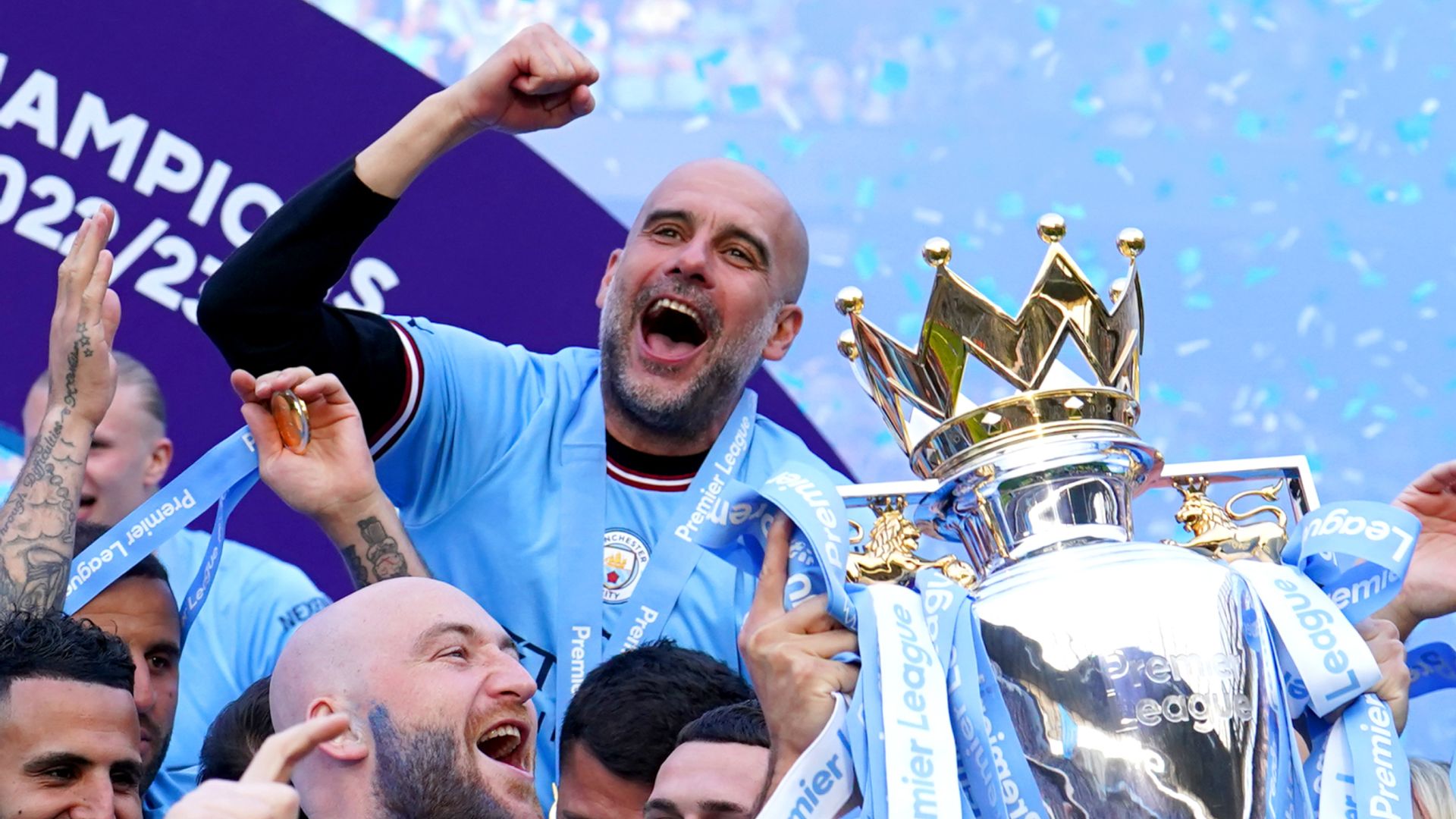
The lazy consensus across every sports desk in Europe is simple: Manchester City faces an existential crisis, a regulatory guillotine waiting to drop, and a corporate panic room filled with frantic lawyers sweating over 115 alleged breaches of Premier League financial rules.
It is a neat narrative. It fits the moral panic of modern football commentary. It feeds the tribal dopamine hits of rival supporters who desperately need an administrative asterisk to explain why their own clubs spent half a billion pounds on mediocrity while Pep Guardiola built a relentless winning machine.
It is also completely wrong.
Manchester City does not fear the verdict. They are orchestrating it. Strip away the breathless media hysteria and look at the cold structural mechanics of modern sports law, sovereignty-backed ownership, and global legal warfare. You will find a terrifying reality for the rest of the English football pyramid. City is not defending themselves against an existential threat. They are stress-testing the entire regulatory framework of European sport to see how much weight it can hold before it shatters completely.
If you think this is about a fine or a points deduction, you are missing the entire chessboard.
The Myth Of Regulatory Sovereignty
Let us start with the core misconception that anchors every mainstream column on this case. The belief is that the Premier League is a sovereign governing body with the absolute authority to police its members, protect the integrity of competition, and enforce compliance like a domestic regulator.
That authority is a legal fiction.
The Premier League is a private commercial partnership limited by shares. Its rules are not statutory laws passed by parliament; they are contractual agreements signed voluntarily by autonomous corporate entities. When a dispute arises between a multi-billion-dollar enterprise backed by a sovereign wealth fund and a voluntary trade association of competing clubs, standard administrative law does not apply. Contractual arbitration does.
I have spent years watching corporate boards navigate regulatory compliance, and the amateur hour happening in football boardrooms is staggering. Executives at traditional clubs genuinely believe that if an independent commission hands down a heavy punishment, City will simply bow their head, accept the sanction, and start a five-year rebuilding project in the Championship.
That is not how state-backed entities operate. That is not how multi-jurisdictional litigation teams with infinite capital budgets function.
If the Premier League attempts to relegate City, dock them eighty points, or strip them of retroactive titles, the case does not end in a London arbitration room. It instantly explodes into high-stakes international commercial litigation, public law challenges, and potentially even state-level diplomatic friction. The discovery process alone would expose the financial engineering, related-party sponsorship valuations, and commercial loopholes used by every single club sitting in the top half of the table.
City’s legal strategy has never been about proving their absolute innocence on every single minor administrative charge. It has been about exposing the structural impossibility of enforcing arbitrary financial controls in a globalized sports economy.
The Flawed Logic Of Associated Party Transactions
To understand why City is entirely comfortable playing this long game, you have to look at the Associated Party Transaction rules. These regulations were rushed through by terrified rival owners after the 2021 Newcastle takeover specifically to prevent state-owned clubs from inflating sponsorship deals with companies tied to their ownership groups.
The media treated these rules as a triumph of competitive balance.
That is an economic fantasy.
In a truly globalized market, commercial value is not set by a local committee of traditional English clubs; it is set by global reach, digital footprint, and geopolitical alignment. When a club based in Abu Dhabi signs a sleeve sponsorship or a stadium naming rights deal with a regional conglomerate, who has the objective expertise to declare that deal is above or below "fair market value"?
Independent legal panels have already begun pushing back against these rules, noting that parts of the Premier League's governance structure border on anti-competitive behavior. If the league's entire mechanism for cost control is ruled unlawful or disproportionate under UK competition law, the foundational premise of Profitability and Sustainability Rules collapses overnight.
This is why the 115 charges are not a noose around City's neck. They are a crowbar. City is using the sheer volume and complexity of the charges to force the Premier League into a protracted, exhausting legal war that threatens to bankrupt the governing body's legal defense fund while paralyzing its regulatory credibility.
What Guardiola Actually Knows
Pep Guardiola is not just a tactical genius; he is an elite corporate politician. When he sits in press conferences rolling his eyes at journalists asking about financial charges, the media paints it as arrogance or detachment.
It is calculated insulation.
Guardiola knows that football management at the absolute elite level is entirely decoupled from the administrative rules written by bureaucrats who missed the boat on globalization twenty years ago. He knows that his squad, his recruitment department, and his sports science staff operate in an isolated bubble of meritocratic excellence that no tribunal can retroactively dismantle.
Even if a severe sanction were miraculously applied—say, a massive points deduction or a transfer ban—it would not dismantle the institutional architecture City has built. In fact, it would likely galvanize the organization into an aggressive siege mentality, accelerating a squad refresh and proving to the football world that their success is systemic, not merely financial.
Look at what happened when UEFA tried to ban City from European competition a few years ago. The entire industry expected an exodus of world-class talent. Instead, the club took the case to the Court of Arbitration for Sport, systematically dismantled UEFA's evidence, reduced the penalty to a negligible fine, and won the Champions League shortly after.
The establishment learned nothing from that defeat. They assumed it was an anomaly rather than a preview.
The Uncomfortable Truth About Financial Doping
Let address the moral panic head-on because avoiding it makes any analysis toothless. Fans of traditional clubs scream about "financial doping." They argue that injected capital ruins the sanctity of the sport.
Here is the brutal, unvarnished truth that nobody in the mainstream press wants to print: football was never a level playing field.
For decades, legacy clubs maintained a cartel-like monopoly on revenue generation, built on historic success, domestic broadcast dominance, and regional fanbases that were locked in place for generations. Rules like Financial Fair Play and Profitability and Sustainability were never designed to promote competitive balance. They were designed to pull up the drawbridge. They were written by historical giants to ensure that no ambitious outsider could ever use outside capital to bridge the revenue gap.
City simply looked at the existing oligopoly, recognized the rules as an anti-competitive protectionist racket, and out-maneuvered the architects at their own game.
To call this cheating is to fundamentally misunderstanding how modern capital allocation works. When a venture capital firm backs a disruptive tech startup to break a legacy monopoly, we call it innovation. When a sovereign wealth fund invests billions into regenerating a deprived post-industrial English city, building state-of-the-art academy infrastructure, and funding community programs alongside a world-class football operation, the football establishment calls it an existential threat to the game.
The hypocrisy is breathtaking, and the public has swallowed the establishment's framing hook, line, and sinker.
The Ultimate Outcome
So where does this actually end?
Forget the sensationalist headlines predicting expulsion, dissolution, or the wholesale stripping of decades of trophies. That is spectator-sport theater designed to generate clicks for digital media outlets desperate for engagement.
The real resolution will happen behind closed doors in a confidential arbitration settlement. It will involve a heavily managed compromise—perhaps a significant financial penalty that amounts to chump change for a state-backed entity, combined with minor administrative adjustments to the league's governance handbook to allow the establishment to save face.
The Premier League will claim they defended the integrity of the game. Manchester City will continue winning football matches, collecting commercial revenues, and operating at the absolute cutting edge of athletic performance.
The system will not change because the system cannot survive structural reform without collapsing under its own weight.
Stop waiting for a regulatory savior to restore an imaginary romantic past that never actually existed. The traditional football order lost control of its own asset class a decade ago, and no independent commission’s verdict is going to turn back the clock.
Manchester City is not fighting for survival. They are presiding over the autopsy of traditional sports governance.