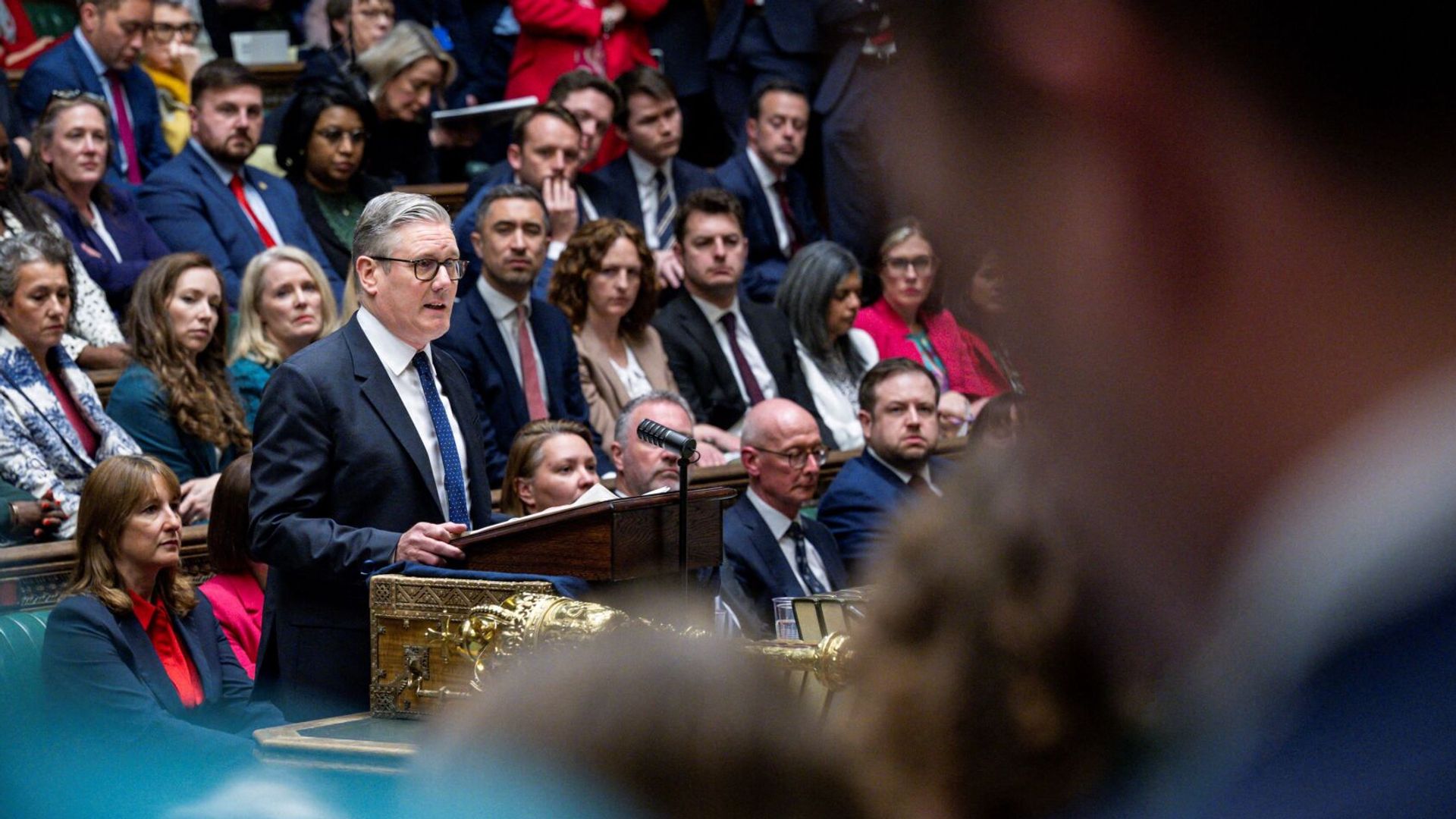
The press gallery is currently vibrating with the kind of performative outrage that only a Peter Mandelson comeback can trigger. They see a "bruising day" for Keir Starmer. They see a "scandal" involving Donald Trump’s weighing in on British appointments. They see a ghost from the New Labour past haunting the present.
They are looking at the wrong map.
The real story isn't whether Mandelson is too toxic for a diplomatic post or whether Trump’s team is playing mind games with Number 10. The real story is the utter intellectual bankruptcy of a political class that thinks a 72-year-old architect of 1990s triangulation is the only person capable of talking to a Mar-a-Lago administration.
We are witnessing the frantic gasps of a "professionalized" political tier that has forgotten how to actually govern. They are obsessed with the optics of the appointment while the underlying structural reality—that Britain has no clear strategy for a post-globalist Washington—remains unaddressed.
The Myth of the "Mandelson Magic"
The lazy consensus suggests Mandelson is a "heavyweight" who can navigate the shark-infested waters of the next Trump term. This is a delusion born of nostalgia. In my years observing the intersection of high finance and policy, I’ve watched this specific brand of "fixer" fail repeatedly when the rules of the game change.
Mandelson’s expertise is rooted in a neoliberal, consensus-driven world that died in 2016. He thrives in the corridors of Davos and Brussels. To think his brand of velvet-glove manipulation will work on a MAGA vanguard that views the entire pre-2020 establishment as an enemy to be dismantled is not just optimistic—it’s a tactical error.
The media focuses on the "bruising" nature of the debate. It’s not bruising; it’s irrelevant. If Starmer appoints him, he signals that he is a prisoner of the past. If he doesn’t, he signals he has no bench of talent to draw from. Either way, the British state looks weak.
Trump’s Intervention Is a Stress Test Labour Is Failing
When figures close to Trump leak their distaste for Mandelson or mock the current administration’s "woke" credentials, the British press treats it like a diplomatic crisis. It isn’t. It’s a negotiation tactic.
Trump respects strength and transactional clarity. By dithering over an ambassadorial pick, Starmer is showing neither. The "scandal" isn't what Trump says; it’s how easily the British government is rattled by it.
We see the UK government treating the US relationship as a fragile vase that might shatter at any moment. In reality, the US-UK relationship is a commercial and military dependency. Trump knows this. Starmer seems to have forgotten it. Instead of arguing over whether Mandelson’s past business links are a "conflict of interest"—which, let’s be honest, is the baseline for anyone in that orbit—we should be asking why we are sending a diplomat to do a salesman's job.
The Institutional Decay of "The Center"
Keir Starmer’s problem isn't Mandelson. It’s the "Center."
The political center in the UK has become a vacuum. It no longer produces new ideas; it only recycles old personnel. The obsession with bringing back the "big beasts" of the Blair era proves that the current Labour frontbench is an intellectual desert.
- The Experience Fallacy: We are told Mandelson has "experience." In reality, he has a Rolodex of people who are also out of power.
- The Competence Trap: Starmer prizes "adults in the room." But when the room has changed its dimensions, the old "adults" are just tourists.
- The Messaging Obsession: The government thinks the right "vibe" will fix the relationship. Trump doesn’t care about vibes; he cares about tariffs, defense spending, and loyalty.
Imagine a scenario where Britain appointed a tech-literate, pro-growth industrialist to Washington—someone who actually understands the silicon and steel supply chains that Trump wants to repatriate. That would be a disruption. Instead, we are arguing about a man who was once nicknamed "The Prince of Darkness" as if we’re still living in a 1997 BBC drama.
Why the "Bruising Day" Narrative is Content for the Weak
The headlines scream about Starmer having a "bad week." This is the myopia of the 24-hour news cycle. A bad week is a fluctuation in a poll. A bad decade is failing to recognize that the special relationship is now a series of cold, hard transactions.
The "scandal" surrounding Mandelson’s potential appointment is being framed as a question of ethics or past associations. That’s the boring version. The aggressive version—the one that actually matters—is that the appointment represents a total lack of imagination.
We are told that Mandelson’s presence would "reassure" the markets. Which markets? The ones currently being disrupted by AI, decentralized finance, and a shifting energy paradigm? Mandelson represents the era of the PFI (Private Finance Initiative) and the slow privatization of the state. He is the human embodiment of the status quo that voters on both sides of the Atlantic have spent the last eight years trying to set on fire.
The Foreign Office Is Not Your Friend
One of the biggest misconceptions in this entire saga is that the Foreign, Commonwealth & Development Office (FCDO) needs a "diplomat."
The FCDO is an institution designed for a world that no longer exists. It is built for a time when "soft power" meant something. In 2026, soft power is a rounding error. Hard power—economic leverage and military utility—is the only currency that prints in the West Wing.
Sending an establishment figure like Mandelson to Washington is like bringing a quill to a cyberwar. He is a creature of protocol. Trump is a creature of momentum. The friction between those two worlds won't result in "influence"; it will result in Britain being sidelined while the real deals are made with Paris, Berlin, or New Delhi.
Stop Asking if Mandelson is "Fit" and Start Asking if He is Useful
The "People Also Ask" sections of the internet are filled with queries about Mandelson’s past, his ties to Epstein, or his business dealings. These are distractions for the mid-wits. In the world of high-stakes geopolitics, "fitness" is a moral category used by those who don't understand power.
The only question that matters is: What does he actually bring to the table that a 40-year-old trade negotiator wouldn't? The answer is "access." But access is only valuable if you have something to trade. What is Starmer trading? So far, he has offered a commitment to the European security architecture and a cautious approach to trade. Both are antithetical to the "America First" doctrine. Mandelson cannot charm his way out of a 20% across-the-board tariff. He cannot use his "dark arts" to stop the US from pulling back from NATO commitments.
The Actionable Truth for Number 10
If Starmer wants to survive the next four years without becoming a footnote in the history of American hegemony, he needs to stop looking for "heavyweights" and start looking for "disruptors."
- Kill the Nostalgia: Stop hiring people because they were successful during the Clinton/Blair years. That world is gone.
- Define the Trade-Offs: Admit that the US-UK relationship is now a series of expensive trade-offs. Be honest with the public about what we have to give up to keep the "special" status.
- Ignore the "Bruising" Days: The media’s obsession with daily wins and losses is a trap. Structural change takes years, not news cycles. If Starmer is rattled by a few mean tweets from the Trump transition team, he has already lost.
The Mandelson "scandal" is a distraction from the fact that the British government is intellectually naked. We are arguing over the driver of the car while the engine is on fire and the wheels are falling off.
The status quo isn't just failing; it’s embarrassing. The fact that the debate is even happening proves that the UK is currently a spectator in its own future.
Stop looking for a fixer. Start looking for a strategy.
The era of the "political mastermind" is over. We are in the era of the hard-nosed pragmatist. If Keir Starmer can’t find one in his own party, he shouldn’t be looking in the 1990s archives. He should be looking in the mirror and wondering why he’s so afraid of the future.