Names are small anchors we drop into the world, hoping they will hold us in place. We give them to newborns with a quiet superstition, whispering them over tiny foreheads like spells against anonymity. Most names drift locally. They stay within zip codes, echo across school gymnasiums, or get shouted across grocery store aisles.
Then there is twelve.
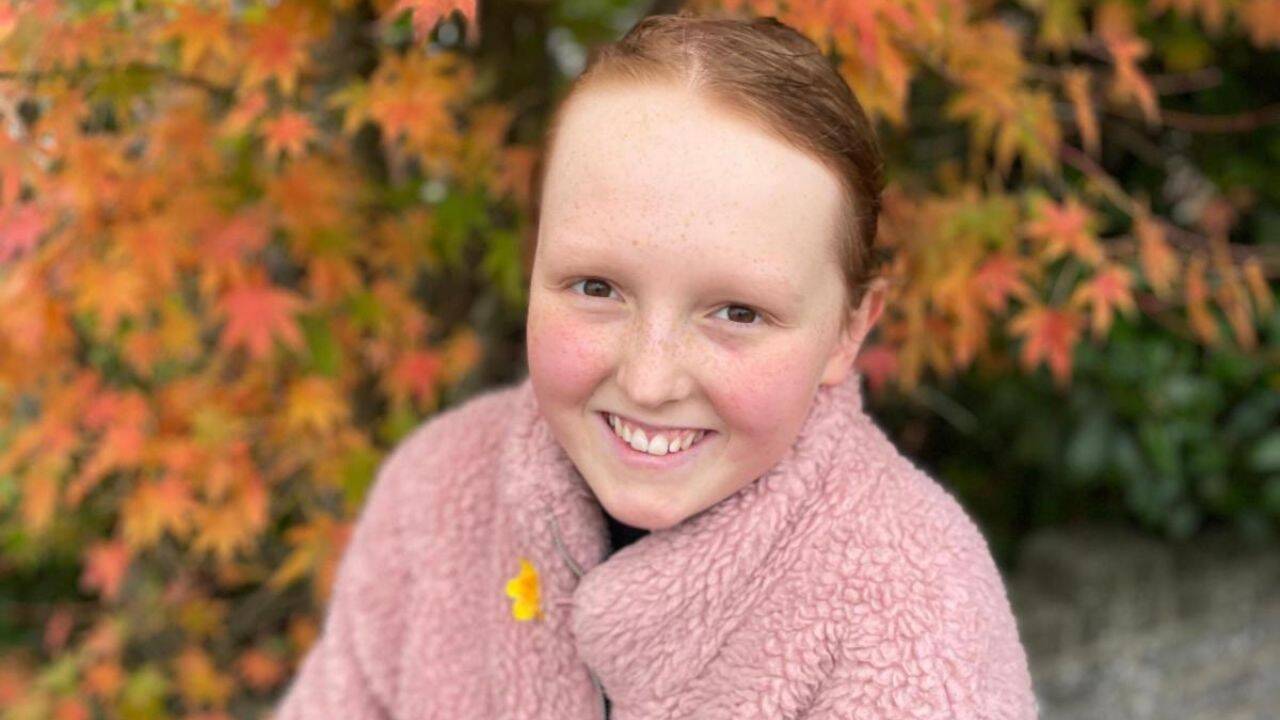
Twelve is an age where the world is usually measured in bedroom walls, bicycle radiuses, and the agonizing distance to the school bus stop. For one child, however, twelve became an exercise in cartography. Sitting before a glowing screen in a quiet room, she did not look at a map of countries or mountain ranges. She looked at a constellation of names.
Fourteen thousand of them.
Scattered across fifty different nations, resting in European courtyards, suburban American cul-de-sacs, and coastal towns halfway across the globe, fourteen thousand strangers shared a single linguistic identifier: Kirsty.
It starts with a screen glow.
Imagine looking at a spreadsheet not as rows of cold data, but as a crowded room. Every row is a heartbeat. Every name is a person waking up, drinking tea, worrying about rent, or laughing at a dog. To most adults, a database is a filing cabinet. To a child with a singular focus, it is a gymnasium waiting to be filled.
She did not start with a grand strategy. She started with curiosity. The kind of stubborn, unfiltered curiosity that adults lose somewhere around their first mortgage. Why is my name here? Who else carries it? What do their lives look like?
Questions like that have a way of spiraling.
What begins as a late-night keystroke turns into an international pursuit. She reached out. Not through corporate channels or polished public relations campaigns, but with the disarming sincerity only a child can muster. Hello. We share a name. Tell me who you are.
And the world answered back.
From Tokyo to Toronto, from small villages in Scotland to bustling hubs in Australia, people stopped what they were doing to reply to a twelve-year-old girl. They sent photographs. They sent stories. They revealed fragments of their daily lives. A nurse in a busy emergency room, a student pulling exams, an artist staring at an empty canvas—all bound by four syllables and an arbitrary collection of vowels and consonants.
Identity is a strange architecture. We spend decades building it out of career choices, style statements, and political affiliations. We want to be unique. We fight tooth and nail to stand out in a crowd. Yet, there is a primal, aching comfort in realizing you are never truly alone.
Consider the isolation of modern life. We live in hyper-connected boxes, scrolling through curated feeds of strangers while feeling profoundly disconnected from our neighbors. We crave community, yet we build walls of obsidian to keep the world out.
It took a child to break those walls down with a spreadsheet.
When you find someone thousands of miles away who shares your name, something shifts in your chest. The abstract concept of "humanity" stops being a political talking point or a charity commercial. It has a face. It has your face, or at least your name.
The project could have stopped there. A viral curiosity. A heartwarming human-interest story to be consumed over morning coffee and forgotten by noon. The internet is a graveyard of things that were briefly interesting.
Instead, the constellation demanded gravity.
If fourteen thousand people share your name, and you have managed to pull them into a shared orbit, you possess something rare. You possess leverage of the purest kind. Not the corporate kind designed to squeeze profit margins, but the human kind designed to move mountains.
The pivot from curiosity to action is rarely loud. It happens in the quiet spaces between realization and responsibility.
One hundred thousand pounds.
Say the number out loud. It sounds heavy. It sounds like grant proposals, board meetings, and high-stakes galas with uncomfortable shoes and cold chicken. We are conditioned to believe that meaningful change requires institutions, bureaucracy, and decades of professional networking.
A child raised that money through sheer momentum of spirit.
How do you convince thousands of strangers across fifty countries to open their wallets? You don't use high-pressure sales tactics. You use belonging. When someone who shares your name asks for help to build a better world, refusal feels like turning your back on yourself.
The funds flowed inward, turning abstract goodwill into concrete reality. Hospitals received equipment. Families in crisis found breathing room. Projects that lived in the margins of funding budgets suddenly found themselves flush with possibility.
All because a girl in a bedroom decided to map the world by its first names.
There is a lesson here that stings a little bit if you let it. We spend our lives overcomplicating connection. We hire consultants to foster community in workplaces. We design algorithms to match us with friends based on music taste and political leanings. We build elaborate digital architectures to bridge gaps that we keep widening ourselves.
Meanwhile, empathy remains entirely analog.
It requires looking at another human being and recognizing the echo of your own existence in their eyes. It requires the audacity to reach out across an ocean and say, I see you.
We talk endlessly about global scales, international relations, and geopolitical divides as if humanity were divided into immutable camps of Us and Them. We treat the map as a battleground.
Look closer.
Underneath the borders, beneath the trade tariffs and the language barriers, the map is just a tapestry—no, a lattice—of shared experiences. We are all just trying to figure out how to pay our bills, keep our loved ones safe, and leave a mark that doesn't wash away in the next rainstorm.
The fourteen thousand Kirstys did not change global politics overnight. They didn't solve climate change or rewrite economic policy. They did something much harder. They proved that distance is an illusion.
When the last check was cleared and the final tally was locked into place, the girl who started it all was still just a kid growing up in a complex world. But the world she inhabited was permanently altered. It was no longer a vast, terrifying expanse of strangers.
It was a neighborhood.
The screens go dark eventually. The laptops shut, the spreadsheets minimize, and the notifications quiet down. The room gets dark. Outside, the wind moves through the trees, indifferent to spreadsheets and fundraising totals.
Yet, somewhere in Tokyo, a woman looks at her coffee cup and smiles. Somewhere in Edinburgh, a teenager checks a notification. Somewhere across fifty distinct borders, a small piece of the world feels a little bit warmer.
The names remain. The distances remain.
But the space between them is no longer empty.