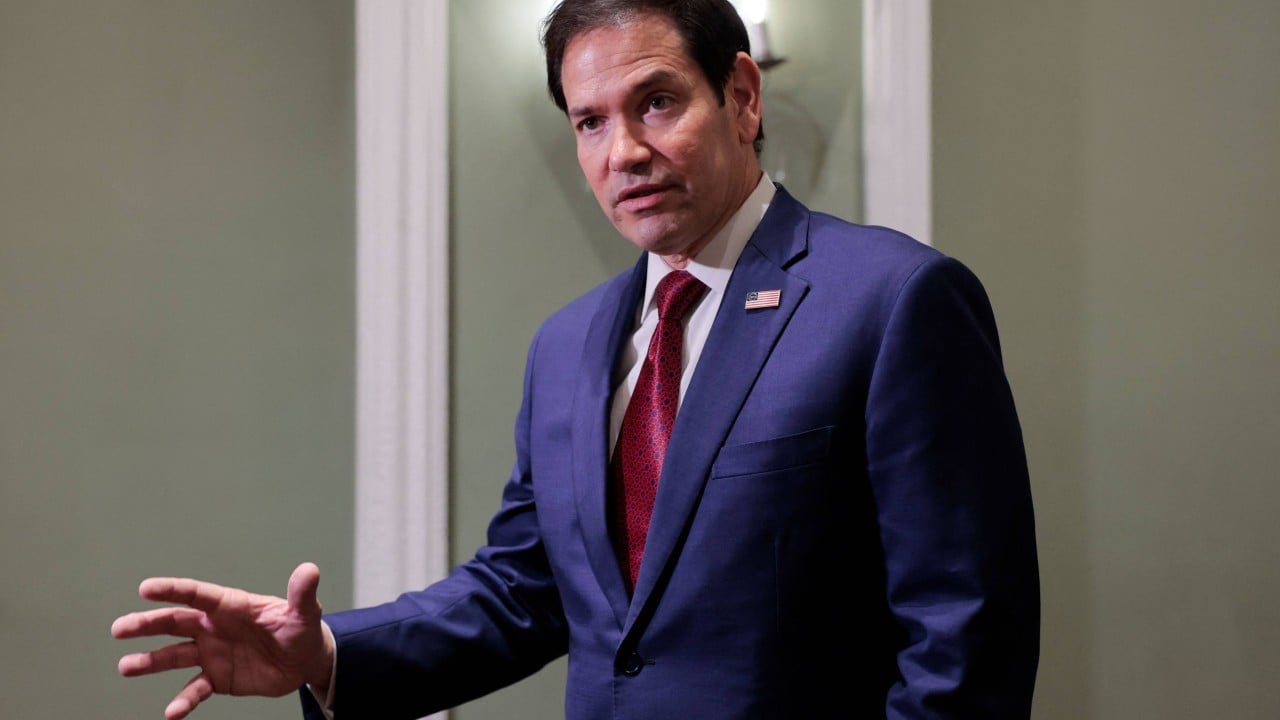
Secretary of State Marco Rubio is defending a controversial U.S. oil arrangement with Venezuela by framing it as an urgent national security necessity to block China and Russia from dominating Western Hemisphere energy reserves. Confronted by sharp skepticism from both hawkish lawmakers and human rights advocates who view any economic opening with Caracas as a betrayal of democratic principles, Rubio argued that walking away from Venezuelan crude simply hands the world’s largest proven oil reserves directly to Beijing and Moscow on a silver platter.
The logic is brutally transactional. If American companies and Western allies are barred from operating in the Orinoco Belt, state-backed Chinese conglomerates and sanctioned Russian energy firms will happily fill the vacuum, locking up supply chains and cementing geopolitical influence ninety miles from American shores. Meanwhile, you can read related stories here: Transnational Illicit Supply Chains How Triads Cartels and the Mafia Architect Global Arbitrage.
For decades, Washington’s playbook on Caracas rested on a straightforward premise: economic isolation would eventually force political capitulation. Yet the reality on the ground in South America has consistently defied clean diplomatic theory. Every time the United States tightened the screws on state oil giant Petroleos de Venezuela (PDVSA), the barrels didn't stay in the ground. They simply changed flags, flowing through opaque maritime networks to independent "teapot" refineries in China or serving as collateral for Russian defense loans.
The Geopolitical Math Behind the Orinoco Belt
To understand why a longtime foreign policy hawk like Rubio is making the pragmatic case for controlled energy engagement, you have to look at the barrel math. Venezuela sits atop roughly 300 billion barrels of proven crude reserves, surpassing even Saudi Arabia. While decades of mismanagement, underinvestment, and corruption have battered the country's daily output down to a fraction of its 1990s peak, the underlying geology remains an irresistible magnet for global powers. To see the full picture, check out the recent article by The New York Times.
China has spent the better part of two decades treating Venezuelan crude as a strategic insurance policy. Through massive oil-for-loan agreements initiated during the Hugo Chavez era, Beijing secured long-term claims on heavy crude shipments while bypassing traditional Western financial clearinghouses. Even when U.S. sanctions peaked, dark-fleet tankers routinely disabled their transponders off the Venezuelan coast, transferred cargo at sea near Malaysia, and delivered discounted crude directly to Chinese ports.
Russia’s footprint is smaller in volume but far sharper in strategic leverage. Rosneft, and later state-owned Roszarubezhneft, stepped into joint ventures precisely when Western service companies were forced to pack their bags. Moscow used those stakes not merely to extract profit, but to establish a permanent logistical and intelligence foothold in Washington’s traditional backyard.
Rubio’s defense of the disputed oil deal rests on disrupting that exact dynamic. By allowing structured, monitored participation by U.S. and allied energy firms—under strict licensing frameworks rather than blanket sanctions relief—Washington aims to achieve three specific objectives:
- Diverting physical supply: Heavy sour crude from Venezuela is uniquely suited for Gulf Coast refineries in Texas and Louisiana, which were engineered decades ago to process dense, high-sulfur grades.
- Crowding out foreign state capital: Capital-starved PDVSA prefers dealing with Western operators who bring actual technical expertise and hard currency over Chinese lenders demanding steep discounts to pay down old debt.
- Maintaining regulatory visibility: Transactions routed through U.S.-licensed channels require transparent auditing, escrow oversight, and compliance checks that vanish completely when oil trades on the black market.
Why Critics Call the Strategy a Mirage
Not everyone in Washington is buying the national security rationale. Inside the halls of Congress and across foreign policy think tanks, opposition to the deal cuts across traditional party lines, uniting human rights champions with hardline national security hawks.
The core counter-argument is simple. Money is fungible.
Even when licensing agreements stipulate that revenues must flow into restricted accounts or go toward paying down existing corporate debts rather than funding the presidential palace in Caracas, critics argue that every dollar generated by oil exports frees up domestic cash for the ruling apparatus. When PDVSA’s balance sheet improves, the Venezuelan state has more liquidity to pay security forces, reward loyalist generals, and weather domestic unrest without making genuine concessions on free elections or political prisoners.
There is also deep skepticism about whether U.S. engagement actually displaces China and Russia in any meaningful way. Analysts who track global tanker movements point out that Beijing and Moscow do not operate in Venezuela solely for commercial return; they operate there to irritate Washington and secure geopolitical optionality. A few hundred thousand barrels per day moving north to the U.S. Gulf Coast will not convince the Chinese Communist Party to abandon its multi-billion-dollar infrastructure investments in Latin America, nor will it stop Russian warships from making periodic port calls in La Guaira.
The Trap of Sunk Costs
Historically, selective sanctions waivers have a habit of becoming permanent fixtures. Once major energy corporations deploy hundreds of millions of dollars in specialized drilling rigs, diluents, and technical personnel into the Orinoco Belt, their lobbyists become powerful advocates against snapping sanctions back into place.
Critics warn that Rubio’s framing creates a one-way ratchet. If the administration argues that pulling out hands a victory to China and Russia today, that exact same argument will still be true six months or two years from now—regardless of whether Caracas honors its diplomatic commitments. In effect, Beijing and Moscow become permanent bogeymen used to justify indefinite tolerance of authoritarian governance.
The Heavy Crude Reality Nobody Wants to Discuss
Strip away the diplomatic rhetoric on Capitol Hill, and a stubborn industrial reality emerges. The global oil market does not treat all barrels equally.
Over the past fifteen years, the American shale boom flooded the world with light, sweet crude from the Permian Basin. While that surge transformed the United States into a net petroleum exporter, it created a peculiar mismatch at home. Many of the largest, most complex refineries along the U.S. Gulf Coast were built long before the shale revolution. Their coking units and hydrocrackers are optimized for heavy, sour crude—the exact kind of dense, tar-like oil pumped out of Venezuela and Canada.
When Venezuelan supply was cut off by sanctions, Gulf Coast refiners scrambled to replace those missing heavy barrels. Russian Urals crude briefly filled part of the gap until the 2022 invasion of Ukraine shut down that pipeline too. Canadian heavy oil from Alberta helped, yet pipeline bottlenecks limited how fast supply could scale.
Allowing controlled volumes of Venezuelan heavy crude back into the American refining system lowers feedstock costs for domestic fuel producers and stabilizes diesel and asphalt supply chains. Politicians rarely lead with refining chemistry when defending controversial foreign policy moves on Sunday talk shows. Invoking the specter of Chinese and Russian encroachment plays far better on television than explaining delayed coker utilization rates in Port Arthur, Texas.
Navigating the Gray Zone Between Sanctions and Engagement
The dispute over the Venezuela oil deal exposes a fundamental flaw in modern American statecraft. Over the past two decades, Washington has grown addicted to financial sanctions as a low-cost alternative to military intervention or sustained diplomacy. Yet sanctions work best as a short, sharp shock—not as a permanent operating system.
When broad economic embargoes remain in place for years, targeted regimes adapt. They build parallel banking networks, rely on shadow shipping fleets, and forge deeper alliances with rival superpowers that have zero interest in enforcing U.S. Treasury rules. By the time Washington realizes the blockade is leaking, re-entering the market requires messy compromises that look like retreat.
Rubio’s posture reflects an uncomfortable awakening to those limits. Defending a disputed oil deal while maintaining a reputation as an uncompromising critic of socialist autocracies requires walking a razor-thin rhetorical line. The message to skeptics is essentially a choice between two bad options: tolerate an imperfect, tightly policed commercial arrangement that keeps Western firms in the game, or cling to ideological purity while watching Beijing and Moscow lock down the hemisphere's energy infrastructure for a generation.
What Comes Down to Enforcement
Whether this gamble pays off or unravels into another diplomatic embarrassment hinges entirely on execution. Licensing deals in high-risk jurisdictions are only as strong as the compliance mechanisms policing them.
If the Treasury Department and State Department enforce strict, verifiable audit trails—ensuring that joint-venture revenues go exclusively toward debt retirement, operational maintenance, and verified humanitarian channels—the administration can credibly claim it is starving adversaries of leverage without enriching bad actors. Look at the precedent of the Iraq Oil-for-Food program in the 1990s as a cautionary benchmark; without relentless, independent forensic oversight, state oil monopolies inevitably find ways to skim off the top through shell companies and inflated service contracts.
Conversely, if Caracas successfully exploits gray areas in the licensing terms to divert hard currency while keeping Chinese and Russian state firms entrenched in neighboring blocks, Rubio’s national security defense will collapse under its own contradictions.
In the end, energy geopolitics rarely offers clean moral victories. A barrel of heavy crude pulled from the Orinoco mud will eventually find a buyer somewhere on Earth, and the flag flying on the tanker that carries it matters enormously to the balance of power in the Americas.