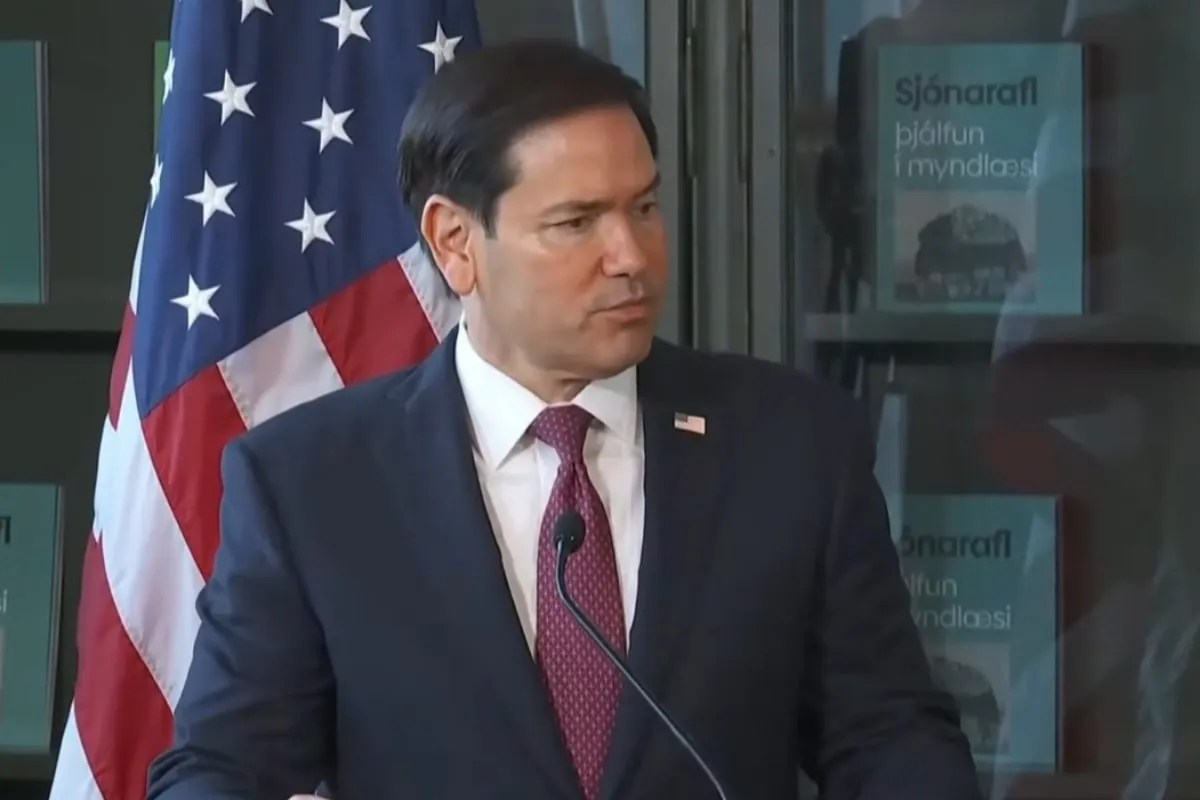
The foreign policy establishment is having a collective meltdown over Marco Rubio stating the obvious. Headlines scream that Washington is abandoning Kyiv, that security guarantees are crumbling, and that the diplomatic playbook is being rewritten by a Secretary of State who refuses to play along with fantasy land scenarios. Everyone is focusing on the wrong words. They are hyperventilating over the phrase NATO membership while completely ignoring the brutal mechanics of how wars actually end.
Here is the lazy consensus plaguing every mainstream foreign desk right now: Ukraine must be handed an ironclad Article 5 security umbrella as the non-negotiable prerequisite for any peace deal, because anything less is a betrayal. It is a neat, emotionally satisfying narrative for anyone sitting three thousand miles away from the front lines. It is also completely detached from geopolitical reality. Expanding on this idea, you can also read: The Anatomy of Aviation Defense Failure: Quantifying the Flydubai Flight 1073 Incident and Congressional Response.
Rubio’s stance is not a concession to Moscow. It is an acknowledgment of hard arithmetic and risk management. NATO is not an insurance policy you hand out to a country currently locked in an active, existential artillery duel with a nuclear-armed power. To pretend otherwise is to gamble with global annihilation for the sake of diplomatic optics.
Let us dismantle the core myth driving the commentary. The conventional wisdom treats NATO membership as a magic shield. The moment a country enters the alliance, deterrence instantly materializes. But deterrence only works when the cost of aggression clearly outweighs the benefit, and when the alliance possesses both the absolute capability and the absolute willingness to respond. Handing Ukraine a blank check via Article 5 today does not deter anything. It instantly converts every NATO member state, from Berlin to Washington, into a direct belligerent in a hot war with Russia. That is not collective security. That is an accelerated path to World War III. Experts at BBC News have also weighed in on this matter.
Look at the history of post-Cold War security architecture. Expanding alliances without establishing functional, durable local stability is a recipe for strategic paralysis. When you promise security you cannot practically enforce without risking nuclear escalation, you create a moral hazard. You encourage maximalist stances that preclude compromise, locking both sides into a perpetual war of attrition where victory is mathematically impossible for either party.
The real conversation should not revolve around whether Kiev gets a seat at the Brussels table next Tuesday. The real conversation is about designing a sovereign, heavily armed Ukraine that can defend its own borders without requiring American soldiers to patrol the Dnieper River. Think of it as the ultimate armed neutrality model. Finland and Sweden did not need decades of NATO membership to build formidable deterrent capabilities; they maintained societies where defense was a totalized, functional reality.
If Washington pivots toward ending the war by freezing territorial realities and decoupling peace from immediate alliance expansion, it signals a return to cold, calculating realism. Critics call this appeasement. That is intellectual laziness. Appeasement is handing over territory with no strategic return. Realism is recognizing that you cannot dictate terms from a position of economic and industrial exhaustion while your defense supply chains are redlining.
The uncomfortable truth is that the Western defense industrial base has hit a wall. Artillery shell production, missile stockpiles, and maintenance cycles are lagging behind the brutal attrition of modern industrial warfare. Pretending that we can maintain this cadence indefinitely while drafting expansion treaties is the kind of delusion that costs nations their credibility. Rubio’s approach strips away the therapeutic language of endless solidarity and replaces it with the cold logistics of exit strategies.
Wars end at the negotiating table when both sides realize the cost of continuing exceeds any possible gain. As long as Kyiv is promised the ultimate golden ticket of NATO membership at the end of the rainbow, Moscow has zero incentive to negotiate a lasting ceasefire, because a frozen conflict with NATO on its border remains its worst-case strategic nightmare. By taking immediate membership off the table, Washington removes Moscow's primary pretext for total war while opening a narrow, pragmatic window for actual diplomatic leverage.
You do not achieve peace by doubling down on maximalist demands that require a miracle to execute. You achieve it by looking at the chessboard without the fog of cable news sentimentality. Ukraine's future security depends on steel, economic integration, and indigenous military capacity, not on a piece of paper signed in Belgium that nobody is truly willing to enforce with boots on the ground when the sirens start wailing.
Stop treating diplomacy like a moral crusade and start treating it like the high-stakes risk calculation it has always been.


