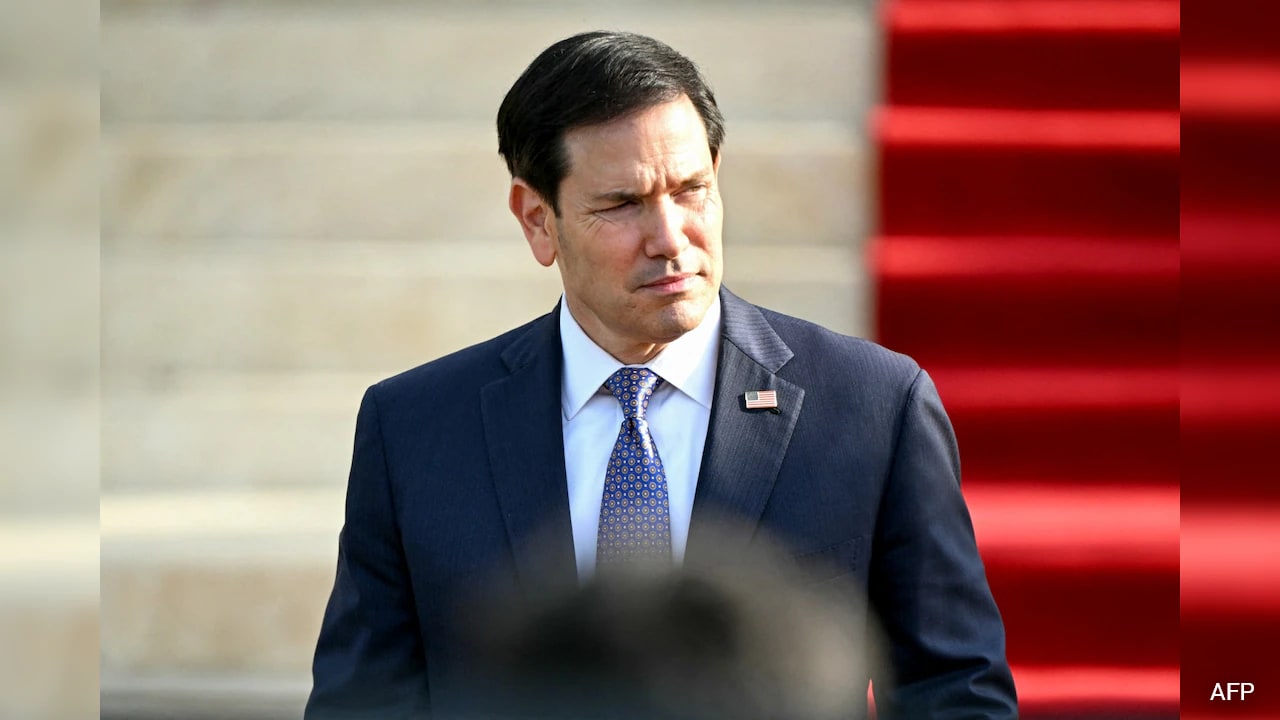
The rules of engagement in the Middle East just shifted into harsher territory. US Secretary of State Marco Rubio made it clear during a press stop in Colombia that American retaliation against Iranian aggression won't stop at defensive maneuvers.
If Tehran keeps shooting at American warships, its commercial fleet pays the price. Simple as that. For a more detailed analysis into similar topics, we recommend: this related article.
The Escalation Cycle
This hardline stance follows a direct military confrontation in regional waters. US Central Command confirmed that American forces destroyed five Iranian crude oil carriers after an American naval warship faced ballistic missile targeting over a two-day span.
The targeted warship successfully evaded the incoming ordnance, and no American service members suffered injuries. But Washington decided that dodging missiles wasn't enough of a response. For broader information on this development, in-depth coverage can be read on Reuters.
Instead of waiting for the next salvo, the US military took out five oil carriers. Rubio laid out the administration's math bluntly while speaking to journalists.
"Iran continues to try to hit US naval ships, and for every time they do that or try to do that, they're going to lose tankers," Rubio stated.
Hitting Tehran Where It Hurts
Targeting oil tankers strikes directly at the economic lifeline of the Iranian state. Crude oil exports fund the regional proxies, missile programs, and naval operations managed by the Islamic Revolutionary Guard Corps.
When the US Navy goes after commercial carriers, it transforms a tactical naval skirmish into a heavy economic drain. Tehran relies heavily on these maritime routes to keep revenue flowing past international restrictions.
By neutralizing these vessels, Washington is shifting the cost of naval harassment sky-high. Each tanker sent to the bottom represents tens of millions of dollars in lost infrastructure and unrecoverable cargo.
Broader Regional Fallout
This tit-for-tat violence doesn't happen in a vacuum. Following the destruction of the oil carriers, regional tensions rippled outward, with reports of retaliatory ballistic activity stretching toward neighboring territories.
The calculus in Washington rests on deterrence through disproportionate economic and physical punishment. Officials want Tehran to calculate that the price of launching missiles at an American flag vessel is the systematic dismantling of its commercial shipping capability.
The strategy carries massive risks. Escalation spirals rarely follow a predictable script, and open maritime warfare threatens global energy markets.
Yet the current White House stance leaves zero ambiguity. The response to incoming missiles is outgoing torpedoes and airstrikes aimed straight at the economic engine powering them.
Watch the tanker traffic in the Gulf. That is where this conflict is actually being decided.



