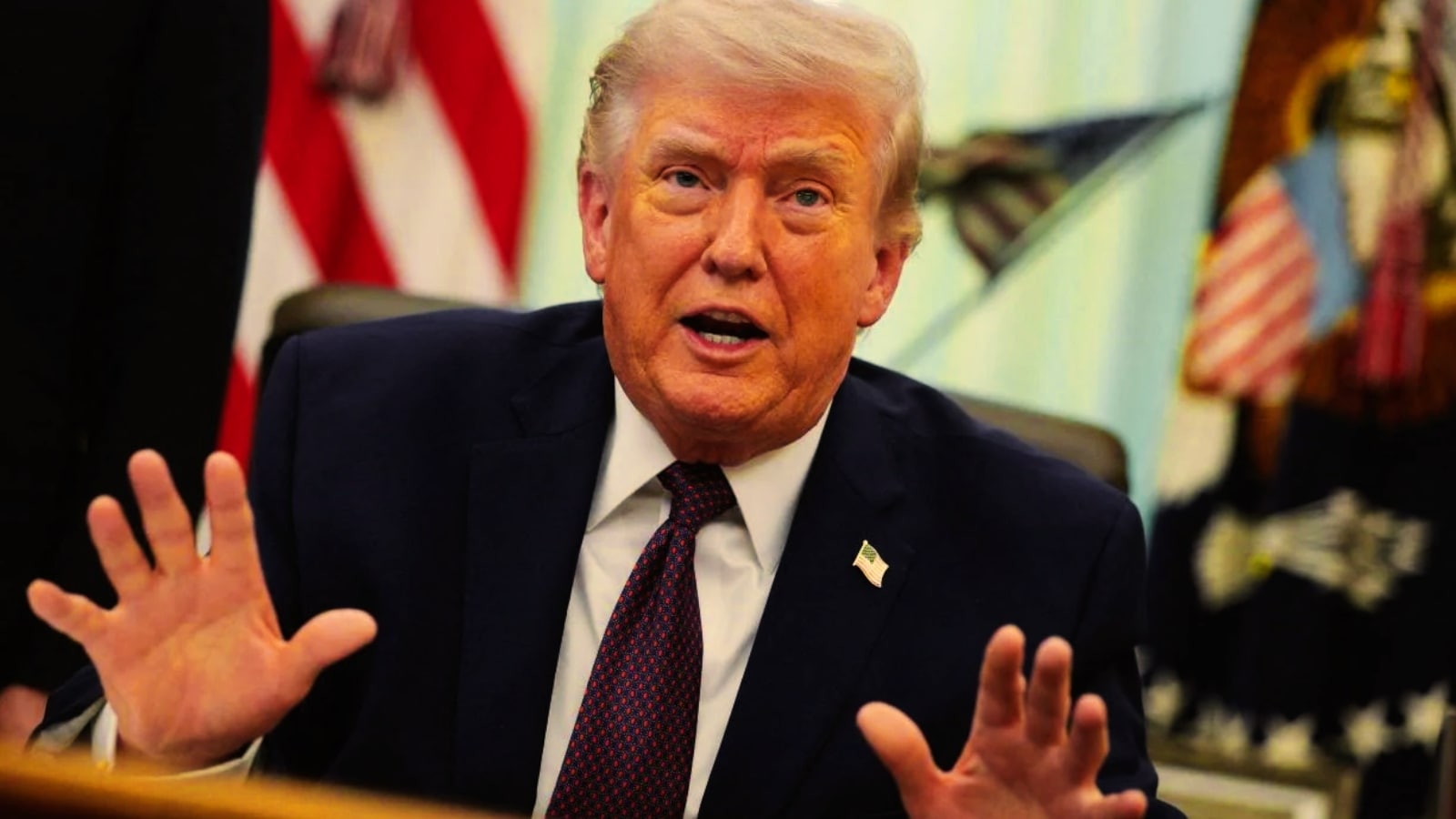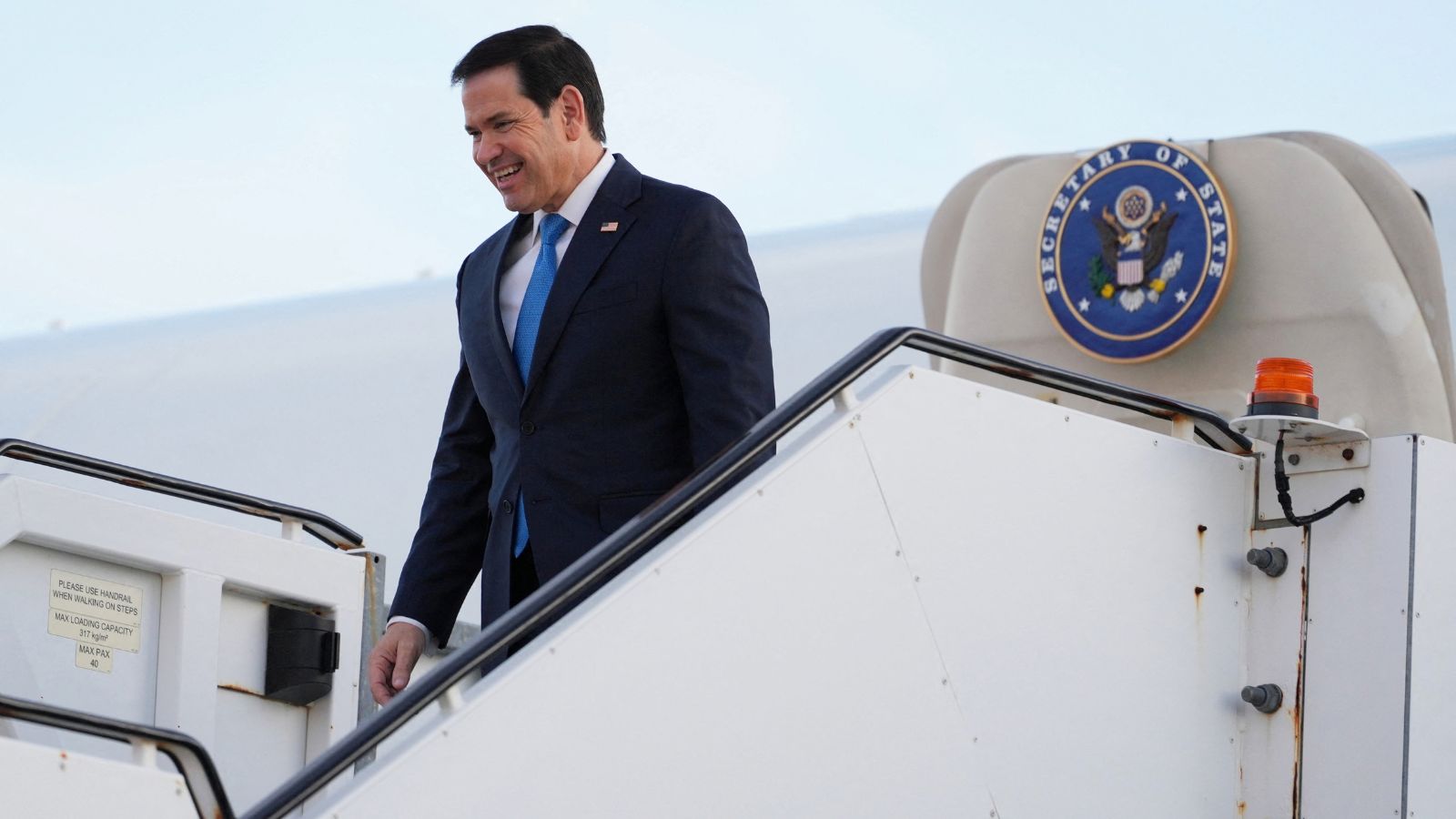
Secretary of State Marco Rubio landed in Reykjavik this week to kick off a three-nation NATO tour, walking directly into a diplomatic freeze that has nothing to do with the weather. While official State Department cables frame the visit as routine alliance maintenance, the reality on the ground in Iceland tells a sharper story. Nordic leaders are deeply unsettled by the Trump administration's renewed, transactional rhetoric regarding Arctic territory, sovereignty, and defense burdens. Reykjavik, a founding NATO member with no standing army of its own, is suddenly forced to calculate whether its decades-old security umbrella comes with unspoken territorial strings attached.
The standard diplomatic readout will tell you this trip is about countering Russian submarine patrols and Chinese infrastructure bids in the High North. That is only half the truth. The real tension inside the room at Höfði House centers on trust—specifically, whether Washington views Iceland and its neighbor Greenland as sovereign partners or as strategic real estate on a balance sheet.
The Ghost of the 1951 Defense Agreement
To understand why Icelandic officials are gripping their briefing books so tightly right now, you have to look back at the 1951 Bilateral Defense Agreement. Iceland does not maintain a military. Instead, under the terms of that Cold War pact, the United States assumed sole responsibility for the island's defense in exchange for operating the massive Naval Air Station at Keflavik.
For over half a century, that arrangement worked cleanly. Then, in 2006, Washington unilaterally pulled its fighter jets and troops out of Keflavik, deciding the North Atlantic was no longer a priority theater. Icelanders felt abandoned overnight. When Russian long-range bombers resumed probing Icelandic airspace a few years later, Reykjavik had to rely on rotating, temporary air policing missions from other NATO allies just to know who was flying overhead.
The U.S. Navy eventually returned to Keflavik on a rotational basis to fly P-8 Poseidon submarine hunters, upgrading hangars to track Russian vessels slipping through the GIUK Gap—the vital naval choke point between Greenland, Iceland, and the United Kingdom. Yet the psychological scar remained. Iceland learned the hard way that American strategic attention is conditional. Now, with President Donald Trump repeatedly floating ideas about acquiring Greenland and questioning the value of traditional mutual defense treaties, politicians in Reykjavik are asking an uncomfortable question. If Washington is willing to pressure Denmark over Greenland, what happens when the White House decides Iceland’s strategic position requires a different kind of arrangement?
Why the GIUK Gap Suddenly Matters Again
Geography dictates everything in the North Atlantic. You cannot change where an island sits, and Iceland sits directly on top of the maritime highway connecting the Russian Northern Fleet's bases on the Kola Peninsula to the open Atlantic.
During a conflict, Russian nuclear-powered attack submarines would have to pass through the waters flanking Iceland to threaten Allied supply convoys sailing from North America to Europe. At the same time, melting sea ice is opening up the Northern Sea Route, turning the Arctic from a frozen buffer zone into a contested commercial and military corridor.
This is where Rubio’s diplomatic tightrope gets tricky. The Pentagon desperately needs uninterrupted access to Icelandic airfields and deep-water ports to monitor this traffic. You simply cannot track modern quiet submarines without forward operating bases in the High North.
However, Icelandic domestic politics are fiercely protective of national sovereignty. Even joining NATO in 1949 triggered historic riots outside the Althingi, Iceland's parliament. The presence of foreign troops on Icelandic soil has always been a delicate political compromise, tolerated only because Washington respected Reykjavik's civilian authority and stayed out of local governance.
When rhetoric from Washington treats Arctic territory like a corporate acquisition target, it hands ammunition to Icelandic neutrality advocates and left-wing opposition parties. Rubio is not just negotiating with a prime minister; he is trying to prevent a domestic political backlash that could restrict American operational freedom at Keflavik.
The Greenland Spillover Effect
You cannot talk about Iceland's wariness without talking about Greenland. The two islands share deep cultural, economic, and historical ties, separated by less than two hundred miles of frigid water across the Denmark Strait.
When the Trump administration revived its interest in asserting control over Greenland—citing national security and rare earth mineral deposits—it sent shockwaves through every Nordic capital. In Copenhagen, Nuuk, and Reykjavik, diplomats saw a fundamental shift in American statecraft. Traditional post-1945 alliances relied on the principle that borders were settled and sovereignty was non-negotiable among friends.
For Iceland, the Greenland fixation hits uncomfortably close to home. Both territories sit on massive reserves of untapped resources, from geothermal energy potential to critical minerals on the seabed. More importantly, both possess small populations governing vast, strategically vital expanses of the globe.
Consider a hypothetical scenario that keeps Nordic defense planners awake at night. Suppose Washington demands exclusive basing rights or resource extraction preferences in the High North as a precondition for continued NATO intelligence sharing or missile defense coverage. A country of nearly 400,000 people like Iceland has zero military leverage to push back against a superpower making transactional demands. Its only shield is the collective diplomatic weight of the Nordic bloc and the broader European alliance.
Rubio’s challenge on this tour is to convince his counterparts that the State Department still operates on traditional diplomatic rules, even when the White House uses the language of real estate leverage. That is a hard sell when European intelligence services monitor every Truth Social post and campaign rally speech coming out of Washington.
What Russia and China Are Doing While NATO Argues
While Washington and Reykjavik dance around questions of sovereignty and burden-sharing, Moscow and Beijing are steadily changing the physical reality on the ground.
Russia has spent the last fifteen years rebuilding and modernizing dozens of Soviet-era Arctic military bases, airfields, and radar stations. Moscow views the Arctic not as a peripheral frontier, but as its primary strategic bastion—the protected waters where its ballistic missile submarines hide to guarantee a second-strike nuclear capability. Russian naval exercises in the Norwegian and Barents Seas have grown larger, more complex, and more aggressive.
China, despite having no Arctic coastline, declared itself a "near-Arctic state" in 2018 and has pursued a patient, checkbook-driven strategy across the region. Beijing has attempted to buy up land, fund deep-water ports, and build research stations in both Iceland and Greenland.
In northern Iceland, the sprawling China-Iceland Arctic Science Observatory at Kárhóll—ostensibly built to study the aurora borealis—raised serious eyebrows among Western intelligence analysts due to its potential dual-use capabilities for satellite tracking and space weather monitoring. Washington leaned heavily on Reykjavik in recent years to block Chinese state-backed firms from acquiring strategic coastal properties and telecommunications infrastructure.
Iceland largely complied with American warnings, turning down lucrative Chinese investment offers to stay in Washington’s good graces. That history makes the current friction sting even worse. Icelandic officials feel they already paid an economic price to align with U.S. national security priorities, only to be met with skepticism and transactional pressure from the new administration.
The Three-Nation Calculus
Reykjavik is only the first stop on Rubio’s itinerary, and the sequencing of the trip reveals the administration's broader strategy for managing NATO’s northern flank. By pairing Iceland with two other key European allies, the State Department is attempting to compartmentalize its bilateral disputes while projecting a unified front against Moscow.
| Strategic Priority | U.S. Position | Icelandic Concern |
|---|---|---|
| Keflavik Air Base | Needs expanded infrastructure for anti-submarine warfare and long-range surveillance. | Fears permanent militarization without clear sovereignty guarantees or long-term commitment. |
| Arctic Resources | Wants Western control over rare earths and shipping lanes to block Chinese monopolies. | Worries about aggressive U.S. commercial pressure overriding local environmental and economic rules. |
| NATO Burden Sharing | Demands European allies pay more for their own regional defense and border security. | Lacks a standing military; contributes through strategic geography and infrastructure rather than troop counts. |
The table above highlights the core disconnect. Washington measures alliance value primarily through defense spending percentages and direct military hardware. Iceland, by constitutional design and historical consensus, contributes through geographic access and civilian infrastructure.
When U.S. officials criticize NATO members for failing to meet spending targets, Reykjavik hears an implicit threat that its unique status within the alliance is no longer respected. Rubio has to bridge that gap without contradicting the president who appointed him—a diplomatic maneuver that requires careful phrasing behind closed doors.
The Limits of Transactional Diplomacy in the High North
There is a fundamental flaw in applying purely transactional logic to Arctic security. Unlike a trade tariff or a commercial contract, you cannot easily walk away from geographic choke points once trust is broken.
The United States relies on a vast network of undersea cables, satellite ground stations, and early-warning radar sites scattered across the North Atlantic. Much of that architecture sits on sovereign Nordic territory, governed by bilateral status-of-forces agreements that require continuous local parliamentary consent.
If Washington pushes Nordic allies too hard—treating their territory as leverage rather than partnership—those governments face immense domestic pressure to slow-walk permits, restrict troop rotations, and limit intelligence cooperation. They do not need to formally leave NATO to make life miserable for Pentagon planners. Subtle bureaucratic friction in Reykjavik or Nuuk can delay radar upgrades and naval logistics for years.
Veteran diplomats know that alliances survive on predictability. Small nations align with great powers not because they expect charity, but because they expect the rules of the game to remain stable from one election cycle to the next.
Rubio understands the machinery of the Senate Foreign Relations Committee and the traditional architecture of American alliances better than almost anyone in the current cabinet. His presence in Reykjavik is a tacit acknowledgment that the administration cannot afford to alienate the gatekeepers of the North Atlantic. Yet words spoken in a press conference in Iceland carry only so much weight when policy is routinely rewritten from the Oval Office. Until Washington proves that its commitment to Nordic sovereignty is unconditional, every handshake in Reykjavik will be followed by a quiet check of the exit doors.