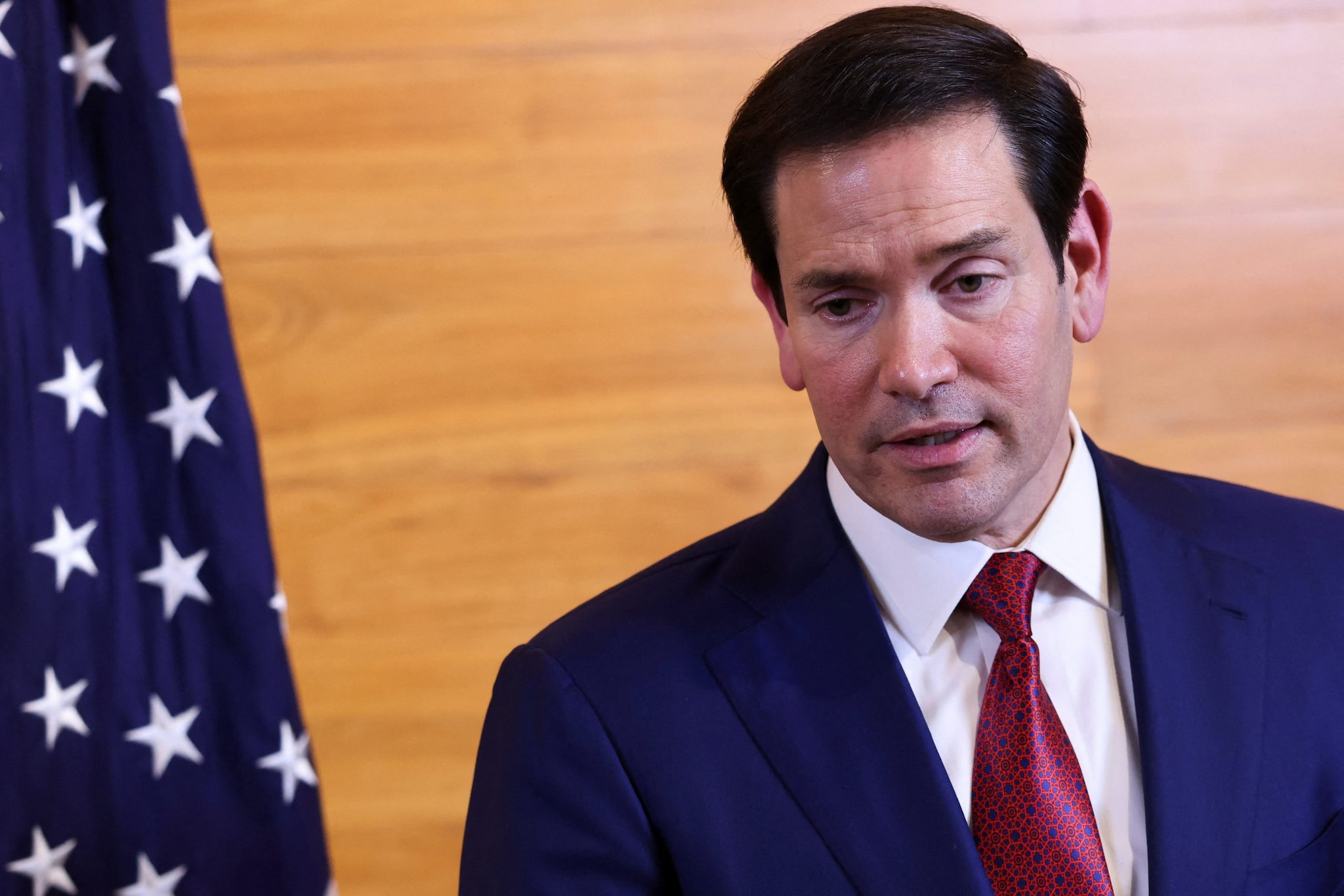
The headlines are vibrating with the same exhausted rhythm. A high-ranking US official—this time Secretary of State Marco Rubio—is reportedly heading to New Delhi to "cement" a strategic partnership. The press is salivating over a "post-trade deal" era. They paint a picture of two democratic giants finally locking arms against a rising China.
It is a fantasy.
If you think this visit signals a new era of frictionless cooperation, you are ignoring twenty years of diplomatic scar tissue. I have watched these "landmark" visits unfold for decades. They follow a scripted loop: grand proclamations at Hyderabad House, a vague joint statement about "shared values," and a return to the status quo of protectionism and bureaucratic friction. The "lazy consensus" suggests that a trade deal and a high-profile visit are the final pieces of the puzzle. In reality, they are merely masking a widening gap in actual strategic alignment.
The Myth of the "Natural Ally"
The most dangerous phrase in DC and New Delhi is "natural allies." It suggests that because both nations hold elections, their geopolitical interests must eventually merge. This logic is a trap.
India does not want to be a junior partner in a US-led security architecture. India wants to be a pole in a multipolar world. While the US views India as the ultimate counterweight to Beijing, New Delhi views the US as a temporary convenience. This isn't a cynical take; it’s a sovereign one.
When Rubio lands, he isn't coming to sign a blank check for Indian expansion. He is coming to manage a relationship that is fundamentally transactional. The US wants India to detach from Russian defense hardware. India, meanwhile, knows that its strategic autonomy depends on keeping those legacy pipelines open. You cannot "tease" a visit into fixing a fundamental disagreement over S-400 missile systems or oil imports from sanctioned regimes.
Trade Deals are the New Window Dressing
The competitor press is obsessed with the "boost" from a trade deal. Let’s get one thing straight: A trade deal between the US and India is often a list of what both sides agreed not to fight about, rather than a blueprint for growth.
Total bilateral trade has surged, yes. It crossed $190 billion recently. But look at the composition. It is dominated by services and specific commodities. The "friction" remains in the sectors that actually matter for long-term integration: agriculture, medical devices, and digital taxation.
The US expects India to adopt Western standards for intellectual property and market access. India, under the "Atmanirbhar Bharat" (Self-Reliant India) initiative, is moving in the exact opposite direction. They are building walls, not bridges. Rubio’s visit won't dismantle the "Equalization Levy" or the complex data localization laws that keep American tech giants awake at night. To suggest otherwise is to ignore the protectionist DNA currently driving New Delhi’s policy.
The China Trap
The "enemy of my enemy" logic is the weakest foundation for a superpower relationship. The US wants a frontline state. India wants a strategic buffer.
Imagine a scenario where tensions in the South China Sea boil over. The US expects India to provide more than just "moral support" or naval exercises. However, India’s primary concern is the 3,488-kilometer Line of Actual Control (LAC). India will not jeopardize its continental security to pull American chestnuts out of the fire in the Pacific.
Rubio, known for his hawkish stance on China, will likely push for deeper military integration. But I’ve seen this play out: the US offers high-end tech with strings attached (End Use Monitoring), and India rejects it because they refuse to have their sovereign defense audited by a foreign power. We are talking about two different definitions of "partnership."
- US Definition: Collaborative defense where systems are interoperable and interests are synchronized.
- India’s Definition: Technology transfer without political alignment or operational restrictions.
These two definitions are currently irreconcilable.
The H-1B Elephant in the Room
You cannot talk about "boosting ties" without talking about human capital. Rubio has historically been a skeptic of the H-1B visa program, often advocating for stricter controls to protect American labor. India views the movement of its professionals as a non-negotiable component of any trade or diplomatic "deal."
The competitor’s article ignores the fact that Rubio’s domestic base is diametrically opposed to the concessions New Delhi wants. If this visit is meant to "boost ties" after a trade deal, how does he navigate the political suicide of easing visa restrictions? He doesn't. He will pivot to "cybersecurity cooperation" or "space exploration"—safe, nebulous topics that provide great photos but zero economic impact for the average person in either country.
Dismantling the "People Also Ask" Delusions
Most people are asking: "Will India replace China as the world's factory?"
The honest answer is: No. Not under current conditions.
India’s infrastructure and labor laws are still lightyears away from the "plug-and-play" ecosystem China built over forty years. American companies are moving some production to India (the "China Plus One" strategy), but it’s a trickle, not a flood. Rubio’s visit won't change the fact that it still takes twice as long to move a shipping container in Mumbai as it does in Shanghai.
Another common query: "Is the US-India relationship the most consequential of the 21st century?"
Only if you enjoy disappointment. The most consequential relationship is still US-China, because that is where the actual power resides. The US-India link is a hedge, not a cornerstone. It is a secondary theater.
The Price of Realism
Admitting the flaws in this relationship doesn't make you "anti-India" or "anti-US." It makes you a realist. The danger of the "Rubio visit" hype is that it sets expectations that cannot be met.
When the visit ends and we don't see a massive shift in India’s stance on Russia, or a sudden collapse of Indian trade barriers, the pundits will call it a "missed opportunity." It wasn't. It was just a meeting.
True integration requires the US to accept a partner that will frequently disagree with it, and it requires India to realize that "strategic autonomy" has a ceiling if you want access to the world’s most advanced military hardware. Neither side is ready to make that trade.
The Bureaucratic Quagmire
I have sat in rooms where "foundational agreements" were discussed. The sheer weight of the bureaucracy on both sides is enough to crush any "boost" a Secretary of State tries to initiate.
- ITAR Restrictions: The US State Department’s own rules make sharing high-level tech nearly impossible, regardless of what Rubio says in a press conference.
- Price Sensitivity: India wants Mercedes-level tech at Maruti-level prices. The US defense industry isn't a charity.
- Liability Laws: India’s nuclear liability laws effectively killed the American civil nuclear deal’s commercial viability. That was a "landmark" deal twenty years ago. It produced almost zero watts of power for India.
Rubio is walking into a graveyard of "landmark" agreements.
Stop Buying the Hype
If you want to understand the trajectory of US-India relations, don't look at the plane landing in New Delhi. Look at the trade deficit. Look at the number of Russian oil tankers docking in Vadinar. Look at the "Make in India" tariffs on American electronics.
The visit is a diplomatic exercise in managing differences, not resolving them. It is about optics for a domestic American audience that wants to look "tough on China" and an Indian audience that wants to look "globally significant."
The trade deal was the easy part. The "boost" is a myth. The reality is a slow, grinding, and often frustrating negotiation between two nations that are too big to be told what to do and too different to ever truly act as one.
Stop waiting for the breakthrough. It already happened, and it looks exactly like this: messy, inconsistent, and perpetually "soon."