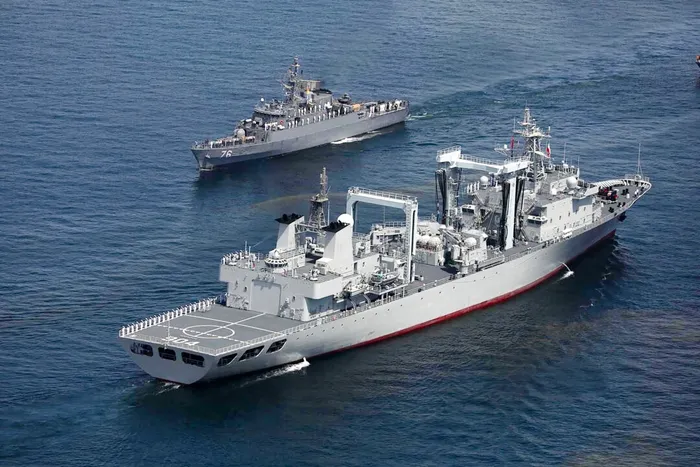
The shift in United States engagement rules regarding Iranian surface vessels represents a fundamental recalibration of maritime deterrence, transitioning from passive monitoring to a proactive kinetic engagement threshold. When the executive branch issues a standing order to destroy any Iranian fast-attack craft (FAC) harassing U.S. naval assets, it modifies the cost-benefit analysis of asymmetric naval warfare. This policy shift targets the specific operational utility of the Islamic Revolutionary Guard Corps Navy (IRGCN) "swarm" tactics, which rely on proximity, ambiguity, and the hesitation of larger, more technologically advanced capital ships.
The Mechanics of Asymmetric Naval Harassment
The IRGCN does not seek to win a traditional blue-water engagement. Instead, their doctrine centers on "anti-access/area denial" (A2/AD) within the narrow confines of the Strait of Hormuz. The technical reality of this environment creates an inherent disadvantage for Arleigh Burke-class destroyers and other high-tonnage vessels.
The IRGCN utilizes high-speed, small-bore armed vessels that operate in the "gray zone"—a state of hostility that remains just below the threshold of open war. By maneuvering within dozens of yards of U.S. ships, these craft exploit the restrictive Rules of Engagement (ROE). Historically, U.S. commanders faced a binary choice: ignore the provocation and risk a collision or a suicide-style explosive attack, or fire first and risk starting a regional conflict.
The executive directive to "shoot down and destroy" eliminates this ambiguity. It establishes a pre-defined spatial trigger. Once an IRGCN vessel crosses a specific distance threshold or exhibits clear hostile intent through maneuvering, the tactical decision is decentralized to the ship's commander. This reduces the latency between provocation and response, stripping the IRGCN of its primary weapon: the exploitation of American bureaucratic restraint.
The Three Pillars of Tactical Neutralization
To understand the impact of sinking IRGCN assets, one must deconstruct the components of Iranian naval power into three distinct functional tiers.
1. The Attrition of Specialized Platforms
While the IRGCN possesses hundreds of small boats, their "Tier 1" assets—those equipped with anti-ship cruise missiles (ASCMs) or sophisticated torpedoes—are not easily replaced under current sanction regimes. Sinking nine ships is not merely a numerical loss; it is a degradation of specialized hulls. Each engagement forces Iran to dipping into its limited inventory of marinized engines and localized electronic warfare suites.
2. Information Dominance and Sensor Fusion
The effectiveness of a swarm depends on coordinated movement. Modern U.S. naval responses utilize integrated sensor suites, including the Aegis Combat System and Mk 38 25mm Machine Gun Systems, to track multiple small-target threats simultaneously. Kinetic action provides a live-fire validation of these systems against low-RCS (Radar Cross Section) targets. When the U.S. Navy engages these craft, it collects high-fidelity electronic intelligence (ELINT) on IRGCN communications and coordination patterns used during the approach.
3. The Psychological Value of the "Non-Response"
In game theory, deterrence only functions if the threat of retaliation is credible and consistent. By executing kinetic strikes against harassing craft, the U.S. Navy resets the "shadow of the future." If the IRGCN believes the probability of destruction is 100% upon reaching a certain radius, the utility of the swarm tactic drops to zero, as the cost (loss of crew and hull) outweighs the benefit (temporary propaganda or intelligence gathering).
Kinetic Calibration and the Risk of Miscalculation
The transition to a "shoot on sight" posture for harassment introduces a specific set of operational risks that must be managed through precise fire control. The primary danger is the "Swarm Saturation" effect. In a confined space like the Persian Gulf, an Iranian commander may deploy 30 to 50 small boats. Even with superior targeting, the logistical burden of tracking and potentially engaging dozens of targets simultaneously creates a high cognitive load for the Bridge and Combat Information Center (CIC).
The engagement of nine ships serves as a calibrated signal. It is large enough to demonstrate systemic capability but small enough to avoid a "Total War" escalation. However, the mechanism of this escalation is non-linear. A single stray round hitting an Iranian shoreline facility or a civilian dhow could trigger a cascade of retaliatory missile strikes from Iranian coastal batteries (such as the Noor or Gader systems).
The Economic Cost Function of Maritime Security
Maintaining a carrier strike group (CSG) in the Fifth Fleet area of operations carries an immense daily "burn rate." Conversely, the IRGCN operates on a fraction of that budget.
- Asymmetric Cost Ratio: An IRGCN fast-attack craft may cost $200,000 to $500,000. A single RIM-116 Rolling Airframe Missile (RAM) or an Evolved SeaSparrow Missile (ESSM) used to defend against such a craft can cost between $1 million and $2 million.
- Ammunition Conservation: To counter this cost imbalance, the U.S. Navy has shifted toward gun-based solutions and directed-energy testing. Using 20mm Phalanx CIWS or 57mm Mark 110 guns to neutralize small boats is more economically sustainable than using ship-to-air missiles.
By sinking these vessels, the U.S. forces Iran to internalize the capital loss of the hulls, whereas previously, the U.S. bore the entire "readiness cost" of simply being present and being harassed.
Technological Barriers to IRGCN Modernization
The degradation of the Iranian fleet is compounded by their inability to access global supply chains for advanced maritime components. Most IRGCN engines are derived from high-end civilian outboard technology (e.g., Yamaha or Mercury) or reverse-engineered Chinese designs.
The systemic weakness in the Iranian naval strategy is the lack of "Over-the-Horizon" (OTH) targeting. Small boats are visually dependent. By destroying these assets, the U.S. Navy effectively blinds the IRGCN’s forward-deployed "eyes." Without these small boats to provide terminal guidance or visual confirmation, Iran’s land-based anti-ship missiles become significantly less effective against moving targets at sea.
Strategic Pivot: From Containment to Active Denial
The decision to neutralize harassing craft indicates that the U.S. has moved beyond the "Containment" phase of the 1990s and 2000s. We are now in a phase of "Active Denial." This strategy assumes that Iranian intent is fixed and hostile; therefore, the only variable the U.S. can control is the Iranian capability.
This approach creates a bottleneck for Iranian naval planners. If they continue the harassment, they lose their fleet piecemeal. If they stop, they lose their primary lever of influence over the oil transit corridors. This "Zugzwang"—a chess term where every possible move weakens the player's position—is the intended strategic outcome of increased kinetic engagement.
The U.S. must now focus on the "Second Order" response: Iran’s likely pivot to sub-surface or unmanned aerial vehicle (UAV) provocations. As the cost of surface harassment becomes too high due to direct naval intervention, the IRGCN will likely transition their remaining resources into the development of "suicide" drone swarms (Loitering Munitions) and midget submarines (Ghadir-class). These platforms offer a higher degree of deniability and a different profile for U.S. radar to solve.
The tactical imperative for the U.S. Fifth Fleet is the deployment of shipborne laser weapon systems (LaWS) and high-power microwave (HPM) counters. These technologies offer a "zero-cost-per-shot" solution to the swarm problem, effectively neutralizing the economic advantage of Iran’s low-cost naval doctrine. The destruction of the nine ships is the opening move in a long-term technological decoupling of Iranian naval influence from the Strait of Hormuz.
The Navy must accelerate the integration of unmanned surface vessels (USVs) of its own to act as a buffer. Deploying autonomous "picket" boats to intercept IRGCN craft before they reach the "red zone" of a manned destroyer shifts the risk from human sailors to expendable hardware. This creates a symmetric response to an asymmetric threat, forcing the IRGCN to engage with robots rather than taunting American sailors, thereby removing the emotional and political leverage Iran seeks to exploit in every Persian Gulf encounter.