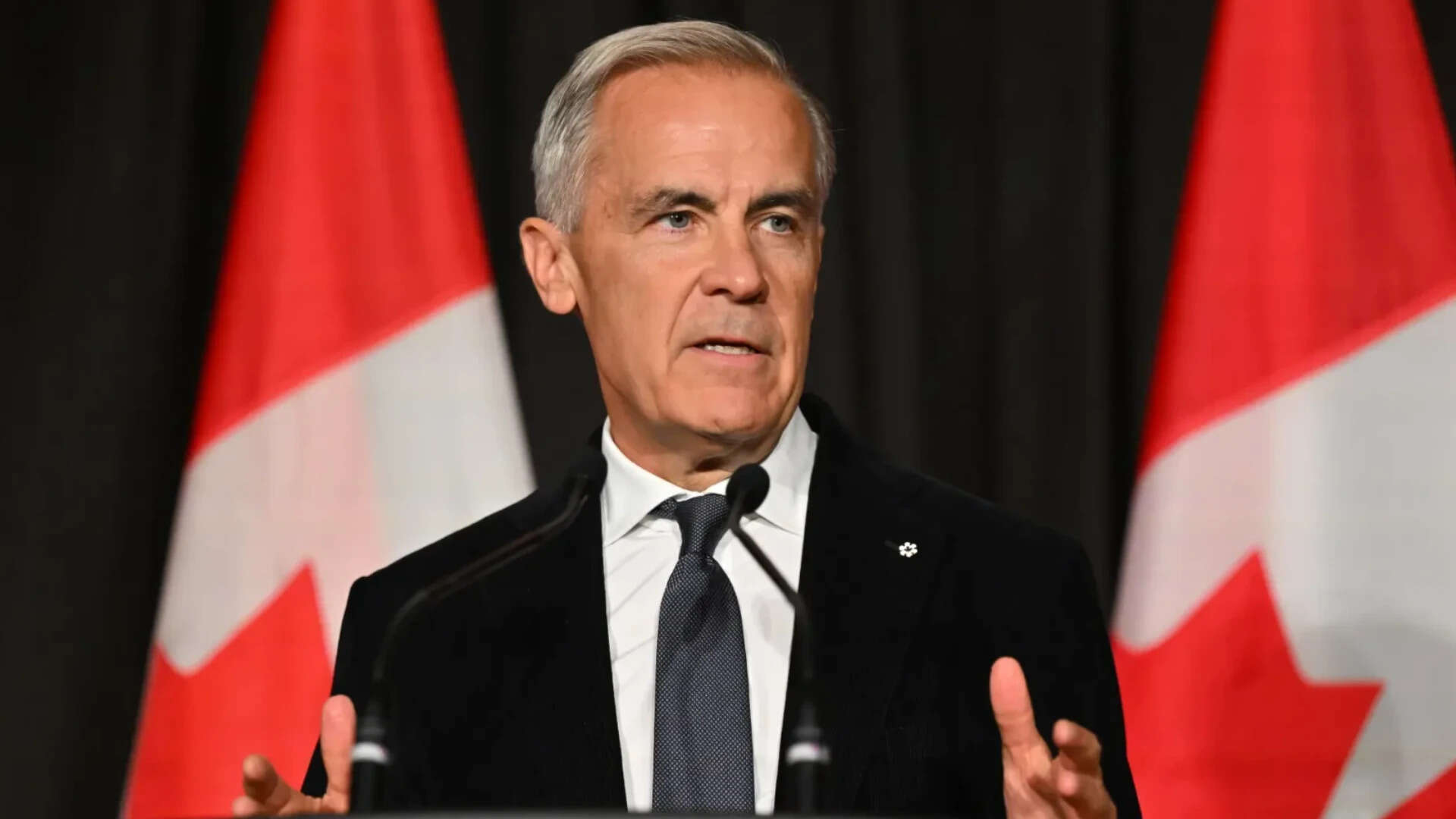
Mark Carney wants Canadians to believe that economic friction with Washington will forge a sovereign industrial base rather than crush it. History suggests a more complicated reality. When bilateral commerce breaks down between an economic titan and its primary supplier of raw materials and energy, the rhetoric of resilience often runs headfirst into the brutal mathematics of supply chains.
The core premise centers on a stark geopolitical shift. As protectionist impulses harden in Washington regardless of which party holds the White House, Canadian policymakers face a reckoning over resource dependency. Carney argues that forced diversification and domestic economic restructuring will yield a stronger nation. Yet the transition from a branch-plant economy integrated with the American Midwest to an autonomous economic power is not a clean administrative choice. It is a slow, expensive industrial wrenching. Also making news lately: France Is Paying Farmers to Grow Despair While the Soil Dies.
For decades, Canadian economic policy operated on a simple premise. Sell discounted crude, timber, minerals, and manufactured components across an undefended border, then buy back finished goods. This continental integration created immense wealth alongside structural complacency. Domestic capital found it easier to invest in Toronto real estate than in high-risk manufacturing innovation or proprietary technologies. R&D spending among Canadian corporations lagged far behind OECD peers for a generation.
When US trade policy pivots toward tariffs, quotas, or strict domestic-content rules under various legislative banners, that complacency becomes an acute vulnerability. Tariffs targeted at Canadian steel, aluminum, or energy exports instantly compress operating margins for domestic producers. Without immediate access to alternative global markets—constrained by geography and a lack of dedicated export infrastructure like coast-to-coast pipelines or liquefied natural gas terminals—Canadian firms absorb the blow. More insights regarding the matter are detailed by Harvard Business Review.
Carney’s thesis relies on the promise of strategic autonomy. By doubling down on critical minerals, domestic energy security, and advanced manufacturing, Canada can theoretically insulate itself from the whims of protectionist politics down south. The logic is sound in a whiteboard session. In practice, building domestic processing capacity for lithium, nickel, and cobalt takes a decade of capital deployment, regulatory navigation, and intense environmental assessment. You cannot substitute a multi-billion-dollar integrated industrial network overnight with a press release and a sovereign wealth fund.
Furthermore, capital is ruthlessly efficient. Global investors direct funds where returns are highest and friction is lowest. If American regulatory environments offer massive subsidies through industrial policy legislation while Canadian tax structures remain sluggish and permitting processes stall projects for years, capital flees north to south. Sovereign resilience requires more than nationalistic resolve. It requires competitive tax incentives, rapid infrastructure deployment, and a willingness to streamline regulatory roadblocks that currently choke major resource and industrial projects.
Consider the energy sector. Canada sits atop vast oil and natural gas reserves, yet most exports flow entirely into the American Midwest pipeline network. Redirecting those molecules to global markets via tidewater ports on the Pacific or Atlantic coasts has proven politically and logistically tortuous. If trade hostility with the US intensifies, choking off baseline export routes without ready alternatives leaves domestic producers stranded with excess supply and collapsing domestic prices. Resilience requires physical outlets, not just policy speeches.
At the same time, domestic consumers bear the immediate collateral damage of trade retaliation. When tariffs are met with counter-tariffs, the cost of imported machinery, consumer electronics, and agricultural inputs rises. Inflation creeps higher just as economic growth stalls. Politicians can preach self-reliance from podiums in Ottawa, but households balancing grocery bills and mortgages feel the pinch of trade wars immediately.
Yet Carney is not entirely wrong about the necessity of the pivot. The old model of frictionless continental integration is fracturing. Washington’s bipartisan consensus on industrial policy means protectionism is no longer a temporary aberration under a single administration; it is the permanent baseline of American trade strategy. Canada has no choice but to diversify its trade partners in Europe, Asia, and the Global South, regardless of the logistical hurdles.
Achieving this independence demands a fundamental cultural shift in Canadian boardrooms. Corporate leaders must abandon the safe harbor of exporting unrefined commodities southward and start building globally competitive enterprises that export intellectual property, specialized software, and high-value manufactured goods. Governments must shift public spending away from corporate welfare for stagnant legacy industries and toward high-impact infrastructure and applied research.
The road ahead is paved with fiscal pain, supply chain bottlenecks, and fierce international competition. Claiming that Canada will emerge stronger and more independent glosses over the institutional friction required to get there. Resilience is not a guaranteed outcome of external pressure. It is earned through painful structural reform, massive capital allocation, and an unflinching assessment of past economic failures.
The pressure from the south is not going away. How Canada responds will define its economic standing for the remainder of the century.