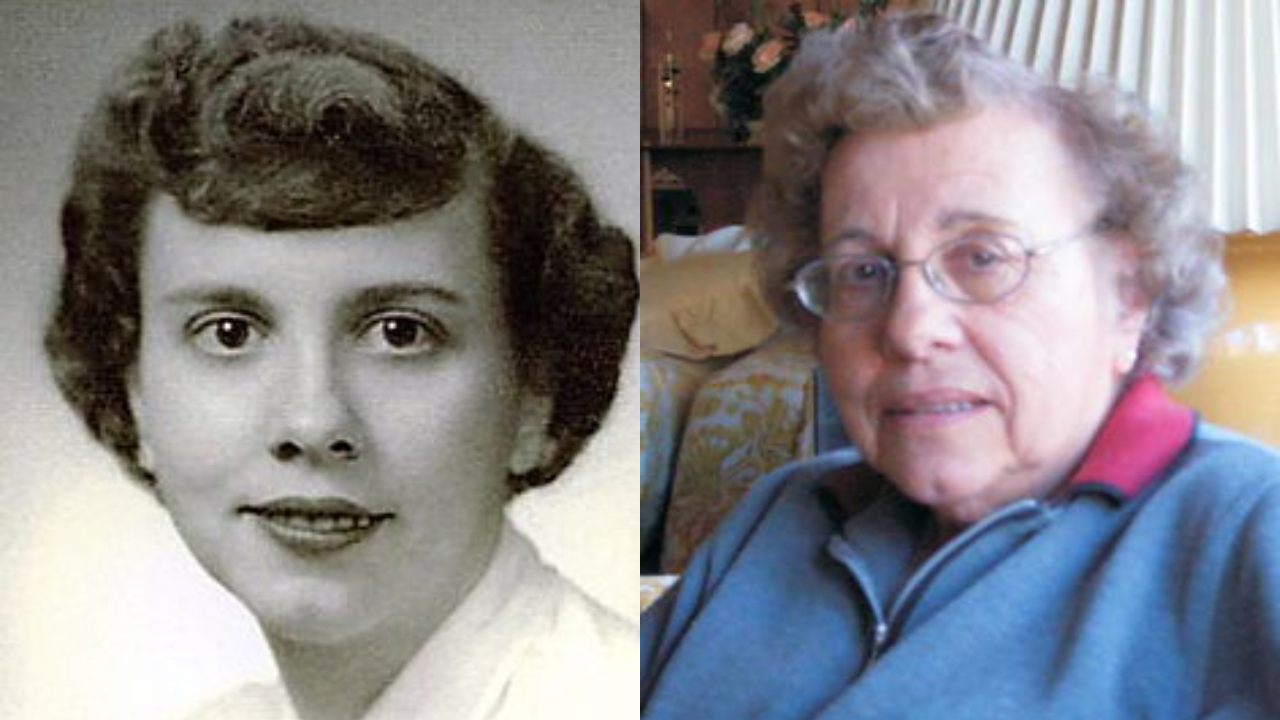
In 1952, a young mathematician sat down in front of a room-sized machine at the Los Alamos Scientific Laboratory. Her name was Mary Tsingou, and she was handed a set of equations that would accidentally blow a massive hole in classical assumptions about how energy behaves. While heavyweights like Enrico Fermi, John Pasta, and Stanislaw Ulam theorized the math, Tsingou actually translated it into machine language for the MANIAC computer. What she found didn't just tweak standard physics models—it birthed modern nonlinear dynamics and chaos theory.
Most people assume early scientific computing was just an extension of paper-and-pencil math. It wasn't. Machines like MANIAC had a meager 1,000 words of memory. Every single line of code had to be painstakingly mapped out by hand. Tsingou didn't just push buttons; she wrote the original algorithm for what became the first-ever numerical experiment in physics.
What They Expected Versus What Actually Happened
The experiment aimed to test a core tenet of statistical mechanics: thermalization. Physicists believed that if you introduced energy into a simple, slightly non-linear system—like a chain of mass points connected by springs—that energy would quickly scatter across all available frequencies. Everything should randomize. It’s the microscopic equivalent of dropping a drop of ink into water and watching it diffuse uniformly.
Fermi thought the computer would show a neat, predictable drift toward equal energy distribution. He was dead wrong.
Tsingou coded the loop, ran the simulation, and watched the ticker print out values. Instead of dispersing into random thermal chaos, the system absorbed the energy, sloshed it around briefly, and then—bizarrely—poured almost all of it right back into the original starting mode. It was like watching a spilled drop of ink un-mix itself and snap back into a clean droplet.
Why the Math Community Missed Her Contribution for Decades
For a long time, this landmark trial was known exclusively as the Fermi-Pasta-Ulam (FPU) problem. Tsingou’s name was stripped from the core acronym, relegated to a brief two-line acknowledgment at the back of the 1955 Los Alamos report: "Work done by Fermi, Pasta, Ulam and Tsingou."
She wasn't listed as an author, even though she did the heavy lifting of figuring out how to make a primitive computer digest differential equations. It took decades for the scientific establishment to course-correct. It wasn't until 2008, when physicist Thierry Dauxois published research highlighting her foundational coding, that the acronym officially expanded to FPUT (Fermi-Pasta-Ulam-Tsingou).
History loves to celebrate the famous theorists whose names roll easily off the tongue. But code is theory made executable. Without Tsingou bridging the gap between theoretical physics and machine execution, the paradox might have stayed locked in a notebook for years.
How This Simulation Changed Everything
That single run on MANIAC opened up entire fields of study that didn't exist before.
- Solitons: Researchers later realized the periodic recurrence happened because the energy was traveling in stable, indestructible wave packets called solitons.
- Chaos Theory: The realization that complex systems could maintain hidden order instead of melting into random noise laid the groundwork for modern chaos theory.
- Computational Science: It proved that computers weren't just fast calculators for routine arithmetic, but independent laboratories capable of discovering physical truths.
Next time you look at weather models, plasma confinement for nuclear fusion, or cryptographic security algorithms, remember they all trace their lineage back to a 24-year-old programmer sitting in a chilly Los Alamos room, debugging punch cards and proving that nature loves order far more than we ever realized.
The Fermi-Pasta-Ulam-Tsingou Enigma: Order in Chaos
This video provides a helpful visual breakdown of the oscillations and mathematical quirks discovered during the original computer simulation.
http://googleusercontent.com/youtube_content/1