Silence.
That is the first thing that disappears when violence arrives on a residential street, and it is the last thing that ever truly comes back, replaced instead by the low, persistent hum of suspicion that settles into the brickwork of ordinary houses long after the forensic tents have been folded away and the police tape has been rolled into yellow spools. Meanwhile, you can read related stories here: Clinical Logistics Under Siege Inside Ethiopia’s Hospital Triage Systems.
When a news wire pushes out a headline reading Murder investigation launched after 'shocking attack by men in balaclavas', the public consumes it in four seconds flat. A glance at a phone screen over morning coffee. A brief shudder. A thumb swipe toward weather forecasts or sports scores. In the cold, stripped-down vernacular of breaking crime reporting, human devastation is compressed into a police statement, a cordon perimeter, and a quote from a detective inspector calling the assault "shocking" and appealing for dashcam footage.
The facts themselves are stark enough to freeze the blood. A targeted, brutal assault carried out in broad daylight or under the thin cover of dusk. Multiple perpetrators, faces erased behind black woollen fabric, moving with the practiced speed of men who have rehearsed the geometry of an ambush. A victim left fatally injured on tarmac that, ten minutes earlier, held nothing more threatening than school-run traffic and delivery vans. Within hours, homicide detectives establish a major incident room, forensic officers in white Tyvek suits grid the pavement with numbered yellow markers, and the machinery of a murder investigation grinds into motion. To explore the full picture, we recommend the detailed article by BBC News.
Yet those dry dispatches miss the real story entirely. They record the anatomy of a crime while ignoring the ecology of fear it leaves behind.
The Architecture of an Ambush
To understand why an attack by men in balaclavas detonates so violently inside the collective psyche of a neighborhood, you have to step outside the police press release and stand on the curb.
Consider a hypothetical street—let us call it Alder Grove, though it could be any terraced row in Manchester, Birmingham, London, or Glasgow. At 6:15 PM on a Tuesday, Alder Grove operates on a predictable, comforting rhythm. Kettles boil behind net curtains. A teenager practices parallel parking between a hatchback and a skip. An elderly neighbor steps onto his porch to bring in a recycling bin before the wind picks up.
Now introduce three figures in dark tracksuits and balaclavas.
The balaclava is not merely a disguise; it is a psychological weapon. In criminological terms, full-face concealment strips away the social friction that normally restrains human aggression. Without eyes, jawlines, or expressions to read, witnesses cannot register hesitation or remorse, and the attackers themselves operate inside a portable bubble of anonymity. Behavioral psychologists have long documented how facial obscurity accelerates deindividuation—the process by which a person stops acting as an accountable individual and becomes an instrument of group violence.
In our hypothetical reconstruction of Alder Grove, the attack takes less than forty seconds. Forty seconds is shorter than the time it takes to microwave a mug of tea. It is barely long enough for a witness standing at a kitchen window to process that the shouting outside is not a drunken argument or a roughhousing game between youths, but a coordinated assault. By the time the first resident dials emergency services, hands shaking so badly they mistype the digits twice, the attackers have already vanished into a waiting vehicle with cloned plates or melted down an unlit alleyway toward a canal towpath.
What remains on the pavement is irreversible.
Living Behind Drawn Curtains
I have spent years reporting from the edges of streets just like this, standing behind blue-and-white police tape while rain darkens the asphalt and neighbors huddle on doorsteps in fleece jackets, clutching mugs that went cold an hour ago. You learn very quickly that a murder investigation does not happen in a vacuum. It happens inside people's living rooms.
Take Sarah, a composite character drawn from dozens of residents I have interviewed in the aftermath of urban street violence. Sarah lives three doors down from the cordon. She did not see the blows land, though she heard the sharp, unnatural crack of voices raised in panic and the screech of tires accelerating out of second gear. When she opened her front door, she saw a neighbor kneeling beside a motionless figure on the concrete, pressing a folded bath towel against a wound that refused to stop bleeding.
For the police, Sarah is a potential witness—line item forty-two on a house-to-house inquiry log. Officers will knock on her door at 11:00 PM, polite and exhausted, asking if her doorbell camera was active, whether she noticed a dark saloon car idling near the junction earlier that afternoon, or if she heard names shouted during the struggle.
For Sarah, however, the investigation marks the exact moment her home stopped feeling like a sanctuary.
For weeks afterward, every hooded teenager walking past her hedge triggers an involuntary spike of adrenaline. The sound of a car door slamming after dark sends her to the edge of the landing window, peering through a two-inch gap in the blinds. Her eight-year-old son asks why the pavement outside has a faint, scrubbed-clean patch where the pressure washer lingered longest, and she has to invent an answer gentle enough to protect his sleep while honest enough to keep him cautious.
This is the invisible collateral damage that never makes the six o'clock bulletin. Crime statistics measure incidents—one homicide, three suspects, four forensic exhibits. They have no column for the quiet erosion of community trust, the sudden reluctance of elderly residents to walk to the corner shop at dusk, or the way neighbors stop lingering on front paths to chat because nobody wants to look as though they are watching the street too closely.
How a Murder Investigation Actually Unfolds
When the public hears that detectives have launched a murder investigation, television dramas often distort what happens next. There are no miraculous DNA matches returned during a commercial break, no lone detective solving the case through a sudden flash of intuition over a dimly lit desk.
In reality, a modern homicide inquiry is an exhaustive exercise in digital archaeology and human patience.
Think of a murder investigation like assembling a ten-thousand-piece jigsaw puzzle in a room where someone has thrown half the pieces out the window and painted over the lid of the box. Detectives begin at the center—the "golden hour" immediately surrounding the attack—and work outward in concentric rings of time and geography.
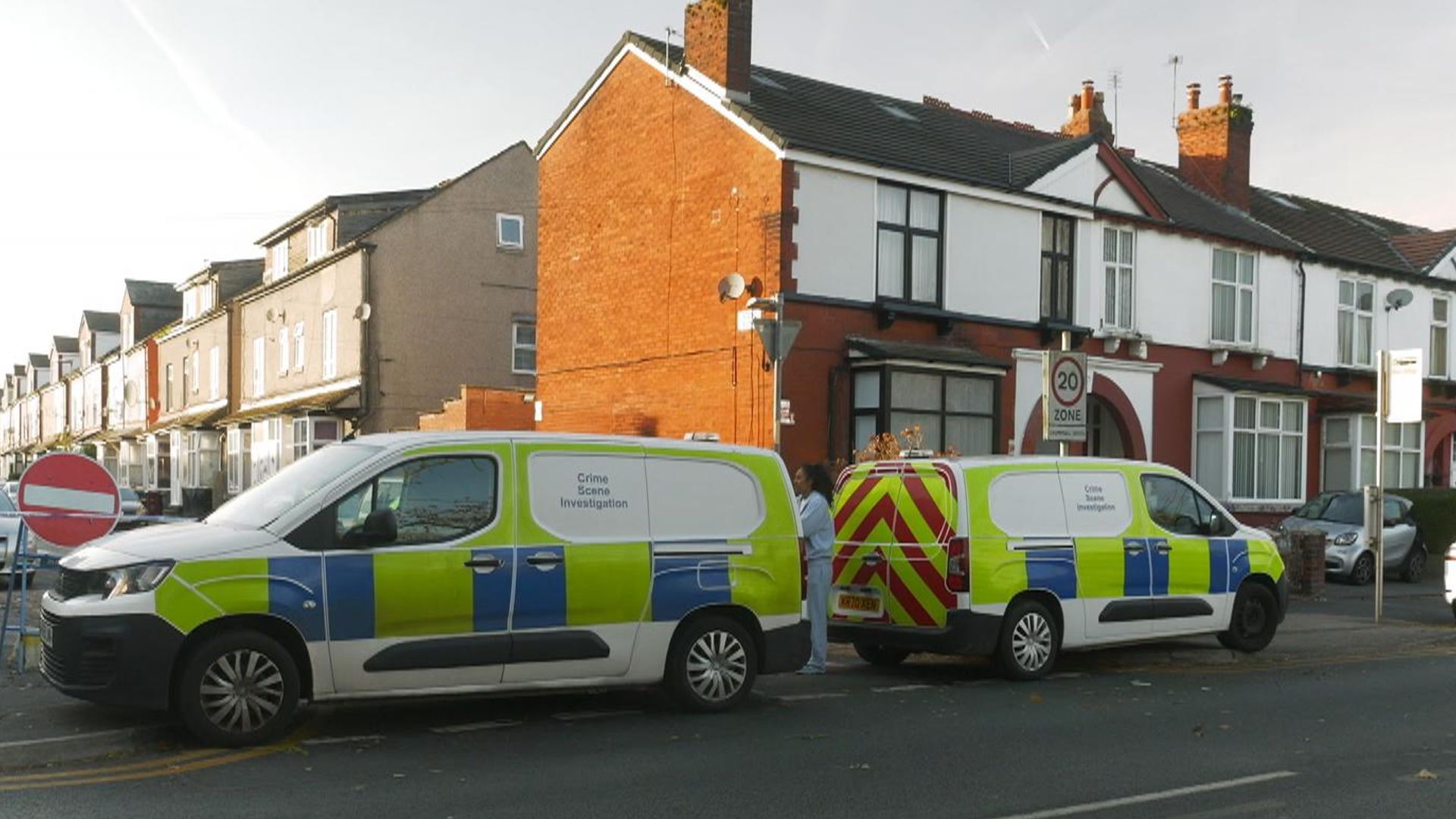
First comes the physical lockdown. Forensic teams erect weatherproof tents over the primary scene not for dramatic effect, but to protect microscopic trace evidence—fibers, footwear impressions, blood spatter geometry, or a dropped mobile phone—from wind, rain, and contamination. Every officer entering that zone wears protective suits and logs their movements to the second so defense barristers cannot later argue that evidence was compromised.
Simultaneously, the digital trawl begins. In almost every targeted street attack involving men in balaclavas, the perpetrators make at least one mistake before or after the moment they pull the fabric over their faces. A balaclava hides a face on the target street, yet cameras half a mile away often capture the same men buying energy drinks at a petrol station, walking past a municipal bus lane, or adjusting their hoods before entering the blind spot. Detectives harvest hundreds of hours of CCTV, Ring doorbell footage, dashcam files, and Automatic Number Plate Recognition hits, mapping the vehicle's route backward from the crime scene until they find where the journey began.
Cell-site analysis adds a second, invisible layer. Even when suspects use burner phones or switch handsets to airplane mode during an attack, mobile masts record the rhythmic handshake of devices moving in tandem along a corridor of streets. If three separate handsets travel from the same estate at 5:40 PM, go silent at 6:10 PM near the scene of the assault, and power back up twenty minutes later along an arterial road heading out of town, investigators have the skeleton of a conspiracy.
The Anatomy of Fear and Silence
Yet technology alone rarely secures a murder conviction. Sooner or later, every major investigation collides with the hardest barrier in policing: human silence.
Why do people who saw something crucial hesitate to come forward? Outsiders often mistake that hesitation for apathy or complicity. Inside the affected neighborhood, the calculus is far more visceral.
When an attack is carried out by masked men in public view, it sends an unmistakable message to everyone watching: We are willing to do this in the open, and we know where you live. If the perpetrators have not yet been arrested, stepping forward as a witness feels less like a civic duty and more like stepping into the crosshairs. Residents worry about retaliation—a brick through a front window at 3:00 AM, a whispered threat outside a school gate, a tire slashed on a driveway.
Detectives understand this terror, which is why modern witness protection protocols and anonymous reporting channels like Crimestoppers exist. Still, bridging the gap between fear and testimony requires trust that cannot be manufactured overnight. It demands community officers walking the beat without sirens, listening to grievances that have nothing to do with the murder, and proving that the state will still be there to protect witnesses long after the press vans have driven away.
There is another, quieter complication too: memory under extreme stress. Neuroscientists studying eyewitness trauma have shown that when a person witnesses sudden, life-threatening violence, the brain narrows its focus onto the immediate source of danger—a phenomenon known as weapon focus. A witness might remember the exact weave of a black balaclava or the glint of a blade under a streetlight with agonizing clarity, yet remain completely unable to recall the height of the man wearing it or the color of his trainers. Good investigators know how to separate reliable recall from the details a traumatized mind invents to fill in the blanks.
The Weight of a Name
Amid the procedural rigor—the forensic grids, the ANPR cameras, the press briefings—it is dangerously easy for the victim to become an abstraction.
In early reports, the person at the center of the tragedy is reduced to an age and a gender: a man in his twenties, a thirty-four-year-old local resident. Even after formal identification releases a name to the public, headlines rarely capture the sheer absurdity of how suddenly a life is severed.
Somewhere in a hospital family room or behind the drawn curtains of a terraced house, relatives are staring at an untouched pair of trainers by the front door, a half-read message on a phone screen, a birthday card propped on a mantelpiece. Murder does not merely end one biography; it fractures the biographies of everyone who loved that person, forcing parents, siblings, and partners to divide their entire existence into before and after.
I once spoke with the mother of a young man killed in a strikingly similar street assault—masked attackers, a quiet residential road, forty seconds of chaos. What haunted her most, she told me, was not the courtroom trial or the verdict, but the ordinariness of their last conversation. He had called from the corner shop to ask if she needed milk. Five minutes later, paramedics were working on him beneath a sodium streetlight two hundred yards from her gate.
That is the truth buried beneath the clipped phrasing of every crime bulletin. Behind every "shocking attack" is someone who walked out of their front door expecting nothing more dramatic than dinner, a lift from a friend, or an evening watching television—and never walked back in.
What Keeps a Street Whole
When violence visits a neighborhood, the immediate reflex is to demand answers: Who were they? Why this victim? How could this happen here?
Some of those answers will emerge slowly over the coming months, tested under fluorescent lights in a crown court where barristers dissect every frame of CCTV and every cell-site ping. Arrests may follow. Charges may be brought. Justice, in its formal, institutional sense, will grind forward at its deliberate pace.
Other questions linger far longer. No verdict can restore the unthinking ease with which neighbors once greeted each other at dusk. Recovery in a traumatized street does not arrive through a press conference; it happens in small, stubborn acts of defiance against fear. It happens when a resident unlocks their front gate the next morning, sweeps the glass from the gutter, and checks on the elderly couple next door. It happens when someone who saw a dark car turning too fast at the end of the road picks up the phone, swallows their fear, and tells detectives what they know.
The men in balaclavas count on anonymity, speed, and the paralysis of ordinary people who assume someone else will speak up.
Outside the police cordon, as dusk settles over the street once more, a porch light clicks on—small, steady, and refusing to go dark.