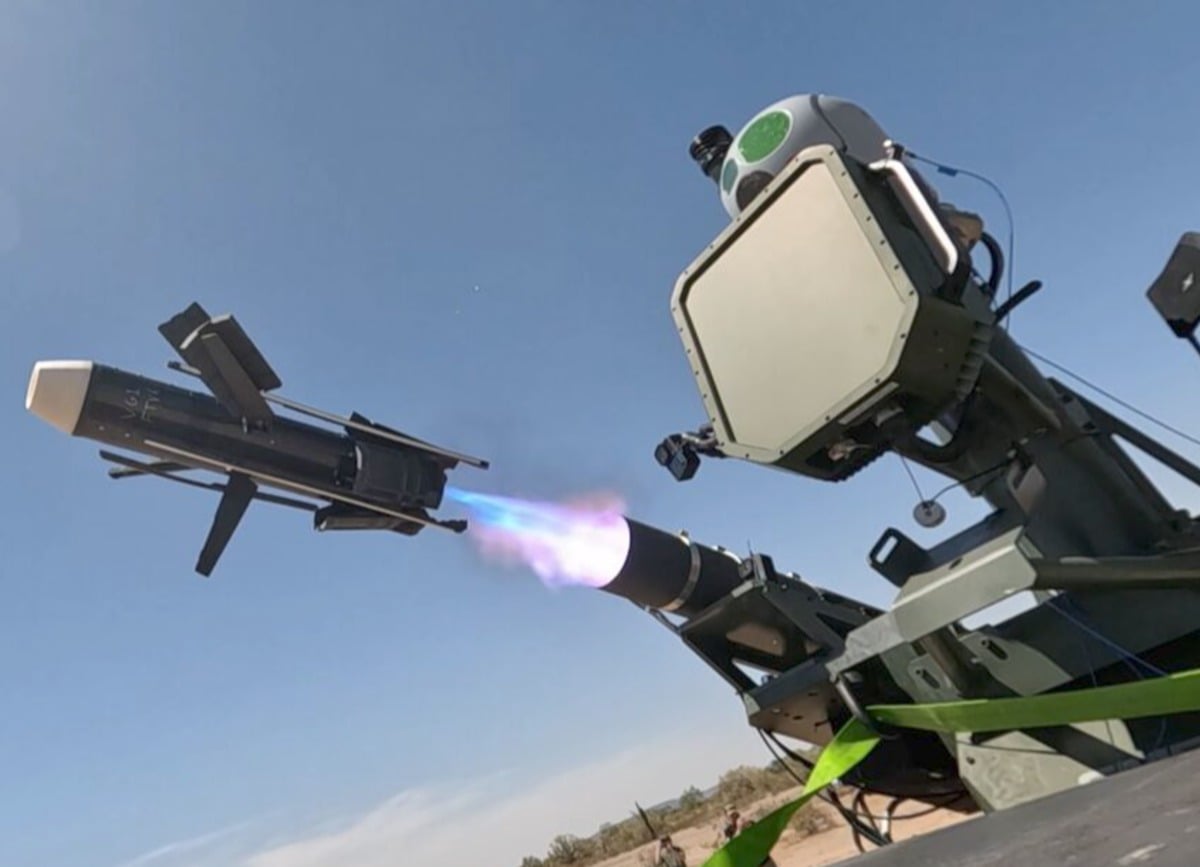
Western defense architecture is facing an economic breaking point. To counter waves of cheap, mass-proliferated drones dominating modern combat, radar manufacturer Echodyne is launching a new manufacturing plant near Seattle, Washington. The facility aims to churn out 30,000 radar units annually. This shift marks a deeper realization within the industrial complex. Defeating a hundred-dollar drone with a million-dollar missile guided by a multi-million-dollar legacy radar is a mathematical path to bankruptcy. Survival requires building thousands of compact, low-cost sensors capable of matching the terrifying volume of attritable aerial threats.
The conflict in Ukraine and recent swarm incursions over sensitive military outposts in Europe have laid bare a stark vulnerability. Traditional air defense systems were built for a different era. They were designed to track a handful of exquisite, high-altitude fighter jets or ballistic missiles. Today, a squad can buy a fleet of off-the-shelf quadcopters, attach commercial explosives, and disrupt multi-billion-dollar infrastructure. The sensor architecture needed to spot these low-altitude, slow-moving targets simply does not exist at scale.
The Asymmetry of Modern Air Defense
For decades, the Pentagon and its allies relied on a centralized defense philosophy. A few massive, highly sensitive radar installations guarded vast swaths of airspace. These systems are marvels of engineering, but they possess a fatal flaw when confronting uncrewed aerial systems. They are too expensive to deploy everywhere.
If an adversary floods an airspace with three hundred cheap reconnaissance drones, a single multi-million-dollar radar panel cannot be split up to cover every gap in the terrain. Trees, buildings, and hills create blind spots. Drones exploit these gaps by flying just above the tree line. To counter this tactic, forces on the ground require a dense grid of short-range sensors. Every combat vehicle, every supply convoy, and every temporary forward operating base needs its own dedicated radar eye.
The defense market calls this requirement low size, weight, and power, or SWaP. For a long time, achieving low SWaP meant sacrificing the tracking quality required to actually shoot down a target. A radar might see something vague in the distance, but it could not tell a sparrow from a kamikaze drone. Operators were left guessing, or worse, wasting precious ammunition on birds.
Breaking the Pricing Monopoly of Legacy Primes
The core issue holding back widespread deployment has always been procurement economics. Traditional defense giants build exceptional hardware. However, those systems routinely cost between $500,000 and $1 million per radar face.
When a battlefield demands hundreds of individual sensor nodes to protect a single division, the math breaks down completely. Governments cannot afford to place a million-dollar sensor on the back of a standard logistics truck.
This is the commercial opening that smaller tech firms are targeting. By utilizing metamaterials rather than standard active electronically scanned arrays, the hardware can be simplified. Instead of using thousands of expensive transmit-receive modules that generate immense heat and require complex cooling loops, a metamaterial array uses a single software-controlled structure to steer the radar beam.
The financial divergence is stark. A compact radar panel like the EchoGuard costs around $40,000. Even the larger, medium-range EchoShield sits in the $160,000 range. These units are small enough to be carried in standard transport cases and deployed by a small team in minutes. This price point changes the defensive equation from an unsustainable luxury to a expendable necessity.
The Physics of Metamaterials on the Production Line
Understanding why this shift is happening requires looking at how these sensors operate. Traditional electronic scanning requires phase shifters and amplifiers for every single antenna element. This makes the manufacturing process incredibly complex, requiring cleanrooms, exotic semiconductor materials, and tight yields.
Metamaterials change the physical mechanism of beam steering. The internal structure uses a dense grid of simple, tunable elements that interact with electromagnetic waves as they pass through. By shifting the voltage across these elements, the radar can alter the direction and shape of the radar beam instantaneously without moving parts.
Traditional AESA:  [Module] [Module] [Module] [Module] -> High Cost, High Heat
MESA Technology:   [Single Source] -> [Tunable Metamaterial Surface] -> Low Cost, Low Heat
This design keeps the power draw low enough to run off standard vehicle batteries. More importantly, it eliminates the primary manufacturing bottlenecks that plague traditional defense prime contractors. The panels can be built using standard surface-mount technology on printed circuit boards, the same process used to manufacture consumer television sets and smartphones.
This brings commercial manufacturing speed to military hardware. The new $40 million facility in Washington state spans over 86,000 square feet, combining assembly and warehouse operations under one roof. The modular layout allows production lines to swing between different radar sizes depending on direct battlefield demand.
High Update Rates over Raw Range
In the counter-drone fight, chasing raw detection range is a trap. A radar that claims it can see an object ten miles away is useless if it only updates the target's position once every few seconds. Small drones change direction rapidly. They dive, accelerate, and use wind currents to mask their approach.
If a defensive gun or laser receives stale positioning data, it will fire at where the drone was, not where it is. Successful interception requires high track quality. The system must deliver continuous, high-fidelity data points at a rapid cadence.
Update Rate Comparison for Target Tracking:
+-------------------+-------------------+----------------------------------+
| Radar Type        | Update Frequency  | Target Tracking Reliability      |
+-------------------+-------------------+----------------------------------+
| Legacy Rotating   | 0.5 Hz - 1 Hz     | Poor (Drones maneuver out of view)|
| Standard Short    | 2 Hz - 4 Hz       | Moderate (Prone to dropped tracks)|
| High-Fidelity MESA| 10 Hz             | High (Continuous fire-control)   |
+-------------------+-------------------+----------------------------------+
Data delivered at 10 Hz ensures that optical tracking cameras can stay locked onto the threat. It allows automated machine-gun turrets or counter-drone interceptor missiles to calculate precise intercept trajectories. When an update drops even momentarily, the engagement sequence resets, and on a modern battlefield, a three-second delay is the difference between survival and destruction.
The Execution Bottleneck in High Volume Defense
Scaling up to 30,000 units a year is an ambitious milestone, but hardware production is only half the battle. The true test lies in integration. A radar sensor does not destroy a drone by itself; it must talk to command-and-control software, cue thermal cameras, and trigger jamming frequencies or kinetic weapons.
The Department of Defense has pushed for the Sensor Open Systems Architecture standard to force different companies to make their products compatible. Historically, defense contractors preferred closed, proprietary ecosystems that locked buyers into their specific ecosystem. Breaking these silos is proving difficult. While new platforms are being delivered to the Air Force and Army with open standards built-in, legacy equipment still requires custom software wrappers to understand modern digital radar feeds.
Supply chains present another hurdle. While building radars on standard circuit board lines avoids specialized semiconductor foundries, it exposes the production rate to global component shortages. The electronic components that alter the voltage across a metamaterial array are also coveted by automotive and consumer electronics manufacturers. If a diplomatic crisis chokes the supply of basic microcontrollers, even the most advanced automated factory floor will grind to a halt.
Monopolies do not yield willingly. The established defense primes are pivoting, acquiring smaller drone-detection startups, and attempting to downscale their own technologies to compete on price. The pentagon’s procurement apparatus is notoriously slow, often favoring entrenched political relationships over rapid commercial scaling. The success of this industrial shift depends entirely on whether military buyers can adapt their funding mechanisms as quickly as tactical threats adapt in the field.