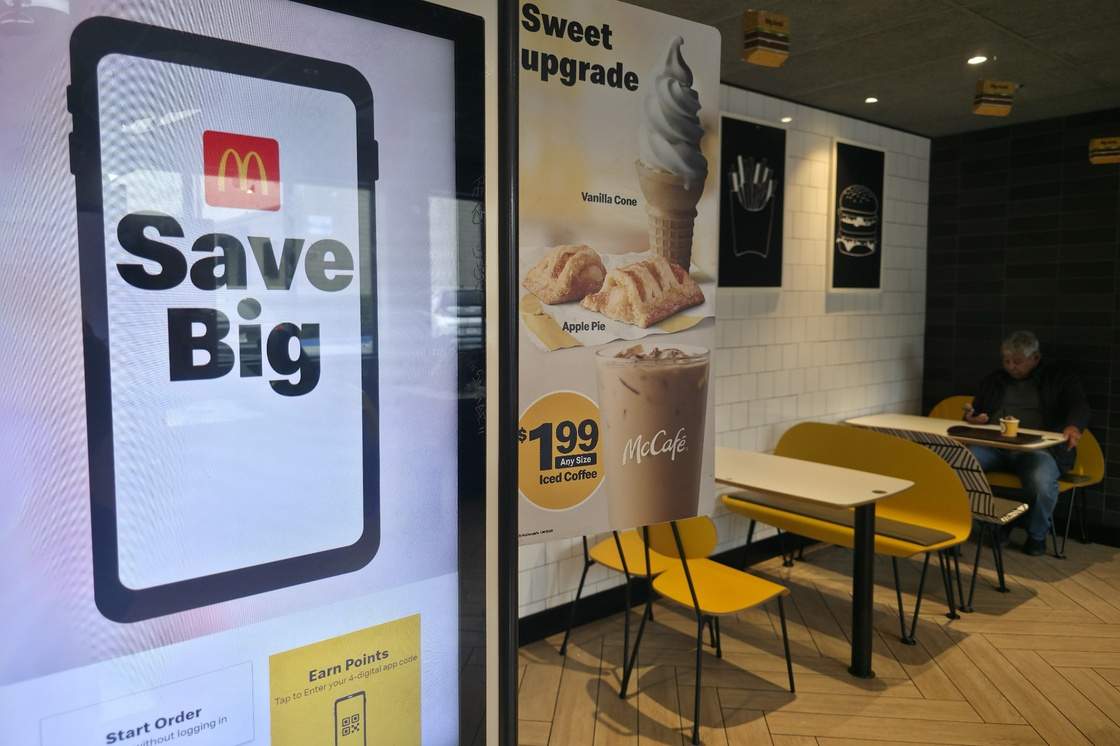
The financial press is having a collective meltdown over the Golden Arches. Every analyst with a spreadsheet and a LinkedIn account is currently publishing identical autopsies claiming that McDonald's is losing its grip because inflation-weary consumers have finally rejected five-dollar breakfast sandwiches and forty-cent cheeseburgers.
The lazy consensus goes something like this: consumer wallets are stretched thin, competitors are undercutting fast food on price, and the temporary return of value bundling was a desperate band-aid on a gushing wound.
It is a neat, tidy narrative. And it is entirely wrong.
I have spent decades watching corporations misdiagnose their own structural decay while blaming macroeconomic weather. I've seen executives light millions of dollars on fire trying to appease fickle short-term sentiment instead of looking at the engine room. McDonald's sales growth is not slowing because consumers suddenly discovered the joy of home-cooked lentils. It is slowing because the corporation has spent a decade automating the soul out of its business model while raising prices to luxury-brand levels, creating an identity crisis that no five-dollar promotional meal can fix.
Let us dismantle the prevailing financial delusion piece by piece.
The Value Meal Fallacy
The entire premise of the mainstream critique relies on a flawed economic equation: Lower price equals higher traffic.
When quarterly reports show cooling foot traffic, the chorus sings for deeper discounts. This is institutional gaslighting. A value menu does not solve a brand equity problem; it accelerates brand erosion. When you train a customer base to view your product strictly through the lens of discount coupons, you are no longer running a restaurant chain. You are operating a distressed asset liquidation sale.
Look closely at what actually happened during the rollout of recent promotional bundles. They generated short-term transaction spikes followed by immediate margin compression. Franchisees screamed bloody murder behind closed doors because the economics of discounting under modern labor and supply chain constraints do not pencil out.
The consumer isn't boycotting McDonald's because the five-dollar meal wasn't cheap enough. They are stepping back because the core value proposition of fast food—speed, predictability, and undeniable economic rationality—has been systematically dismantled.
The True Cost of Digitization
Here is the inconvenient truth that Wall Street analysts refuse to price into their models: the kioskification of fast food has destroyed the primary psychological driver of the drive-thru.
Speed was never just about a fast assembly line in the kitchen. It was about frictionless human interaction and perceived velocity. Today, walking into a modern McDonald's resembles entering a sterile, corporate-mandated airport terminal. You are greeted by towering digital monoliths that demand you swipe your credit card, navigate three layers of upselling screens, and punch in your loyalty code just to buy a medium fry.
Imagine a scenario where a frustrated commuter, exhausted after a ten-hour shift, sits in a drive-thru lane for twenty minutes staring at a dynamic digital menu board that treats them like a targeted programmatic ad network, only to receive lukewarm food packaged in paper that costs more than the contents inside.
That is not convenience. That is friction disguised as innovation.
McDonald's corporate leadership fell in love with digital metrics—monthly active users on the app, data harvesting, digital order penetration—at the expense of sensory reality. They optimized for the balance sheet of the parent company while breaking the unit-level economics of the franchise operator.
Defining the Modern Fast Food Paradox
To understand where this goes next, we need to be precise about terminology.
Fast food, as an institutional category, was built on a specific contract: standardized, hyper-processed calories delivered with absolute velocity at a price point that made cooking at home economically irrational.
Over the past four years, that contract was breached.
When a standard combo meal creeps toward twelve to fifteen dollars in major metropolitan markets, it enters direct competition with fast-casual dining and local independent eateries. At that price point, the consumer's brain shifts categories. They are no longer buying cheap fuel; they are evaluating a culinary experience. And McDonald's, frankly, loses that comparison every single time against competitors who actually season their protein and offer an atmosphere that doesn't feel like a bus station at midnight.
The industry calls this "trade-down." I call it reality catching up to corporate arrogance.
The Flawed Fixes
The proposed solutions floating around corporate boardrooms are laughable. They want to introduce higher-end gourmet burgers to capture the foodie dollar, or conversely, double down on perpetual discounting to lock users into the proprietary mobile app.
Both strategies miss the mark.
Gourmet fast food is an oxymoron. If I want a gourmet burger, I am not going to a drive-thru window operated by a teenager managing three automated fryers. And app-exclusive discounting is just a tax on people who value their privacy and refuse to hand over their email address and location data for a discount on a double cheeseburger.
The institutional heavy hitters in quick-service restaurants—chains that are quietly eating McDonald's lunch—understand something fundamental: consistency and simplicity beat algorithmic complexity every day of the week. Look at regional players who keep their menus tight, their kitchens staffed with competent humans, and their pricing anchored to reality rather than quarterly earnings pressures. They are thriving precisely because they refuse to play the corporate metrics game.
The Uncomfortable Downside of Contrarianism
Let's be entirely transparent here. My perspective has a glaring vulnerability.
If McDonald's were to strip away the digital bloat, halt the endless promotional gimmicks, and return to a hyper-simplified menu with honest, everyday low pricing, short-term earnings would take a brutal hit. Wall Street would punish the stock. Institutional investors who demand predictable double-digit digital engagement growth would riot.
Turning a lumbering global behemoth around requires a willingness to absorb short-term pain for long-term survival. Most modern CEOs lack the spine for that kind of surgery because their compensation packages are tied to three-year stock performance metrics, not thirty-year brand durability.
Stop Asking the Wrong Questions
The financial media keeps asking: How can McDonald's tweak its value menu to restore traffic?
That is the wrong question.
The correct question is: How does a brand that scaled through frictionless speed and absolute economic predictability survive its own transformation into a digital data-brokerage firm charging sit-down prices?
The answer is simple, brutal, and entirely ignored by the consensus: Stop trying to be a tech company. Stop trying to extract margin through algorithmic upselling. Clear the clutter off the menu, fix the drive-thru bottlenecks, and accept that cheap food needs to actually feel cheap again.
Until leadership admits that their own operational bloat is the disease, every value meal they launch is just another pill for a terminal patient.
Burn the app-exclusive strategy. Tear down the digital kiosks. Make the food fast, make it cheap, and get out of the way.