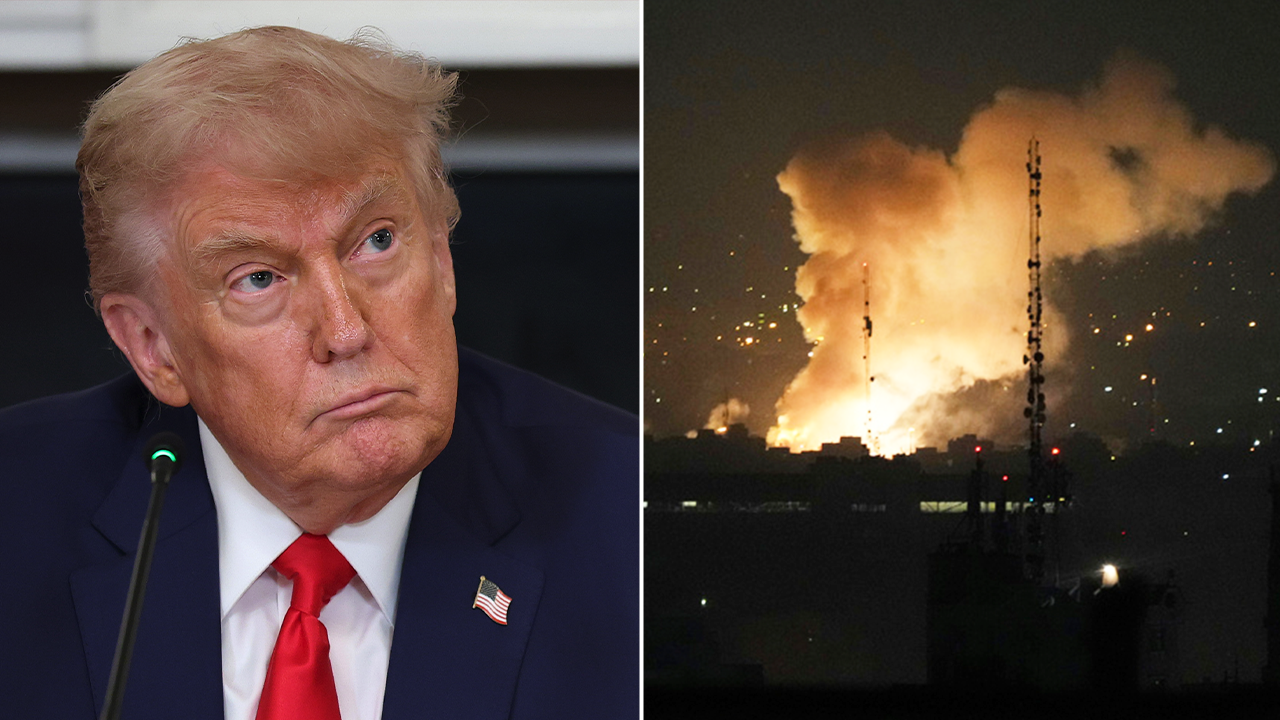
The drums of war aren't just beating; they're echoing through the halls of Washington with a frequency we haven't seen in years. Colonel Douglas McGregor isn't known for pulling punches. When he says things are going to get a lot worse regarding Trump’s continued action against Iran, people usually stop and listen. He isn't just some talking head. He’s a guy who’s been in the room when the maps are rolled out. His warning isn't about minor diplomatic friction. It’s about a fundamental misunderstanding of how power works in the Middle East and why the current path might lead to a regional explosion that nobody—especially the American taxpayer—is ready for.
You've probably heard the standard line. The idea is that "maximum pressure" will eventually force Tehran to the table. It sounds good in a briefing room. In reality, McGregor argues we're backing a cornered cat into a very small space. That's rarely a recipe for a peaceful outcome. Iran isn't a tiny city-state. It’s a nation of 85 million people with a geography that makes it a natural fortress. If you think the conflicts in Iraq or Afghanistan were messy, McGregor’s perspective suggests you haven't seen anything yet.
The Trump Doctrine Meets Iranian Reality
Trump's approach to Iran has always been about leverage. He wants the "better deal." He thinks if he squeezes the economy hard enough, the regime will fold. But McGregor points out a massive flaw in this logic. Honor and sovereignty in that part of the world often outweigh economic survival. When you humiliate a proud nation, they don't just hand over the keys. They dig in.
The recent escalations aren't happening in a vacuum. We’re seeing a shift in how Iran views its own survival. They’ve watched what happens to countries that give up their leverage. They saw it in Libya. They saw it in Iraq. From McGregor’s viewpoint, the Iranians have decided that moving toward a nuclear deterrent isn't a choice anymore—it's a necessity for staying alive. By pushing harder, the U.S. might actually be accelerating the very thing it claims it wants to prevent.
This isn't just about sanctions. It’s about the military posturing in the Persian Gulf. Every time a carrier strike group moves or a drone gets swatted out of the sky, the margin for error shrinks. McGregor’s fear is a "Sinking of the Maine" moment. A mistake. A miscommunication. A low-level commander on either side loses their cool, and suddenly we're in a shooting war that costs trillions and settles nothing.
Why Conventional Military Wisdom Fails Here
Most people think the U.S. can just "delete" Iran’s military capabilities from the air. McGregor thinks that's a dangerous fantasy. Iran has spent decades preparing for an asymmetric war. They don't need a massive navy to shut down the Strait of Hormuz. They just need thousands of cheap, smart mines and swarms of fast boats. If that strait closes, global oil prices don't just go up—they skyrocket. Your gas bill in Ohio or London is directly tied to a tiny stretch of water that Iran can turn into a graveyard for tankers in forty-eight hours.
McGregor often highlights that our ground forces are stretched thin. We've spent twenty years chasing insurgents. We aren't built for a high-intensity conflict against a sophisticated state actor with a real air defense system and ballistic missiles that actually work. The "easy win" narrative is a lie. Iran’s proxies—Hezbollah in Lebanon, militias in Iraq, the Houthis in Yemen—are basically a ring of fire around America's allies. If D.C. hits Tehran, the whole region goes up.
- The Proxy Trap: Iran doesn't have to fight the U.S. directly. They can make life miserable for every American base within 2,000 miles.
- The Economic Blowback: A war with Iran likely triggers a global recession. No amount of domestic drilling replaces the lost flow from the Gulf.
- The Russian and Chinese Factor: Tehran isn't alone anymore. Moscow and Beijing see Iran as a key piece on the chessboard. They won't just sit back and watch their primary energy partner get dismantled.
The Intelligence Gap and Policy Failures
One of McGregor’s sharpest critiques involves the people whispering in the President’s ear. He’s been vocal about the "neoconservative" influence that seems to crave conflict. These are the same voices that promised Iraq would be a "cakewalk." They’re back, and they’re using the same playbook. They frame every Iranian move as an unprovoked act of aggression while ignoring the fact that we have them surrounded by dozens of military installations.
Imagine if Iran had bases in Mexico and Canada and kept sailing warships through the Gulf of Mexico. We'd lose our minds. McGregor is asking for a bit of realism. We don't have to like the regime in Tehran to understand their security concerns. If we don't acknowledge those concerns, we can't negotiate. And if we can't negotiate, we’re left with only one tool: the hammer. When everything looks like a nail, you eventually break the house down.
The "worse" part McGregor mentions refers to the vacuum that follows. If the Iranian state collapses, who takes over? History says it won't be a pro-Western democracy. It'll be chaos. It’ll be a breeding ground for groups that make ISIS look like amateurs. We’re talking about a massive refugee crisis hitting Europe and a power vacuum that Russia and China will be more than happy to fill.
Steps Toward Avoiding the Abyss
If you're looking for a way out of this mess, it starts with a reality check. McGregor isn't saying we should be best friends with Iran. He’s saying we need to be smart. Being smart means realizing that 19th-century colonial-style bullying doesn't work in the 21st century.
First, the U.S. needs to define what a "win" actually looks like. Is it regime change? If so, we better be ready to occupy a country three times the size of Iraq for thirty years. Is it a better nuclear deal? Then we have to give them something they actually want—like real, permanent sanction relief and security guarantees. You can't ask for everything and offer nothing.
Second, we have to talk. Directly. No more using the Swiss as messengers. No more "preconditions" that are designed to be rejected. Real diplomacy is messy and involves talking to people you despise. If we don't start those conversations now, the momentum toward kinetic conflict becomes unstoppable.
The immediate move for anyone watching this is to demand transparency. Ask why we're still prioritizing a conflict that doesn't serve the average American’s interests. Look at the maps. Look at the shipping lanes. Realize that a war with Iran isn't a "surgical strike." It’s a generational catastrophe. Stop falling for the sanitized version of war sold on cable news. The reality is much bloodier and a lot more expensive. Pay attention to the movements in the Gulf over the next six months. If the rhetoric doesn't cool down, McGregor’s prediction of things getting a lot worse will be the understatement of the decade.