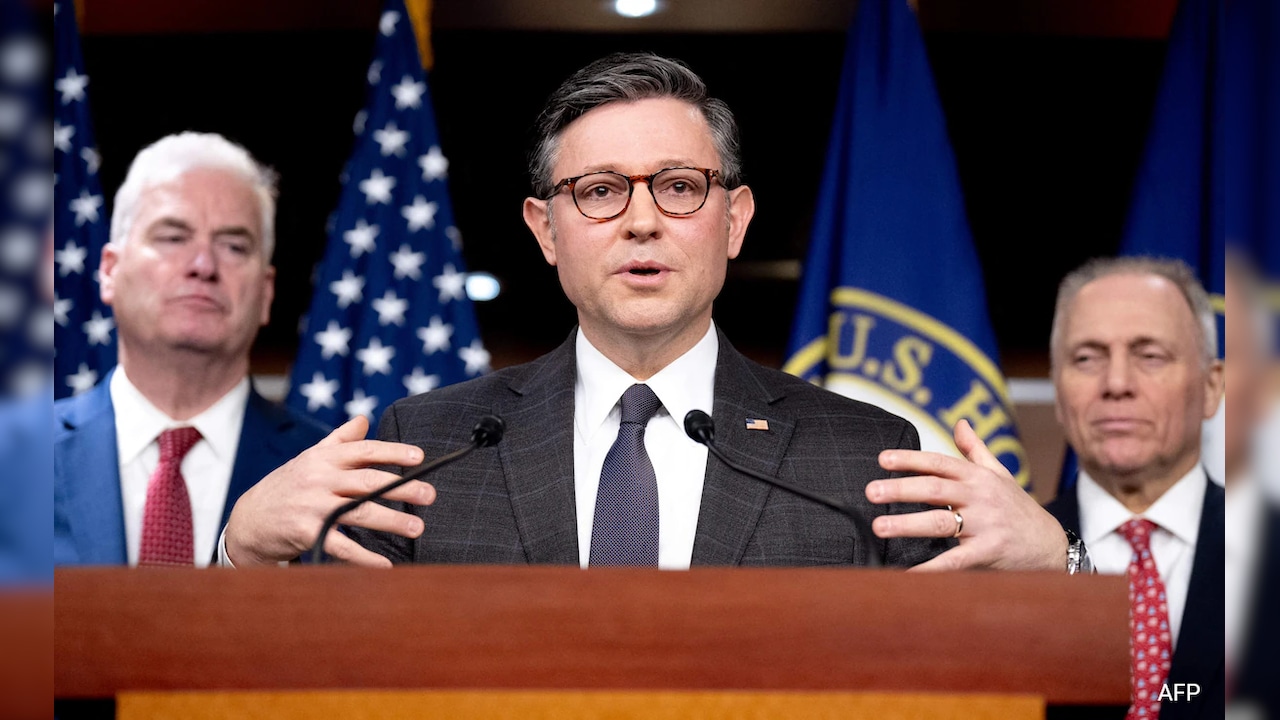
The resignation of a United States House Speaker following a midterm election loss is rarely an act of personal contrition; it is the terminal output of a broken coalition-maintenance equation. When a sitting majority party suffers an electoral rout, the internal mathematics governing the House of Representatives shift instantaneously from offensive legislative production to defensive survival. Standard political commentary frames a Speaker’s departure as a reaction to bad polling or partisan anger, missing the structural reality of institutional power. A Speaker holds office only as long as the cost of keeping them in power remains lower for individual caucus members than the political cost of forcing a leadership vacuum. Once an electoral defeat breaches a specific seat-loss threshold, the Speaker transitions from a fundraising and agenda-setting asset into an acute liability, triggering an inevitable exit.
The Coalition-Maintenance Equation
To understand why a Speaker steps down rather than fighting to retain the gavel—or transitioning smoothly into the role of House Minority Leader—one must examine the institutional mechanics of the House. Unlike the Senate, where individual members retain substantial procedural autonomy, the House is majoritarian by design. The Speaker controls the Rules Committee, committee assignments, and floor scheduling. This centralized power relies on an implicit contract with the caucus: the leadership absorbs national political heat and raises campaign capital in exchange for protecting incumbents and expanding the majority.
Midterm elections operate as a structural referendum on the sitting executive branch, historically producing seat losses for the president's party. However, when the Speaker belongs to the party suffering a rout—whether defending a fragile majority that flips to the minority or watching an existing minority fail to recapture the chamber—the foundational contract breaks down.
The breakdown occurs across three operational variables:
- The Patronage Deficit: A Speaker’s primary currency is committee chairmanships and subcommittee gavels. Losing the majority strips the leadership of every chairmanship in the chamber simultaneously. Without the ability to distribute institutional power, the Speaker loses the primary mechanism used to discipline ideological outliers and reward loyalists.
- The Fundraising Inversion: Donors allocate capital based on return on investment, which in legislative politics translates to access to the legislative agenda. A leader presiding over a shrinking caucus faces an immediate contraction in PAC contributions and high-dollar bundled donations. Members who previously tolerated top-down discipline because the leadership funded their campaigns suddenly find the financial pipeline dry.
- The Ideological Scapegoat Mechanism: Electoral defeats create an immediate split between the caucus's moderate wing (representatives in swing districts) and its ideological base (representatives in safe, partisan districts). Moderates argue the party lost because leadership alienated independent voters; hardliners argue the party lost because leadership compromised core principles. Both factions converge on a single actionable solution: decapitating the existing leadership structure to signal a strategic reset to their respective constituencies.
Historical Precedents and Institutional Thresholds
Because the prompt references an undefined competitor URL without specific naming or date parameters, analyzing the exact mechanics requires examining the established historical patterns of Republican House leadership exits following electoral setbacks. In modern congressional history, Republican Speakers and top leaders operate under tighter ideological constraints and higher internal revolt frequencies than their Democratic counterparts, largely due to the asymmetric nature of their electoral coalitions.
Consider the structural parallels across recent Republican leadership transitions:
- The 1998 Newt Gingrich Exit: Following the 1998 midterms, Republicans retained control of the House, yet lost five seats in a cycle where historical models predicted substantial gains against a second-term Democratic president. Even without losing the majority, the failure to meet expected seat-gain thresholds destroyed Gingrich’s internal viability. Facing an immediate challenge from Appropriations Chairman Bob Livingston and widespread defections among rank-and-file members, Gingrich resigned within days of the election. The mechanism was clear: underperformance relative to baseline expectations is functionally identical to a loss in a high-stakes leadership market.
- The 2006 Dennis Hastert Transition: When Democrats swept the 2006 midterms, capturing 31 Republican seats and ending twelve years of GOP rule, Speaker Dennis Hastert declined to seek the Minority Leader post. Transitioning from Speaker to Minority Leader is exceptionally rare in modern politics because the skill sets and power dynamics are inverted. A Speaker manages a governing coalition; a Minority Leader manages an insurgency. Once the gavel is lost, the incumbent Speaker carries the psychological and political baggage of the defeat into a role that requires unified, aggressive opposition.
- The 2018 Paul Ryan Retirement: While Paul Ryan announced his retirement prior to the November 2018 midterms—in which Republicans lost 41 seats—his departure followed the exact same predictive modeling. Internal polling and generic ballot metrics indicated an oncoming wave election. Stepping down prior to the rout allowed Ryan to exit without a formal floor defeat, passing the minority-rebuilding phase to Kevin McCarthy.
In each scenario, the departure was not dictated by formal party rules, which allow a defeated Speaker to run for Minority Leader. Instead, it was dictated by vote-counting reality. Under House Republican Conference rules, leadership elections are conducted via secret ballot. A leader who lacks a locked-in majority in a secret-ballot conference vote cannot risk the public humiliation of losing an internal election, making preemptive resignation the only rational career-preserving move.
The Structural Vulnerability of Modern Republican Leadership
A rigorous analysis of a Republican House Speaker stepping down must account for the specific organizational friction within the House GOP conference. Over the past three decades, the ideological center of gravity within the Republican Party has shifted rightward while the procedural tools available to the Speaker have weakened.
The abolition of earmarks in 2011 removed a critical transactional tool that previous Speakers used to secure votes on difficult legislation. Without localized spending projects to trade for floor votes, Speakers became entirely reliant on ideological persuasion and partisan loyalty. When a midterm rout occurs, partisan loyalty fractures along geographic lines.
Members representing districts won by single-digit margins require legislative moderation to survive the next two-year cycle. Conversely, members representing districts with +20 partisan leans face zero general-election threat; their only existential risk is a primary challenge from the right. A Speaker attempting to hold these two factions together after an electoral loss faces an unsolvable optimization problem: any policy concession granted to save swing-district incumbents triggers an immediate revolt from safe-district hardliners, while any concession to hardliners guarantees further seat losses in the next general election.
Phase-by-Phase Anatomy of the Post-Election Collapse
When a midterm rout occurs, the timeline from election night to the Speaker’s resignation announcement follows a predictable sequence of operational failures.
Phase 1: The Narrative Vacuum (Hours 0 to 48)
As returns confirm a worse-than-projected seat loss, the Speaker’s communications apparatus loses control of the media narrative. Cable news networks and political analysts immediately broadcast interviews with anonymous—and subsequently on-the-record—caucus members questioning leadership strategy. During this window, the Speaker attempts to project stability by emphasizing remaining legislative priorities for the lame-duck session. This messaging routinely fails because rank-and-file members are focused entirely on the incoming Congress.
Phase 2: The Whip Count Erosion (Days 3 to 7)
Behind closed doors, potential successors begin soft-whipping the conference. Aspirants for the top spot—typically the sitting Majority Leader, the Majority Whip, or the head of a major ideological caucus—gauge support without formally declaring a candidacy. They test a simple hypothesis: if the current Speaker runs for Minority Leader, will they have the votes? Once the incumbent Speaker’s internal whip team realizes that the secret-ballot margin has dipped below 50 percent plus one, the mathematical reality of defeat sets in.
Phase 3: The Donor Freeze (Days 5 to 10)
Major institutional donors and leadership PACs pause disbursements. Financial backers recognize that investing in a wounded leader yields zero legislative leverage in the upcoming session. Simultaneously, surviving committee ranking members begin hoarding their own campaign funds rather than transferring dues to the national party committee, starving the Speaker of institutional capital.
Phase 4: The Controlled Detonation (Days 7 to 14)
To avoid a fractured, multi-ballot floor fight that damages the party brand further, senior party elders and major donors intervene privately. They present the Speaker with the hard whip numbers and negotiate an orderly exit. The Speaker announces they will not seek a leadership role in the new Congress, framing the decision as an effort to allow a "new generation of leadership" to emerge. This phrasing is standard operational cover for an internal vote collapse.
Consequences for the Lame-Duck Session and Minority Rebuilding
The immediate operational consequence of a Speaker stepping down after a midterm rout is the paralysis of the lame-duck session. Between November and January, the outgoing Congress must still pass critical baseline legislation, typically including government funding bills (continuing resolutions or omnibus packages) and the National Defense Authorization Act.
A lame-duck Speaker possesses virtually zero coercive leverage over their own caucus. Members who have just survived a brutal election have no incentive to take tough votes to bail out a departing leader. Consequently, legislative power shifts dramatically toward the Senate and the White House. To avoid a government shutdown before exiting office, the outgoing Speaker is frequently forced to rely on opposition party votes to pass basic funding measures, further alienating their base during their final weeks in the chair.
Looking past the lame-duck period, the vacuum created by the departure sets off a fierce battle over the strategic direction of the minority party. The incoming Minority Leader inherits a depleted roster, reduced committee ratios, and an energized opposition majority. Their immediate task is not passing bills, as the minority party in the House has almost no unilateral ability to bring legislation to the floor—save for the rarely successful discharge petition. Instead, the new leader’s mandate is strictly procedural obstruction, oversight investigations, and candidate recruitment for the next cycle.
Strategic Limitations of Leadership Decapitation
While forcing out a Speaker satisfies the immediate psychological need for accountability after an electoral loss, political science data demonstrates severe limitations to this strategy. Replacing the top leader treats a symptom of electoral misalignment rather than the underlying structural cause.
- The Structural Map Remains Unchanged: Changing the individual holding the gavel does not alter congressional district boundaries, demographic shifts, or national macroeconomic indicators. If a party lost seats due to unfavorable redistricting or an unpopular presidential administration, a new leader faces the exact same electoral headwinds.
- Loss of Institutional Memory: Ejecting an experienced Speaker removes deep procedural knowledge and established relationships with Senate counterparts. During high-stakes budget negotiations or debt-ceiling standoffs, an inexperienced leadership team is prone to tactical miscalculations that can hand strategic victories to the opposing party.
- Escalation of Internal Factionalism: When a caucus successfully topples its leader, it validates rebellion as a viable political tactic. The incoming leader immediately inherits a precedent where any faction of 15 to 20 members can threaten a leadership crisis to extract concessions, creating chronic instability that persists even if the party eventually recaptures the majority.
The Definitive Play for Surviving Caucus Leadership
For any incoming leadership team stepping into the void left by a departing Speaker, survival requires immediately discarding the consensus-based management style of the previous administration. The new leader must execute a ruthless prioritization of electoral math over ideological purity.
First, the incoming leader must restructure the party's campaign arm to ring-fence financial resources exclusively for the 20 to 30 true swing districts that determine chamber control, starving safe-seat incumbents of party infrastructure funds regardless of their media profile. Second, leadership must enforce strict message discipline centered entirely on economic friction points impacting independent voters, utilizing committee oversight powers solely to expose executive branch vulnerabilities rather than indulging fringe ideological grievances. Without immediate centralization of campaign capital and ruthless control over committee agendas, the new leadership team will simply replicate the exact coalition collapse that destroyed their predecessor.