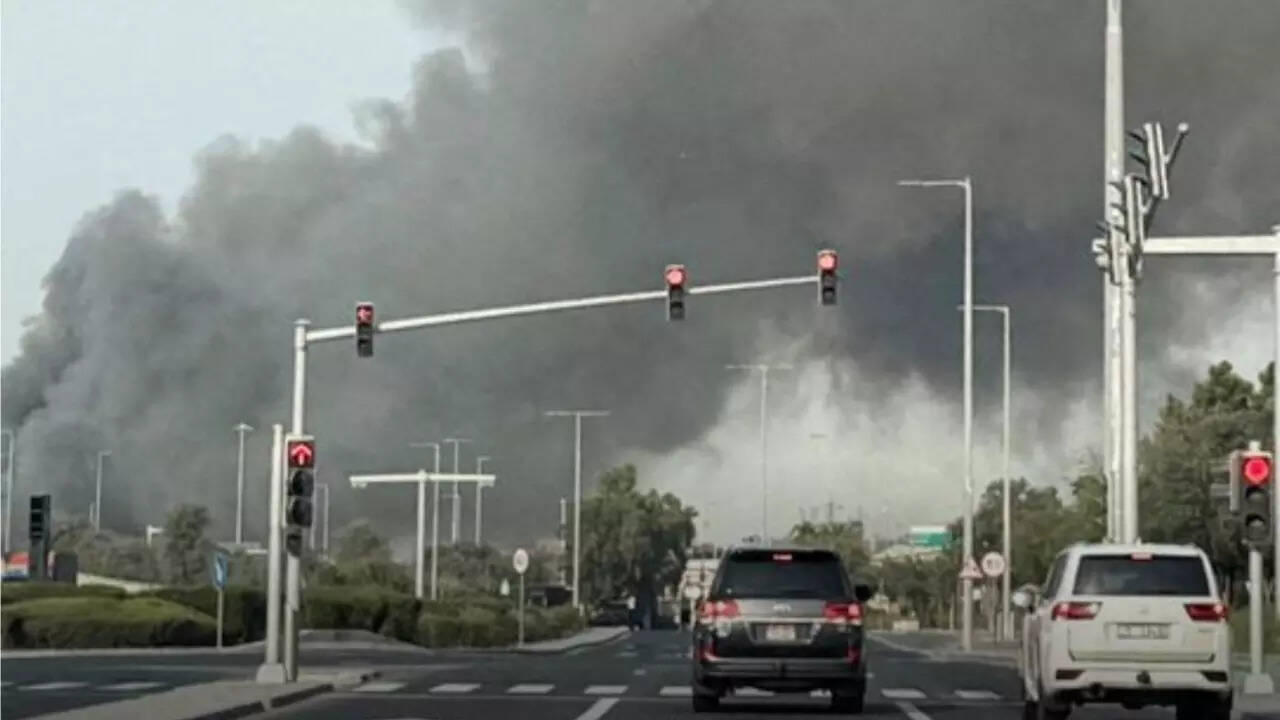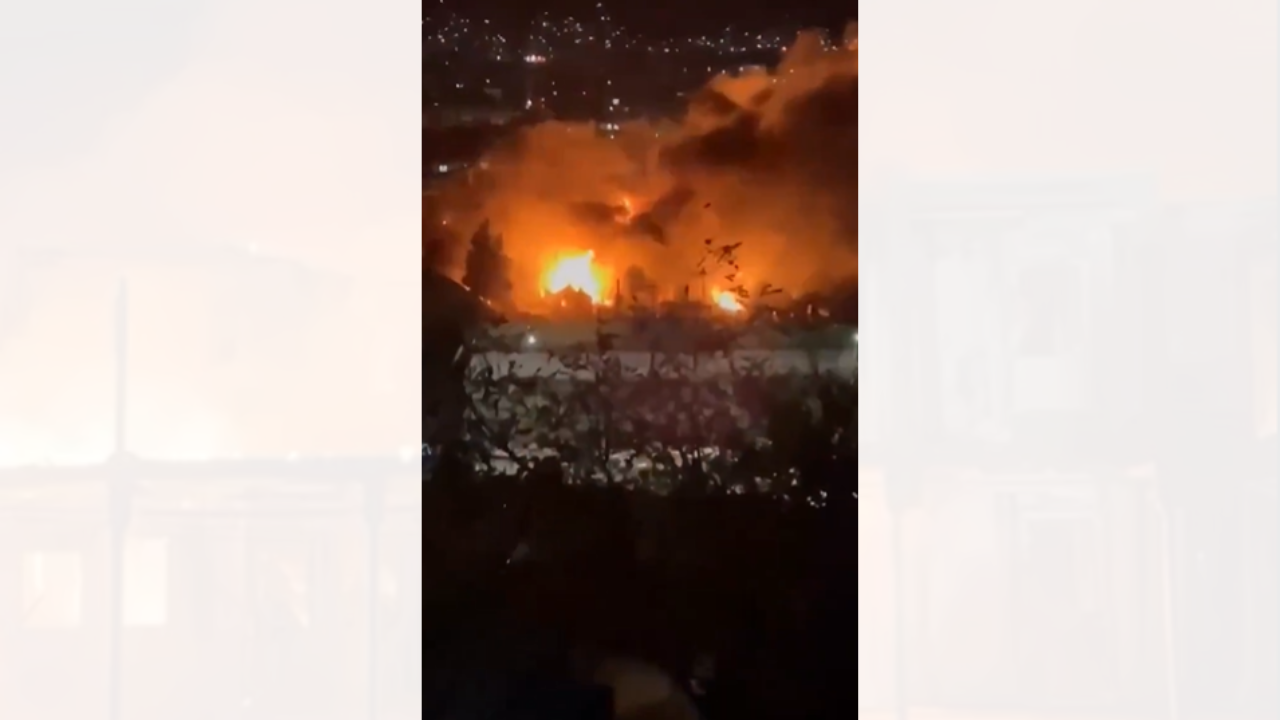
The recent exchange of kinetic force between Pakistan and Afghanistan represents a collapse of the traditional "strategic depth" doctrine, replaced by a volatile cycle of retaliatory deterrence. When the Pakistani Air Force (PAF) executed strikes within the Khost and Paktika provinces, it signaled an operational shift from intelligence-led counter-terrorism to open state-on-state friction. This escalation is not a random outburst of hostility but the functional output of three specific structural failures: the breakdown of the Doha Agreement’s counter-terrorism guarantees, the internal ideological fragmentation of the Taliban, and Pakistan’s urgent need to reset its internal security threshold.
The Tripartite Framework of Conflict Drivers
The instability of the Durand Line is governed by three distinct variables that dictate when and where violence manifests. Understanding these drivers is essential to moving beyond the "terrorism vs. sovereignty" narrative.
- The Safe Haven Asymmetry: Pakistan’s primary grievance is the presence of the Tehrik-i-Taliban Pakistan (TTP) on Afghan soil. From a strategic perspective, the TTP utilizes the Afghan borderlands as a "strategic rear," allowing them to regroup, recruit, and launch sorties into Pakistan’s Khyber Pakhtunkhwa province with minimal risk of a ground pursuit.
- The Sovereignty-Identity Paradox: For the Taliban government in Kabul, the Durand Line is an unrecognized colonial relic. Any Pakistani military incursion is viewed not as a counter-terrorism operation, but as a direct challenge to the Taliban’s primary political currency: their role as the "liberators" and defenders of Afghan soil.
- Domestic Political Leverage: Both administrations face internal pressures. The Pakistani military establishment must project strength amid rising domestic economic instability and a surge in high-profile attacks on its personnel. Simultaneously, the Taliban must manage internal factions; being seen as "soft" on Pakistan would alienate the more radical elements of their rank-and-file who share ideological DNA with the TTP.
The Cost Function of Kinetic Retaliation
When a state chooses to utilize airpower against non-state actors housed within a neighbor’s borders, it performs a specific cost-benefit calculation. Pakistan’s strike on March 18, 2024, followed a devastating attack on a military post in North Waziristan. The logic of the strike was to increase the "hosting cost" for the Afghan Taliban.
The Pakistani military operates under the assumption that if the Afghan Taliban suffer enough diplomatic, economic, or physical damage due to the TTP’s presence, they will eventually move to restrain the group. However, this logic suffers from a critical flaw in understanding the Taliban's internal power structure. The Taliban is not a monolithic entity. While the "Kandahar faction" (the Supreme Leader’s inner circle) may prioritize state stability, the "Kabul faction" and border commanders often prioritize ideological solidarity with fellow militants.
Quantifying the Security Deficit
The surge in violence is measurable and follows a predictable trajectory of escalation. Between 2022 and 2024, Pakistan experienced a nearly 70% increase in militant-linked fatalities. The mechanism of this increase is the "technological upgrade" of the TTP. Following the US withdrawal from Afghanistan, a significant amount of high-grade military hardware—including night-vision goggles, thermal optics, and M16 rifles—leaked into the black market and into the hands of TTP fighters.
This technological parity has eroded the traditional tactical advantage held by Pakistani frontier forces. In response, Pakistan has moved up the escalation ladder, moving from:
- Tier 1: Diplomatic protest and border closures (economic pressure).
- Tier 2: Intelligence-based operations within its own borders.
- Tier 3: Long-range artillery shelling across the border.
- Tier 4: Targeted airstrikes using manned aircraft or drones (the current state).
The Strategic Bottleneck of Border Management
The Durand Line is 2,640 kilometers of rugged, porous terrain. Despite Pakistan’s multi-billion dollar effort to fence the border, the "Permeability Factor" remains high. Fences are physical barriers, but they are not functional barriers against ideological movement or sophisticated guerrilla tactics.
The bottleneck here is the lack of a "Biometric and Economic Integration" strategy. Currently, the border is managed through a series of "ad-hoc" openings and closures that punish local traders more than they deter militants. This creates a secondary security risk: a disenfranchised border population that becomes a fertile recruiting ground for anti-state elements.
The Potential for Full-Scale Attrition
While full-scale war between Pakistan and Afghanistan remains unlikely due to the catastrophic economic consequences for both, we are entering a phase of "permanent low-intensity conflict." This state is characterized by:
- Weaponized Trade: Pakistan utilizes the transit-trade agreements as a lever, frequently blocking Afghan goods at the Torkham and Chaman borders. Afghanistan, being landlocked, faces immediate inflationary pressure.
- The Refugee Variable: The forced repatriation of Afghan nationals from Pakistan serves as a demographic pressure point, designed to strain the Taliban’s already fragile social services.
- Proxy Diversification: As the relationship sours, there is an increased risk that both sides will seek out or tolerate other regional proxies to exert leverage over the other, potentially drawing in regional players like India or Iran.
Structural Obstacles to Resolution
The primary obstacle to de-escalation is the "Recognition-Legitimacy Gap." The Afghan Taliban desire international recognition and the unfreezing of assets. Pakistan was once their strongest advocate on the world stage. Now, Pakistan has become one of their loudest critics, signaling to the international community that the Taliban have failed the basic test of a "responsible state": preventing their territory from being used for international terrorism.
The second obstacle is the "Internal Displacement of Authority." In Kabul, the ministers may agree to security protocols, but in the border provinces like Khost and Kunar, local commanders often ignore center-led directives. Without a unified chain of command in Afghanistan, diplomatic agreements with Pakistan are essentially non-binding at the tactical level.
Strategic Trajectory and Operational Forecast
The current trajectory points toward a "Buffer Zone" strategy. If the Afghan Taliban do not or cannot push the TTP away from the border, Pakistan will likely establish a de-facto "no-go" area through consistent drone surveillance and preemptive strikes. This will effectively move the frontline from the Pakistani interior to the Afghan borderlands.
The strategic play for Pakistan is to pivot from a purely kinetic response to a "Multimodal Containment" model. This requires:
- Economic Decoupling: Reducing the reliance of border regions on informal trade that funds militant networks.
- Internationalization of the Border Dispute: Formally bringing the TTP issue to the UN Security Council to pressure the Taliban through global sanctions rather than just bilateral strikes.
- Hard-Site Fortification: Shifting from a linear fence to a "Deep-Defense" network of sensors and rapid-reaction nodes that do not rely on Afghan cooperation.
The Taliban’s counter-move will likely involve deepening ties with other regional powers to offset Pakistani influence, though their lack of naval access and industrial base makes this a long-term and high-risk gambit. The immediate outlook is a period of "Violent Equilibrium," where strikes are regular, rhetoric is high, but the fundamental border architecture remains unchanged.
Would you like me to analyze the specific economic impact of the Torkham border closures on Afghan transit trade over the last 12 months?