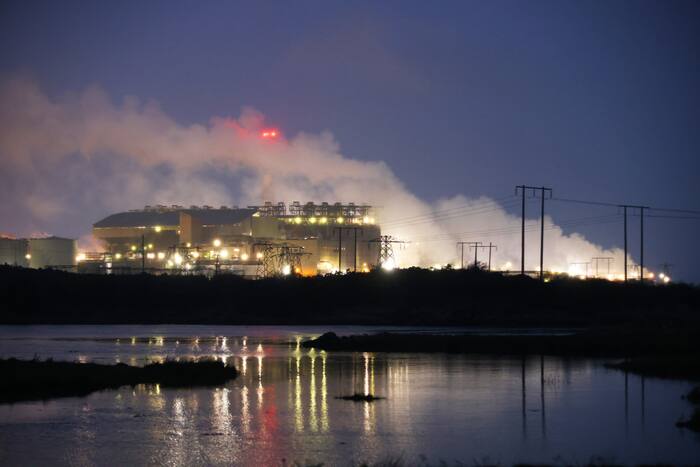
Western sanctions regimes routinely fail at the exact point where commercial metallurgy meets defense manufacturing. While European Union policymakers have aggressively targeted finished Russian weapons systems, microelectronics, and luxury goods, the upstream raw materials feeding the Russian military-industrial complex continue to move through legal corporate channels. The most glaring example of this structural vulnerability sits on the Shannon Estuary in County Limerick, Ireland. The Aughinish Alumina refinery—the largest facility of its kind in Europe—continues to operate as a critical node in the global supply chain of Rusal, the Russian aluminum giant, despite ongoing geopolitical pressure to sever the link. Understanding why Dublin and Brussels have not simply shut down this trade requires analyzing the intersection of industrial chemical engineering, corporate ownership structures, and the economic deterrence of mutual supply chain destruction.
The Metallurgical Conversion Chain
To evaluate the strategic weight of the Irish alumina trade, one must separate commercial rhetoric from chemical reality. Alumina (aluminum oxide, $Al_2O_3$) is not a finished metal; it is the intermediate refined powder extracted from raw bauxite ore via the Bayer process. Without alumina, primary aluminum smelting cannot occur.
The conversion ratio in industrial metallurgy is rigid: roughly two metric tons of alumina are required to produce one metric ton of primary aluminum through the Hall-Héroult electrolytic smelting process. This fixed stoichiometric dependency creates an inelastic chokepoint. Russia possesses vast hydroelectric power resources in Siberia—specifically in Krasnoyarsk, Bratsk, and Sayanogorsk—which provide the cheap, continuous electricity needed for aluminum smelting. What Russia lacks is sufficient domestic high-grade bauxite and alumina refining capacity to feed those smelters at full utilization.
Prior to the 2022 invasion of Ukraine, Russia relied on imports for approximately 60% of its alumina requirements. The disruption of shipments from the Mykolaiv refinery in Ukraine and the Australian export ban on alumina to Russia created an immediate upstream deficit for Rusal. In this constrained environment, the output of Aughinish Alumina became an irreplaceable asset. Once alumina enters a Russian smelter and is reduced into primary aluminum ingots, billets, or alloys, its origin is chemically erased. That metal is then allocated across domestic fabrication plants producing aerospace-grade alloys, armored vehicle hulls, missile casings, naval vessels, and artillery components.
The Tripartite Bottleneck of Sanctions Enforcement
Critics of the Irish government often frame the continued operation of Aughinish Alumina as a failure of political will. In practice, policymakers face a three-part structural trap where unilateral action triggers immediate industrial and economic blowback across the European Union.
1. The Legal Firewall of Non-Designated Entities
Sanctions law operates on strict legal designations, not guilt by association. While Rusal’s founder, Oleg Deripaska, has faced targeted sanctions from the United States, the United Kingdom, and the European Union, Rusal itself—and its parent company, EN+ Group—were structured out of direct designation following a 2019 agreement with the U.S. Treasury Department's Office of Foreign Assets Control (OFAC). Under that settlement, Deripaska reduced his direct shareholding and ceded board control.
Because Rusal is not a sanctioned entity under EU law, and because alumina was deliberately omitted from early EU import and export ban packages, Aughinish Alumina operates entirely within existing legal frameworks. For the Irish state to seize the facility or block its shipments without an EU-wide statutory mandate would invite immediate, multi-billion-euro litigation under international investment treaties and European property law.
2. European Industrial Downstream Dependency
The second constraint is the reverse dependency of European manufacturing on Russian aluminum. Aughinish Alumina does not exclusively supply Russian smelters; it supplies approximately 30% of Europe’s total alumina demand. Shutting down the Limerick refinery—or cutting off its parent company's liquidity—would immediately starve European smelters in France, Germany, and Scandinavia of raw feedstock.
If European aluminum output drops, European automotive, aerospace, and packaging manufacturers must source replacement metal on the global spot market. That replacement supply inevitably leads back to Rusal, which accounts for roughly 6% of global primary aluminum production and holds an even higher share of low-carbon aluminum produced via hydropower. Sanctioning the upstream alumina flow without securing alternative bauxite-to-alumina refining capacity in the Atlantic basin would force European manufacturers to pay higher premiums for the exact same Russian metal routed through third-party traders in Asia or the Middle East.
3. Local Environmental and Economic Contagion
At the national level, the Irish government confronts an acute localized risk profile. Aughinish Alumina employs roughly 450 to 500 direct workers and supports hundreds of regional contractors in the Mid-West of Ireland. More critically, the facility manages a massive bauxite residue disposal area—commonly referred to as a "red mud" pond—covering hundreds of acres along the Shannon Estuary.
Bauxite residue is caustic and requires continuous, specialized environmental engineering to manage alkaline runoff and dust containment. An abrupt corporate default or disordered shutdown of the refinery would transfer immediate environmental remediation liabilities—estimated in the hundreds of millions of euros—directly onto the Irish taxpayer. Governments rarely trigger ecological and fiscal liabilities inside their own borders unless forced by an overarching supranational directive.
The Dual-Use Dilemma in Commodities
The controversy surrounding Irish alumina exposes a fundamental flaw in how Western bureaucracies classify dual-use goods. Export control regimes are historically designed around discrete, engineered components: semiconductors, machine tools, ball bearings, and optical sensors. These items carry clear technical specifications that allow customs authorities to distinguish between civilian and military applications.
Bulk commodities defy this classification model. High-purity aluminum alloy 7075 or 2024 used in the structural airframe of a commercial passenger jet is metallurgically identical to the alloy used in military transport aircraft or tactical missile bodies. When a state exports a precursor oxide like alumina, it loses all downstream visibility once the material crosses the border into a vertically integrated foreign conglomerate.
The causal chain operates through fungibility:
- Feedstock Substitution: Even if Aughinish Alumina exports are contractually earmarked for civilian smelters or third-party European customers, supplying Rusal's global network frees up equivalent volumes of alumina from non-Western sources (such as Guinea, Kazakhstan, or China) to be diverted directly to Russian defense-linked smelters.
- Revenue Liquidity: Profit margins generated from European alumina sales subsidize Rusal's capital expenditure and operational stability within the Russian Federation, indirectly supporting the Russian corporate tax base that funds defense procurement.
- Smelter Continuity: Aluminum smelters cannot be turned off like a standard factory assembly line. If electrolytic cells cool down and the molten aluminum bath solidifies ("freezing the potline"), restarting the smelter requires chipping out the solidified metal and rebuilding the carbon cathodes—a process costing hundreds of millions of dollars and taking up to a year. Maintaining continuous alumina deliveries prevents catastrophic physical damage to Russian industrial infrastructure.
Operational Mechanics of Sanctions Evasion and Rerouting
When Western jurisdictions impose partial restrictions on commodities without targeting the underlying corporate infrastructure, market participants rapidly adapt through trade rerouting. The global alumina and aluminum markets have already demonstrated how partial measures fail to reduce Russian military output.
Following the United States and United Kingdom bans on the import of Russian-origin aluminum onto the London Metal Exchange (LME) and Chicago Mercantile Exchange (CME), global trade flows did not stop; they reconfigured. Russian metal that previously cleared through Western warehouses began flowing east into China, Turkey, and India. Simultaneously, Chinese alumina refineries—which had historically been net importers—expanded exports to Russia to fill the gap left by Australia.
If the European Union were to impose a unilateral export ban on alumina from Ireland to Russia tomorrow, without simultaneously ring-fencing Rusal's ownership of Aughinish, three market reactions would occur within 90 days:
- Swap Agreements: Rusal would execute physical swap contracts with non-sanctioned commodity traders. Aughinish alumina would be delivered to European or Middle Eastern smelters, while those smelters' contracted alumina shipments from Guinea or Brazil would be redirected to Russian ports in the Baltic or Far East.
- Toll Processing: Alumina shipped from Ireland to third-party smelters in jurisdictions outside the EU sanctions perimeter would be smelted into primary aluminum under tolling agreements, transforming the customs "country of origin" from Russia to the smelting nation before the metal re-enters global circulation.
- Transfer Pricing Manipulation: Inside a vertically integrated conglomerate, internal transfer prices between the Irish refinery and parent trading entities in Switzerland or Dubai can be adjusted to extract maximum economic value out of the EU jurisdiction without violating explicit export bans.
Strategic Framework for Severing the Supply Link
Eliminating the strategic vulnerability of Russian-owned critical infrastructure inside the European Union requires moving beyond simple customs bans. A viable decoupling strategy demands a sequenced, multi-layered intervention that addresses corporate governance, alternative supply chains, and environmental liabilities simultaneously.
Step 1: Coordinated EU-Wide Alumina and Aluminum Tariffs
Rather than an immediate, binary embargo that shocks European manufacturing, Brussels must implement escalating prohibitive tariffs on Russian-origin primary aluminum paired with strict rules-of-origin verification (requiring chemical isotopic or trace-element provenance certification) to block toll-smelted Russian metal entering via third countries. Removing the European market premium destroys the economic incentive for Rusal to maintain high-cost European upstream assets.
Step 2: Forced Divestiture via Special Administration
The Irish government, backed by EU state-aid exemptions, should place Aughinish Alumina under temporary special administration or trusteeship—mirroring the legal mechanism Germany used in 2022 to seize control of Rosneft’s German refineries (PCK Schwedt). Under special administration, operational control and financial flows are severed from the Russian parent company while the facility continues producing alumina exclusively for European smelters. This neutralizes the local unemployment threat and keeps the Shannon Estuary red mud containment facility under active, funded engineering management.
Step 3: Atlantic Basin Feedstock Realignment
To permanently decouple Aughinish from Rusal's bauxite supply network (which relies heavily on Rusal-controlled mines in Guinea), European industrial policy must underwrite long-term offtake agreements linking the Irish refinery directly to non-Russian bauxite producers in West Africa, Brazil, or Jamaica, alongside domestic European smelters in France, Norway, and Iceland.
The core lesson of the Aughinish Alumina dilemma is that export controls fail when a hostile state owns the processing node inside the sanctioning jurisdiction. Until Brussels and Dublin replace passive customs monitoring with forced corporate trusteeship and upstream supply chain realignment, European industrial infrastructure will remain an active, legal contributor to Russian metallurgical capacity.