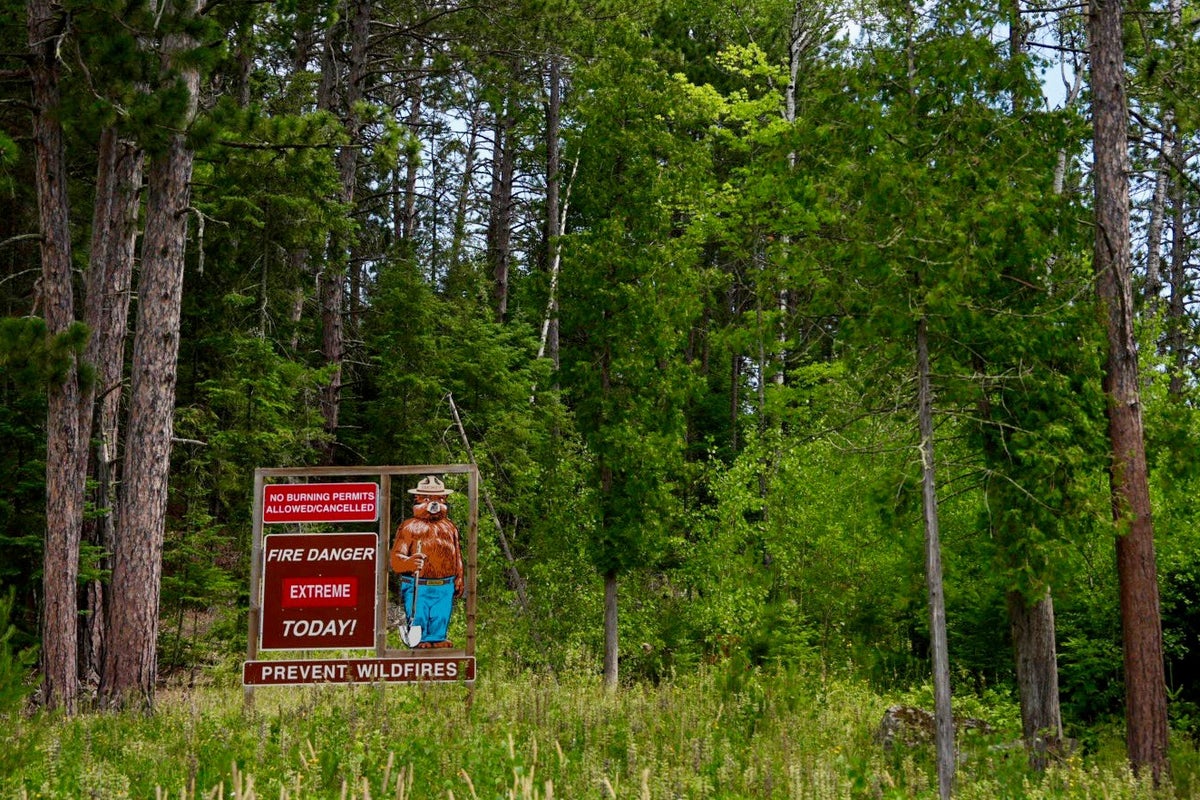
Large-scale wildfire smoke transport is not an episodic weather event; it is a complex thermodynamic and hydrodynamic system that exploits structural vulnerabilities in regional infrastructure and human biology. When massive forest fires in Canada and northern Minnesota release megatons of particulate matter into the upper atmosphere, the resulting plume does not merely drift. It undergoes chemical transformation, interacts with high-pressure thermal domes, and descends into the planetary boundary layer of the Midwest and Northeast United States, exposing millions of people to acute concentrations of fine particulate matter ($PM_{2.5}$).
Managing this recurring air quality crisis requires moving past reactive public health warnings and examining the precise physical, atmospheric, and physiological mechanisms that drive transboundary smoke inundation.
The Triad of Pyrogenic Atmospheric Risk
To understand how wildfires in localized regions of Canada and northern Minnesota can systematically degrade the air quality of distant metropolitan areas like Detroit, Milwaukee, and New York City, we must establish a predictive framework based on three distinct, interacting variables.
+-------------------------------------------------------------+
|               Fuel Aridity and Combustion Chemistry         |
|               (Low Fuel Moisture, Pyrolysis, PM2.5 Yield)    |
+-------------------------------------------------------------+
                              |
                              v
+-------------------------------------------------------------+
|               Synoptic-Scale Transport Dynamics             |
|          (Pyro-convection, Jet Stream, Boundary Layer)      |
+-------------------------------------------------------------+
                              |
                              v
+-------------------------------------------------------------+
|               Thermal Coincidence and Subsidence            |
|          (Heat Domes, Inversion Layer, Cardiac Load)        |
+-------------------------------------------------------------+
Fuel Aridity and Combustion Chemistry
The severity of an atmospheric smoke event begins with the physical state of the fuel bed at the ignition source. Severe drought conditions combined with prolonged high temperatures deplete fuel moisture content (FMC) in boreal and temperate forests. When FMC drops below critical thresholds (typically under 10% to 15%), the thermal energy required to initiate pyrolysis decreases.
As a result, combustion shifts from a slow, moisture-steeped smoldering phase to rapid, high-intensity flaming combustion. This transition dictates the chemical composition of the smoke. Flaming combustion produces high volumes of elemental carbon (soot) and primary organic aerosols, while also generating the extreme thermal updrafts necessary to inject these pollutants deep into the troposphere.
Synoptic-Scale Transport Dynamics
The second variable is the atmospheric vector. Plumes generated by high-intensity fires undergo pyro-convection, acting like localized thunderstorms that push smoke columns past the immediate surface boundary layer and into the free troposphere (altitudes of 3,000 to 10,000 meters). Once injected into these altitudes, the smoke is captured by synoptic-scale wind patterns, such as the jet stream or mid-latitude cyclones.
Transport across thousands of miles occurs with minimal dry deposition (the settling of particles due to gravity) because the particles are suspended above the turbulent surface layer. The real threat emerges when these high-altitude plumes encounter descending air masses—such as those associated with moving cold fronts or high-pressure systems—which force the concentrated smoke down to breathing height.
Thermal Coincidence and Subsidence
The third variable is the meteorological state of the receiving region. When transboundary smoke arrives simultaneously with a persistent high-pressure system, a dangerous feedback loop is established. High-pressure systems feature sinking air (subsidence), which compresses and warms the atmosphere, creating a temperature inversion.
This inversion acts as a physical lid on the planetary boundary layer, trapping both local industrial emissions and descending wildfire smoke within a shallow layer of air adjacent to the ground. When this occurs alongside extreme summer heat, the physical toll on the exposed population escalates rapidly.
Fuel Aridity and Energetic Plume Dynamics
The fires burning in Canada and the dense forests of northeastern Minnesota, including areas near Two Harbors and the Tribal Nation of Grand Portage, are fueled by a compounding deficit in soil moisture and atmospheric humidity.
Forest litter, duff, and coarse woody debris act as the primary fuel vectors. Under normal conditions, these materials retain sufficient moisture to slow fire propagation. However, sustained heat waves accelerate evapotranspiration, desiccating these fuels. The energy equation of wildland fire behavior dictates that dry fuel burns hotter and faster because no thermal energy is wasted heating and vaporizing water trapped in the wood cells.
This extreme heat release rate triggers pyrocumulonimbus (PyrCb) activity. The fire essentially creates its own weather system. The intense upward rush of superheated air, gases, and particulate matter forms a convective column that penetrates the tropopause.
Within this column, complex chemical reactions occur. Volatile organic compounds (VOCs) released by the burning vegetation undergo photo-oxidation when exposed to solar radiation. This process generates secondary organic aerosols (SOAs) and ground-level ozone ($O_3$), effectively multiplying the volume of toxic air pollutants during transport. The resulting plume is a highly concentrated, chemically reactive soup of gases and microscopic solids suspended in the atmosphere.
Synoptic-Scale Transport and Boundary Layer Trapping
The journey of the plume from rural, forested ignition zones to dense urban corridors follows a predictable meteorological pathway. During the summer months, low-pressure systems moving eastward across Canada, combined with high-pressure ridges over the central United States, create a atmospheric pipeline.
- Advection: The horizontal transport of the smoke plume by prevailing winds. In the mid-latitudes, this transport is dominated by westerly and northwesterly winds that align to sweep Canadian and Minnesotan smoke southeastward toward the Great Lakes and the Atlantic seaboard.
- The Entrainment Zone: As the high-altitude smoke plume travels, it encounters the planetary boundary layer (PBL)—the lowest part of the atmosphere, which is directly influenced by the Earth's surface. During the day, solar heating of the ground creates convective turbulence, mixing the lower atmosphere and drawing down smoke from the free troposphere into the PBL.
- Frontal Passages: Cold fronts traveling south from Canada act as atmospheric snowplows. While the cooler air behind the front eventually clears the atmosphere, the leading edge of the front squeezes and concentrates the smoke ahead of it, leading to sudden, extreme spikes in ground-level $PM_{2.5}$ concentrations.
Atmospheric Profile during a Subsidence Inversion:

Altitude
  ^
  |   [ Free Troposphere: High-Altitude Smoke Plume ]
  |   -------------------------------------------------  <- Inversion Lid (Warm Air)
  |   [ Boundary Layer: Trapped Smoke, Heat, Ozone ]     <- Cold Air / Subsidence
  |   =================================================  <- Earth's Surface (Breathing Zone)
  +-------------------------------------------------------> Concentration of PM2.5
When the smoke descends, it is trapped by daytime heating and nighttime cooling cycles. During the night, the ground cools rapidly, creating a shallow surface inversion layer that is highly stable. Any smoke that has been mixed down during the afternoon is locked into a zone that may be only 100 to 300 meters deep, resulting in hazardous air quality index (AQI) values during the late-night and early-morning hours.
The Synergistic Thermal and Particulate Health Penalty
The biological threat of wildfire smoke lies in the physical dimensions of its particulate matter. Unlike industrial dust or pollen, wildfire smoke is dominated by fine particulate matter ($PM_{2.5}$), which consists of particles with an aerodynamic diameter of less than 2.5 micrometers. For context, a human hair is roughly 70 micrometers in diameter.
          o  <- PM2.5 (Fine Particulate: < 2.5 µm) - Deep Alveolar Penetration
       oooo  <- PM10 (Coarse Particulate: < 10 µm) - Upper Respiratory Trapping
   oooooooo  <- Human Hair (Reference: ~70 µm)
The human upper respiratory tract—including the nasal passages, cilia, and trachea—is highly efficient at filtering out coarse particles ($PM_{10}$). It is largely defenseless against $PM_{2.5}$.
Upon inhalation, these microscopic particles bypass the upper airway defenses and penetrate deep into the pulmonary alveoli, where gas exchange occurs. Once lodged in the alveoli, the particles trigger a localized immune response. Alveolar macrophages attempt to engulf and digest the particles, but the complex chemical composition of wildfire soot (which includes polycyclic aromatic hydrocarbons, heavy metals, and free radicals) causes these cells to rupture, releasing pro-inflammatory cytokines.
This localized pulmonary inflammation does not remain confined to the lungs. The cytokines translocate into the bloodstream, triggering systemic inflammatory responses. This mechanism drives the acute cardiovascular events observed during smoke episodes, including myocardial infarction (heart attacks), stroke, and cardiac arrhythmias.
When an extreme heat wave coincides with a wildfire smoke event, the physiological strain is multiplied. Thermoregulation under extreme heat requires the cardiovascular system to increase cardiac output and redirect blood flow to the skin for cooling. This elevated heart rate and cardiac workload occur at the exact moment the blood is oxygen-depleted and filled with inflammatory markers from $PM_{2.5}$ inhalation.
The body is forced to fight two simultaneous physiological battles: shedding heat and combating systemic oxygen deprivation. This dual-stress pathway explains why emergency department admissions and excess mortality rates spike exponentially, rather than linearly, when heat and smoke occur together.
Structural Envelopes and Filtration Economics
The standard public health recommendation during smoke events is to stay indoors. However, this advice assumes that indoor environments are structurally isolated from the outdoor atmosphere. In reality, most residential and commercial buildings are highly permeable.
Outdoor air enters buildings through three pathways:
- Mechanical Ventilation: HVAC systems designed to pull in fresh outdoor air to maintain indoor air quality.
- Natural Ventilation: Open windows and doors.
- Infiltration: Uncontrolled air leakage through cracks in the building envelope, window seals, sill plates, and utility penetrations.
The rate at which outdoor air replaces indoor air is measured in Air Changes per Hour (ACH). Older, unsealed residential structures can have infiltration rates as high as 1.0 to 2.0 ACH, meaning the entire volume of indoor air is replaced by smoky outdoor air every 30 to 60 minutes. Even modern, tightly sealed buildings typically maintain an infiltration rate of 0.2 to 0.5 ACH. Without targeted filtration, indoor $PM_{2.5}$ levels will quickly match outdoor concentrations, rendering the indoor refuge ineffective.
To mitigate this penetration, the mechanical filtration metrics of the building must be reconfigured.
Filtration Efficiency by MERV Rating for PM2.5 (0.3 to 3.0 µm):

Filter Type      Efficiency Range
--------------------------------------------------
MERV 8           < 20% (Mainly traps large dust/pollen)
MERV 11          20% - 65%
MERV 13          > 90% (Recommended minimum for smoke mitigation)
HEPA             99.97% (Absolute capture of micro-particles)
Standard residential HVAC systems typically utilize MERV 8 filters, which are designed to protect the heating and cooling coils from large dust particles but capture less than 20% of the fine particles found in wildfire smoke. Upgrading to a MERV 13 filter is the minimum recommended intervention to actively scrub $PM_{2.5}$ from recirculating air.
However, many residential air handlers lack the fan power to overcome the static pressure drop caused by the denser weave of a MERV 13 filter. Forcing a high-resistance filter into an underpowered HVAC system reduces airflow, decreases thermal efficiency, and can cause the system's compressor or fan motor to overheat and fail.
Where central filtration upgrades are restricted by equipment limitations, localized air purification becomes necessary. Portable air cleaners utilizing High-Efficiency Particulate Air (HEPA) filters are highly effective, but their deployment must match the spatial volume of the room. This is governed by the Clean Air Delivery Rate (CADR). To effectively reduce smoke concentrations, the CADR of a portable unit must be matched to the room's square footage using the two-thirds rule: the unit's smoke CADR rating must be at least two-thirds of the room's area in square feet.
For example, a $300\text{-square-foot}$ living room requires an air purifier with a smoke CADR of at least 200. If the infiltration rate (ACH) of the home is high, even a properly sized HEPA unit will struggle to keep pace with the continuous ingress of fine particulate matter, highlighting the need for comprehensive building-envelope sealing alongside filtration strategies.
Tactical Regional Adaptation
As northern wildland fuels dry out and high-pressure anomalies become more frequent, the eastern half of the United States can no longer treat wildfire smoke as an exceptional, West Coast phenomenon. Municipalities, businesses, and healthcare systems must transition from crisis response to structured, long-term operational adaptation.
The immediate tactical priority is the establishment of clean air sanctuaries within public infrastructure. Municipal buildings, libraries, and schools must be retrofitted with variable-air-volume HVAC systems capable of bypassing outdoor air intake during acute smoke events, relying instead on 100% internal recirculation through MERV 13 or HEPA filtration banks. These systems must be paired with real-time, localized indoor air monitoring using optical particle counters to verify the integrity of the building envelope.
At the enterprise and municipal level, work policies must be governed by hard, pre-negotiated AQI thresholds. When local $PM_{2.5}$ concentrations exceed 150 (Unhealthy), outdoor manual labor must be suspended, and non-essential workers must transition to remote work environments where indoor air quality can be verified or supplemented with portable HEPA units. This threshold-based operational model protects the labor force from cumulative cardiovascular and respiratory strain while standardizing business continuity plans.
Finally, health systems must integrate predictive meteorological forecasting into their staffing models. By tracking cold fronts and high-pressure subsidence patterns up to 72 hours before they intersect with active wildfires, hospitals can anticipate spikes in emergency department admissions for respiratory and cardiac distress and scale up clinical capacity in advance. Reactive public safety announcements are no longer sufficient; institutional resilience must be engineered into the structural and operational frameworks of our cities.