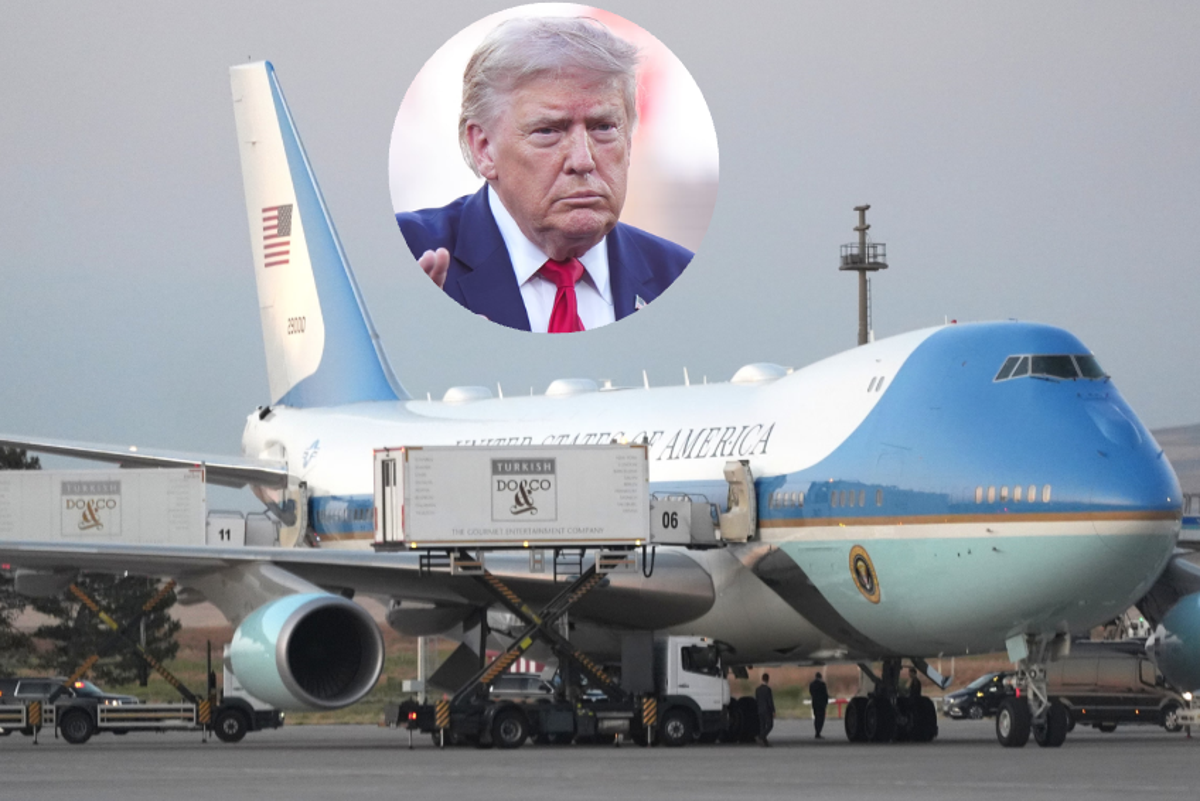
The headlines rolled out like a tired spy thriller script. A former president, a shadowy threat from Tehran, a clandestine tarmac swap, and a high-stakes escape involving a rolling metal box designed for airline turkey sandwiches. The media ate it up. Commentators hyperventilated over the sheer audacity of hiding inside a catering cart to elude Iranian hit squads.
It makes for great cable news chyrons. It plays well into the breathless mythology of high-stakes political intrigue. It is also a complete distraction from how modern threat mitigation actually operates.
Every single security analyst, pundit, and armchair general missed the mark because they are addicted to cinematic narratives. They want you to believe that VIP protection is a Jason Bourne movie where principals squeeze into galley equipment to evade crosshairs. The reality is far more mundane, far more bureaucratic, and infinitely more boring than a catering cart maneuver. And that boredom is precisely what keeps people alive.
I have spent decades watching security budgets burn through millions of dollars on theater while ignoring the baseline protocols that actually stop targeted violence. When the public focuses on a dramatic aircraft swap, they buy into a profound misconception about how state-sponsored threat vectors function in the twenty-first century.
The Myth of the Cinematic Threat
Let us dismantle the lazy consensus. The accepted narrative dictates that high-profile targets facing foreign state threats require dramatic, improvised field evasions. If a threat is credible, the logic goes, you improvise a Hollywood set piece. You ditch the motorcade, you swap planes under cover of night, you cram a VIP into tight spaces.
This is fundamentally backwards.
Real executive protection and counter-intelligence operations hate improvisation. Improvisation is the loud, flashing neon sign of a failed primary plan. When an operation requires physical concealment inside standard airport logistics equipment, you are not witnessing a masterclass in tactical evasion. You are witnessing the absolute collapse of redundant risk management layers long before the tarmac comes into play.
State-sponsored assassination attempts, particularly those attributed to foreign actors like Iran's Islamic Revolutionary Guard Corps, do not operate on the kinetic impulse of a street mugging. They are patient, long-tail intelligence campaigns. They rely on signals intelligence, human assets inside support networks, digital footprint tracking, and predictable scheduling routines.
A threat of that magnitude is not neutralized because a detail managed to wheel a target past a window inside a metal box with folding trays. If hostile intelligence has real-time line of sight on a private aircraft tail number and a specific tarmac footprint, a catering cart is a laughable defense mechanism. Physics and thermal imaging do not care about your aluminum food trolley.
Why We Crave the Spectacle
Why do professional commentators fall for the cart narrative? Because humans are hardwired to prefer dramatic narratives over systemic analysis.
Explaining signal encryption, diplomatic backchannels, counter-surveillance sweeps, and asset hardening is a great way to put an audience to sleep. Telling a story about a makeshift hiding spot taps into primal survival instincts. It turns a dry, terrifying geopolitical chess match into an action-adventure story where the plucky protagonist outsmarts the villains through sheer slapstick ingenuity.
This is dangerous. It trivializes statecraft and threat mitigation down to a cartoon level. When the public thinks security is about hiding in luggage compartments, they stop asking hard questions about intelligence failures, counter-intelligence budgets, and diplomatic deterrence. They applaud the magic trick while missing the fact that the magician should never have been in danger on that specific stage in the first place.
Let us look at the mechanics of actual risk assessment.
When intelligence agencies flag a credible, active assassination plot originating from a hostile nation-state, the response protocol is codified, layered, and utterly rigid. It involves:
- Information Disruption: Feeding false movement vectors into open and compromised communication channels while moving the principal via completely unannounced, hardened vectors.
- Asset Neutralization: Engaging local and international intelligence partners to pressure the host infrastructure, cutting off the operational reach of foreign assets before they ever approach a tarmac.
- Hardened Transport: Utilizing dedicated military or heavily modified government transport platforms equipped with integrated countermeasures, encrypted communications suites, and redundant escort packages that make ambushes mathematically unviable.
Notice what is missing from that list? Rolling a sixty-year-old billionaire into a compartment designed to hold stale airline rolls.
The Dangerous Downside of the Contrarian Take
Adopting this critical stance comes with a downside. It strips away the comforting illusion that our political figures are action heroes living in a spy novel. It forces us to confront an uncomfortable truth: high-profile threats are messy, persistent, and rarely solved by clever on-the-fly improvisation.
When you tell people that a dramatic plane swap is actually a symptom of systemic vulnerability rather than a badge of tactical brilliance, they get uncomfortable. They want to cheer for the ingenuity. They want to believe that quick thinking saves the day.
I have seen organizations blow millions on high-speed tactical driving courses and cinematic escape fantasies while completely ignoring basic operational security, background checks for support staff, and digital hygiene. They spend their resources preparing for the movie scene while ignoring the data leak sitting right in their own administrative office.
The catering cart story is a symptom of a culture that prefers the myth of competence over the hard, invisible labor of actual security.
Redefining the Question
Stop asking whether a politician can successfully hide in galley equipment. Stop treating high-stakes geopolitics like an episode of a spy drama.
The real question you should be asking is why the threat environment deteriorated to a point where a domestic or international transit required such extreme, improvised measures in the first place. If a principal is operating in a theater where hostile actors possess the capability to track, target, and force a clandestine aircraft swap, the primary failure happened months prior at the intelligence and diplomatic levels.
A successful security detail is one where you never read about the escape, because the threat was neutralized before the plane ever left the hangar.
The next time a breathless report crosses your screen detailing some absurd, cinematic evasion tactic, remember that true competence looks boring. It wears a suit, it reviews encrypted logs, it verifies supply chain integrity, and it never, ever gets anywhere near a catering cart.


