The headlines wept with convenient relief. When reports surfaced that a British aid worker had been triumphantly pulled alive from the wreckage of the devastating Nepal and Tibet flash floods, the international press corps ate it up. It offered a neat, digestible narrative arc: a brave foreigner flies in to help, gets swallowed by the disaster himself, and is miraculously extracted from the jaws of death.
There is just one problem. It never happened. In similar updates, read about: The Anatomy of Fiscal Expansion Why Defending the Realm Demands Broadening the Tax Wedge.
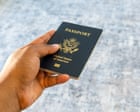
Alastair Chambers, a 45-year-old former local councillor from Gloucester, did not claw his way out of a muddy tomb or get hoisted off a crumbling cliffside by heroic commandos. He was simply a volunteer who flew into Kathmandu on a humanitarian helicopter after distributing sleeping bags and water filters in a remote village, walked into an army barracks, handed over his passport details like a compliant citizen, and watched local authorities misinterpret bureaucratic intake as a miraculous extraction.
The lazy consensus in mainstream reporting treats this administrative screw-up as a quirky human-interest footnote. It is treated as an innocent bureaucratic mix-up in the fog of war-like devastation. NPR has also covered this critical topic in great detail.
That framing is dangerously naive. It completely misses the structural breakdown of crisis management on the ground.
When a glacial collapse triggers a magnitude-4.4 equivalent shockwave and unleashes a wall of water, mud, and ice down the Trishuli and Bhotekoshi river basins, precision is not a luxury. It is the absolute difference between life and death. More than a thousand people are dead, thousands remain missing, and dozens of British nationals are unaccounted for. In the middle of an operational catastrophe of this magnitude, inventing survivors out of administrative clerical errors isn't just sloppy. It is an indictment of how modern disaster reporting prioritizes feel-good foreigner tropes over brutal ground realities.
Look at how the information pipeline actually functions during a Himalayan catastrophe. Local military and police forces are overwhelmed, scrambling to account for hundreds of thousands of displaced villagers and foreign nationals. When a white, British face steps off an aid chopper at an army base, the friction of local record-keeping meets an institutional bias toward tracking foreign statistics with hyper-vigilance. The police logged his paperwork, assumed anyone arriving from the disaster zone via air asset must be a victim ledger item, and weaponized the data straight to social media and government briefings.
The Nepali Army proudly announced that a British citizen was among 119 people rescued. The press corps rushed to amplify it because it fit the psychological comfort food of disaster coverage: the narrative that international rescue apparatuses are sweeping in and successfully pulling people from the debris.
Meanwhile, actual survivors—locals whose homes were pulverized and families scattered—remain buried under feet of silt without a functioning census to track their names.
Imagine a scenario where the global media dedicated a fraction of the bandwidth spent tracking one un-endangered British politician to the systemic communications failures isolating entire mountain valleys. The contrast is jarring. While newsrooms tripped over themselves to phone Chambers for a quirky quote about how he had to break the news to reporters that he didn't need saving, dozens of families back in the UK and Nepal sat staring at blank screens waiting for real intelligence on missing loved ones.
This obsession with individualistic, western-centric protagonist narratives turns mass casualty events into reality television. We crave the singular hero or the dramatic rescue, even when the person in question spent their time handing out gear and simply took a routine flight back to the capital.
Stop buying the clean, cinematic narrative of disaster response. The reality on the ground in the Himalayas is chaotic, administrative, and profoundly unglamorous. When authorities announce a miraculous recovery, demand the receipts before you let them distract you from the thousands who are still unaccounted for.