Sports media loves a redemption arc. Put two daughters of a late, polarizing NHL owner onto the cap table of Canada’s first WNBA expansion franchise, and the press releases practically write themselves. Legacy. Representation. A new chapter for women's sports in Toronto.
It is a lovely fairy tale. It is also completely missing the point.
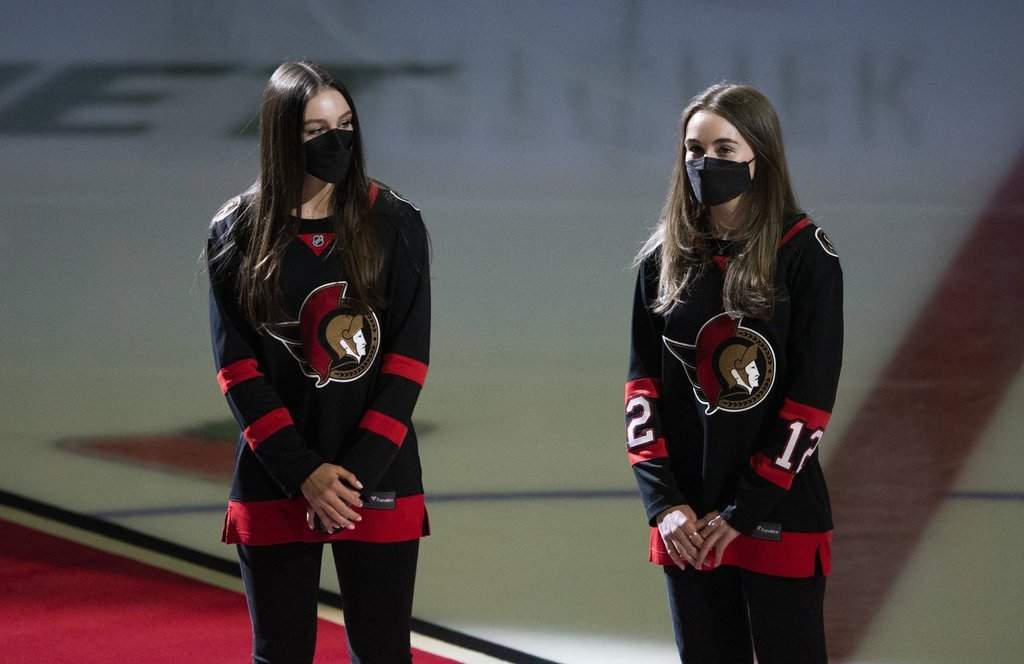
When Anna and Olivia Melnyk—daughters of the late Ottawa Senators owner Eugene Melnyk—bought into the Toronto Tempo ownership group led by Larry Tanenbaum’s Kilmer Sports Ventures, the mainstream sports press treated it like a ceremonial passing of the torch. They framed the move around youth, female empowerment, and generational continuity in Canadian sports ownership. That lazy consensus obscures what actually happened behind closed doors.
This is not a sentimental vanity project. It is an institutional-grade private equity play disguised as a basketball team.
The Illusion of the Benevolent Sports Owner
To understand why the Melnyk sisters are writing checks to the WNBA in Toronto, you have to strip away the romanticism of sports ownership. In the 1990s and early 2000s, buying a sports franchise was a billionaire’s ego trip. You bought a team to sit courtside, get your face on television, and absorb annual operating losses in exchange for civic clout.
That era is dead. Modern franchise ownership is pure asset appreciation.
Eugene Melnyk bought the Ottawa Senators out of bankruptcy in 2003 for roughly $92 million USD. When his daughters sold the controlling stake of that franchise to Michael Andlauer in 2023, the valuation hit $950 million USD. Even after accounting for debt and the grueling years of public friction in Ottawa, the Melnyk estate walked away with massive liquidity and a PhD in how North American sports monopolies print equity value.
Anna and Olivia Melnyk did not inherit a love for losing money. They inherited liquidity from one of the highest-returning asset classes in North America over the last twenty years, and they immediately redeployed a fraction of it into the single most undervalued live-entertainment monopoly on the continent.
Why Larry Tanenbaum Wanted the Melnyk Cap Table
When Kilmer Sports Ventures secured the Toronto WNBA expansion franchise for a reported $115 million USD expansion fee, Larry Tanenbaum did not need help paying the bill. Tanenbaum is the chairman of Maple Leaf Sports & Entertainment (MLSE) and one of the wealthiest, most connected power brokers in Canadian business. He could have funded the Tempo out of petty cash.
So why bring in minority limited partners like Serena Williams, Lilly Singh, and the Melnyk sisters?
Because in modern sports finance, a syndicate of high-profile minority owners performs three critical functions that a single majority owner cannot buy with cash alone:
- Risk Syndication and Liquidity Preservation: Even billionaires hate tying up $115 million in non-liquid equity when startup operating costs—practice facilities, front-office salaries, marketing, and arena leases—will burn cash for the first three to five years. Bringing in limited partners offsets the initial capital outlay while allowing Tanenbaum to retain total operational control.
- Pre-Built Distribution Channels: Marketing a new franchise from scratch costs tens of millions in customer acquisition. When you put Serena Williams or Lilly Singh on the cap table, their personal media ecosystems become free customer acquisition funnels.
- Institutional Credibility and Political Insulation: The Melnyk name carries immediate weight in Ontario’s business and political corridors. Despite the turbulent final years of Eugene Melnyk’s tenure in Ottawa, the family’s brand is synonymous with Canadian major-league sports ownership. Having them as passive capital partners signals to corporate sponsors on Bay Street that this is a serious, long-term commercial enterprise, not a charity initiative.
I have watched dozens of expansion groups fail to gain traction in their first twenty-four months because they treated minority partners like ornamental trophies rather than strategic distribution and capital levers. Tanenbaum is not collecting celebrities. He is building a fortress of political and commercial insulation around a nascent asset.
The Real Math Behind the $115 Million Expansion Fee
Critics who still view women's sports through a 2015 lens balked at the $115 million price tag for the Toronto Tempo. To put that number in perspective, the WNBA’s previous expansion team—the Golden State Valkyries—paid $50 million just months earlier. Doubling the entry fee in less than a year looked reckless to traditional sports accountants looking at historical WNBA gate receipts.
Those accountants are looking in the rearview mirror.
You do not buy a WNBA franchise in 2026 based on yesterday's ticket sales. You buy it for the media rights arbitrage and scarcity value.
Consider the numbers. In 2024, the NBA finalized an 11-year, $76 billion media rights deal, allocating roughly $2.2 billion ($200 million per year) directly to the WNBA—more than triple the league's previous $60 million annual media payout. And that deal includes a critical re-opener clause after three years. If viewership and attendance trajectories hold, the WNBA's national media distribution revenue will surge again before the decade is out.
Now look at the Toronto market specifically:
- A Monopoly of One: Unlike U.S. franchises fighting for regional cable dollars in fragmented local markets, the Toronto Tempo owns an entire G7 nation. Every national broadcast deal in Canada—whether with TSN, Sportsnet, or streaming platforms—flows through a single market monopoly.
- The Scarcity Premium: There are only 30 NBA teams, 32 NFL teams, and 32 NHL teams. Once those leagues hit capacity, valuations go vertical because supply is permanently capped. The WNBA is currently in its rapid-expansion land-grab phase. Buying in at $115 million today gets you a seat at the table before the league locks the doors and franchise values clear $500 million.
- Arena Economics Without the Mortgage: Building a modern arena in a major North American city costs upwards of $1 billion. The Tempo will play primarily out of Coca-Cola Coliseum—an existing 8,500-seat venue at Exhibition Place—with select marquee games at the 19,800-seat Scotiabank Arena. Tanenbaum and his partners get immediate access to world-class infrastructure without carrying a billion-dollar construction debt load on the team's balance sheet.
Dismantling the "Governance Drama" Myth
Whenever the Melnyk name surfaces in Canadian sports, the immediate knee-jerk reaction from hockey fans and pundits is to bring up the dysfunction in Ottawa. Between 2017 and 2022, the Senators were a case study in public relations disasters, front-office turnover, and strained relationships with local government over the LeBreton Flats arena project.
So naturally, the cynical counter-narrative to the Tempo announcement went something like this: Why would Larry Tanenbaum invite the Melnyk family into his ownership group given how messy things got in Ottawa?
This question exposes a fundamental misunderstanding of how sports ownership structures actually work.
In Ottawa, Eugene Melnyk was the sole controlling owner and governor. He had unchecked authority over hockey operations, budget caps, and public messaging. When he clashed with the city or slashed payroll, there was no board of directors to overrule him.
In Toronto, Anna and Olivia Melnyk are limited partners (LPs).
If you have never sat inside a sports venture cap table, understand this distinction: a limited partner has zero operational control. They do not hire the general manager. They do not negotiate player contracts. They do not dictate marketing budgets, arena leases, or ticket pricing. Their legal role is strictly defined: wire the capital, attend board meetings as observers or non-voting advisors, sit courtside at marquee games, and collect distributions or exit proceeds when the asset appreciates.
Let's be brutally honest about the trade-offs here. The downside for the Melnyk sisters is obvious: they have no say if Kilmer Sports Ventures makes a bad basketball hire or miscalculates a sponsorship strategy. They are entirely along for Larry Tanenbaum’s ride. Conversely, the upside for Tanenbaum is absolute: he gets their capital, their network, and their industry familiarity with zero risk of boardroom interference.
What People Are Getting Wrong About Women's Sports Investing
If you search for commentary on the Toronto Tempo ownership group, you will inevitably run into the same tired debates. Let's dismantle the three biggest misconceptions head-on.
Misconception 1: "Are WNBA teams actually profitable yet?"
No, most of them are not cash-flow positive on an annual operating basis—and nobody on the Tempo cap table cares. Amazon lost money for years while building an insurmountable logistics moat. Uber burned billions to capture market share. In institutional sports investing, annual operating profit (EBITDA) is a secondary metric to enterprise value growth. If you lose $3 million a year operating a team for five years ($15 million total burn), and your equity stake appreciates by $150 million over that same window, you just executed a phenomenal trade. Anyone judging an expansion sports franchise by Year 1 net income does not understand how capital markets work.
Misconception 2: "Is the Melnyk sisters' involvement just PR washing for their father's legacy?"
Imagine a scenario where two twenty-something heirs inherit nearly a billion dollars from a high-profile sports exit. If they simply wanted good PR, they could endow a hospital wing in Toronto, fund a university scholarship, and never risk a dime of principal in a volatile startup league. Writing a multi-million-dollar check into a capital-intensive expansion franchise is not a PR stunt. It is an active, illiquid private equity allocation. They are in this deal because they saw firsthand in Ottawa what happens to a sports franchise's valuation over a twenty-year hold, and they recognized the exact same asymmetrical upside in Toronto basketball.
Misconception 3: "Will Toronto actually support a WNBA team once the novelty wears off?"
This is the laziest take in Canadian sports media. Toronto is the fourth-largest city in North America and arguably the most basketball-obsessed market outside of New York and Los Angeles. Look at the demographic pipeline: the Greater Toronto Area produces more NBA talent per capita than almost anywhere on earth, and women's basketball participation across Ontario has surged for a decade. More importantly, corporate Toronto—banks, telecoms, insurance giants—is starved for new inventory. Raptors courtside seats and Maple Leafs corporate suites are locked up on multi-year renewals with decades-long waitlists. The Tempo gives Bay Street sponsors a brand-new, high-visibility vehicle to entertain clients and hit corporate ESG and diversity mandates simultaneously. The sponsorships will sell out before the roster is even drafted.
The Blueprint for Modern Sports Capital
If you are looking at the Toronto Tempo ownership group as a human-interest story, you are reading the wrong section of the newspaper.
What Larry Tanenbaum, Kilmer Sports Ventures, and the Melnyk sisters have assembled in Toronto is the exact blueprint for how the next decade of sports ownership will be financed. The days of the lone-wolf sports mogul running a franchise like a corner hardware store are over. Modern franchises are complex media, real estate, and intellectual property holding companies. They require deep, multi-layered cap tables where institutional operators like Tanenbaum handle execution, cultural icons handle customer acquisition, and seasoned sports capital families like the Melnyks provide patient, sophisticated equity.
Anna and Olivia Melnyk did not join the Toronto Tempo to relive their childhood in Ottawa. They joined because they know how to read a balance sheet—and in North American sports, the house always wins.