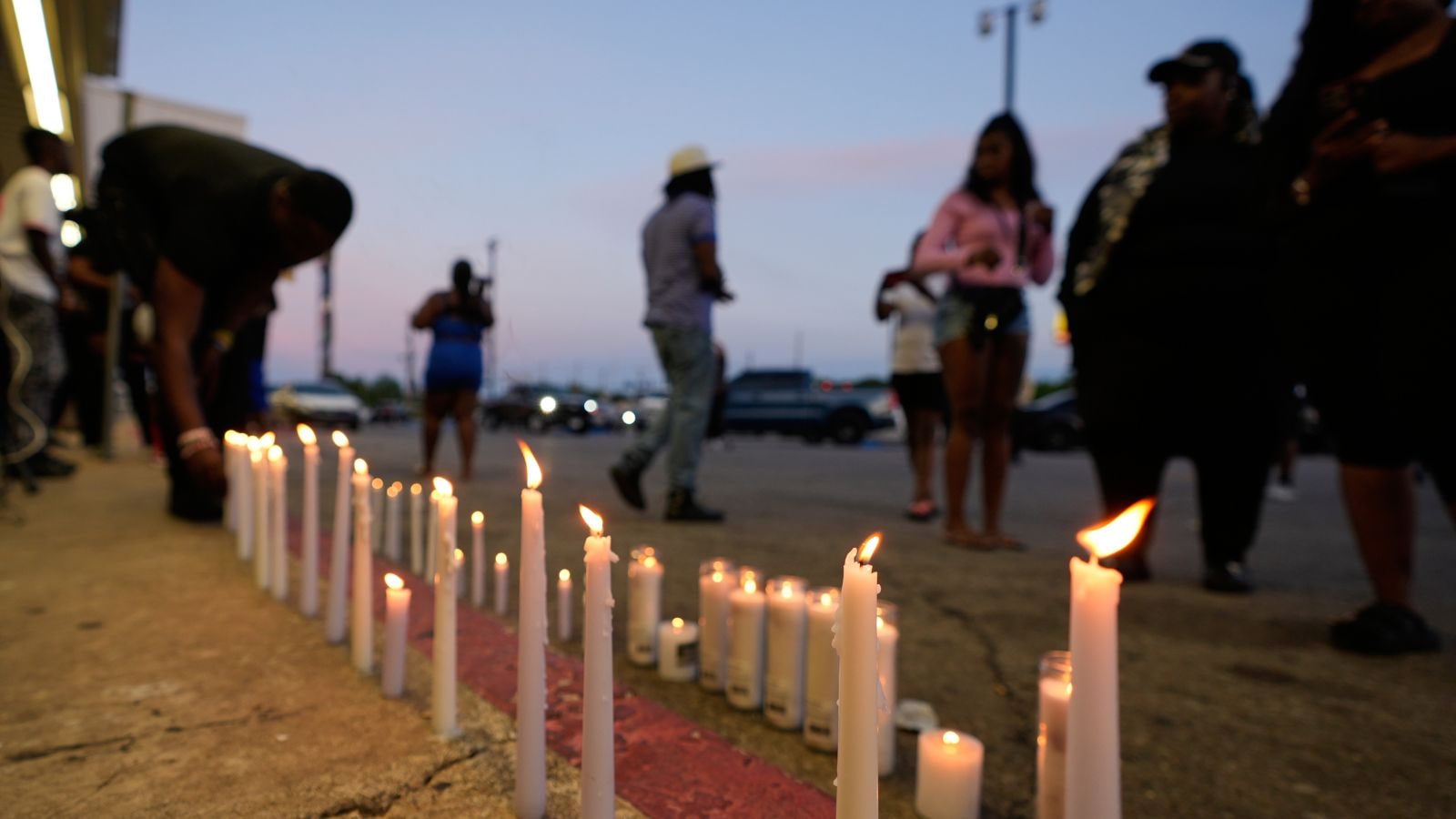
Media outlets love a clean narrative. When a tragedy like the Louisiana shooting occurs, the script writes itself: a father kills his children, the community reels, and the inevitable "mental health issues" label is slapped onto the perpetrator before the crime scene tape is even rolled up. It is a comforting lie. It suggests that if we just had better screening or more beds in psychiatric wards, these horrors would vanish.
This lazy consensus is not just wrong; it is dangerous. By reflexively blaming "mental health," we create a false sense of security while ignoring the grim reality of human agency and the failure of our current predictive models.
The Diagnostic Fallacy
The standard reporting on mass violence suffers from a massive survivor bias in logic. Because most people who commit these acts are distressed, we assume the distress caused the act. This ignores a glaring statistical reality.
Millions of Americans live with depression, bipolar disorder, and PTSD. They are far more likely to be victims of violence than perpetrators. When we use "mental health" as a catch-all explanation for a father murdering his children, we are not explaining anything. We are using a medical term to describe a moral or social collapse.
Psychiatry is built on the $DSM-5$, a manual of symptoms, not a map of human evil. There is no diagnostic code for "capable of filicide." By medicalizing the gunman’s actions, the media grants him a sort of "insanity" shield that actual data rarely supports. Most mass shooters are not "snapping" under the weight of a clinical psychosis; they are often calculated, resentful, and acting out of a sense of entitlement or perceived grievance.
The Predictive Mirage
The public demands "red flag" laws and better intervention. They want to know why the neighbors didn't see it coming. But I have spent years looking at the intersection of behavioral data and risk assessment, and here is the brutal truth: violence is a low-frequency event that is nearly impossible to predict with precision.
If you create a screening tool that is 99% accurate at identifying potential mass shooters, you will still end up detaining thousands of innocent people for every one actual killer you stop. This is the Base Rate Fallacy.
- Total Population: 1,000,000
- Actual Killers: 1
- Test Accuracy: 99%
- False Positives: 10,000
We are chasing a ghost. The "mental health" angle suggests there was a missed appointment or a forgotten pill that could have changed the outcome. In reality, many of these individuals have no prior contact with the mental health system. They aren't "falling through the cracks" of a broken system; they aren't even in the system to begin with.
Stop Asking "Why" and Start Looking at "How"
We waste weeks debating the gunman’s childhood or his undiagnosed depression. This is a distraction. The "why" is often a black box of resentment that we will never truly decode. The focus should be on the "how."
In the Louisiana case, as in so many others, the proximity of high-capacity lethality to domestic instability is the only variable that actually matters. You can be as "mentally ill" as you want, but without the means to execute a mass killing in seconds, you are a tragic figure rather than a catastrophic one.
The obsession with the gunman's psyche is a form of voyeurism that grants him the one thing he likely craved: a legacy. When we analyze his "mental health issues," we turn a murderer into a case study. We center the narrative on his internal struggle rather than the objective reality of his victims' stolen lives.
The Hard Truth About Domestic Volatility
We ignore the "boring" warning signs because they don't fit the "crazy lone wolf" trope. Most domestic mass shootings are preceded by a documented history of domestic abuse, restraining orders, or escalating threats. These aren't "mental health" symptoms; they are criminal behaviors.
When we reframe domestic violence as a "mental health issue," we soften it. We treat it as something to be "cured" with therapy rather than stopped with enforcement.
- The Competitor’s View: He was a sick man who needed help.
- The Reality: He was a violent man who used his children as leverage in a final act of control.
By calling it "mental health," we excuse the community and the legal system for failing to act on the tangible, external red flags that existed long before the first shot was fired.
The Myth of the "Point of No Return"
There is a pervasive idea that people with mental health issues are "ticking time bombs." This is a cinematic myth. It implies an inevitability that strips the perpetrator of responsibility.
The decision to kill one's own children is an active choice. It requires preparation, intent, and execution. Describing it as a symptom of a "breakdown" is an insult to every person struggling with actual clinical illness who chooses every day not to hurt others.
We need to stop looking for a clinical "cure" for what is essentially a cultural and social pathology. Our obsession with the gunman's brain chemistry is a way to avoid talking about the lethality of our environment and the persistent failure to protect women and children from known abusers.
Stop Funding the Wrong Solutions
Every time a shooting like this happens, politicians call for "more mental health funding." While more funding for clinics is great for general public wellness, it is an ineffective strategy for stopping mass shootings.
The people who commit these acts do not want help. They do not think they are sick. They think they are right.
If we want to stop the next Louisiana, we have to stop looking for "insanity" and start looking for "intent." We have to stop accepting the "mental health" excuse as a valid explanation for what is, in the end, a horrific exercise of power.
Stop looking for the ghost in the machine. Look at the machine itself.
The mental health narrative is a security theater that makes us feel like we’re doing something while the bodies continue to pile up. It’s time to retire the trope. He wasn't "dealing with issues." He was a killer. Period.