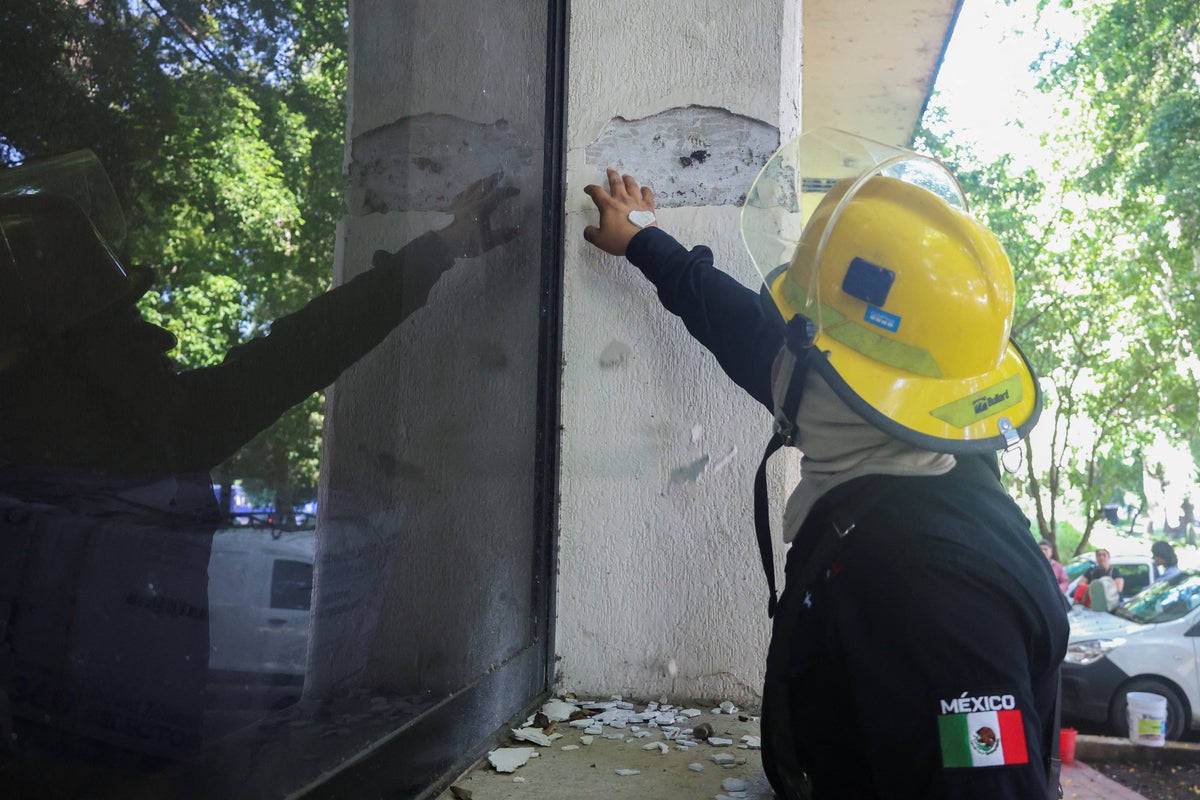
When the ground beneath the Pacific coast of Chiapas violently lurched on Friday, July 17, 2026, a collective breath was held across Latin America. A massive 7.3 magnitude earthquake had just ripped through the ocean floor, right along the volatile border between Mexico and Guatemala. The shaking stretched over hundreds of miles. Tall office buildings creaked and swayed in Mexico City. Streets filled with panicked workers in Guatemala City during the morning rush hour. People ran out of offices in San Salvador. Yet, hours later, the official reports from Mexican President Claudia Sheinbaum and Guatemalan President Bernardo Arevalo confirmed something almost miraculous. No dead. No collapsed skyscrapers. No destroyed towns.
How does a country absorb a shallow 7.3 magnitude shockwave without immediately counting casualties? Most people look at the headline and assume it was just a stroke of pure luck. That assumption is flat out wrong. Surviving a massive earthquake without catastrophic damage relies on a mix of strict building regulations, localized geological quirks, and community preparedness that coastal residents have spent decades refining.
The Raw Numbers Behind the Chiapas Coast Tremor
The United States Geological Survey pinned the epicenter of the main shock at 48 kilometers southwest of Aquiles Serdan, near the coast of Chiapas. It hit at a shallow depth of 15 kilometers. In seismology, shallow means violent. When a massive rupture happens close to the surface, the seismic energy has less rock to travel through before it hits human structures. It does not get muffled by the earth. It hits raw and fast.
The main tremor arrived in the morning, followed by a rapid cluster of at least ten aftershocks measuring between 4.9 and 6.0 magnitude. In the coastal border city of Tapachula, the initial vibration felt mild before intensifying into a prolonged, violent rumble. People inside a local public hospital felt the second floor rolling under their feet. They did not wait for instructions. They evacuated down the stairs into an open courtyard.
Despite the violence of the movement, the immediate injuries remained remarkably low. Local Civil Protection authorities reported only two direct injuries in southern Mexico. One involved a minor cut from a shattered business window. The other occurred when a woman in her 30s suffered a severe panic attack during the shaking and jumped from a second-story apartment window, sustaining leg fractures.
The Tsunami Warning and Immediate Coastal Evacuation
Because the rupture occurred offshore in the Pacific Ocean, ocean sensors immediately triggered a localized tsunami threat alert. The U.S. Tsunami Warning System warned that dangerous waves could surge along coastlines within a 300-kilometer radius of the epicenter. The Meteorological Service of Chiapas calculated that waves could hit up to one meter above normal tide levels.
Coastal communities did not gamble with their lives. Memory of historical ocean surges runs deep along the southern coast. In towns like Puerto Madero, which had already faced severe infrastructure damage from a tropical storm earlier in June 2026, families moved toward higher ground immediately. The Mexican Navy issued strict warnings for residents to stay completely clear of low-lying beaches for at least six hours. The ocean rose, but the feared walls of water never materialized. The Pacific Tsunami Warning Center officially cancelled the threat alert by afternoon after deep-sea gauges recorded only minor, non-destructive sea-level fluctuations.
Why the Giant Alarms in Mexico City Stayed Silent
One of the biggest points of confusion for residents in the nation's capital was the silence of the city's famous early warning siren network. Mexico City sits hundreds of miles away from Chiapas, but its unique soil conditions make it incredibly vulnerable to distant quakes. The capital is built on the soft mud of an old lakebed. This mud acts like a bowl of jelly, trapping and magnifying incoming seismic waves.
On July 17, 2026, the buildings in the capital shook and groaned, but the sirens never went off. The government quickly explained that the energy radiated by the Chiapas quake during its opening seconds failed to cross the mandatory activation threshold. The seismic sensors placed along the coast calculated that the energy dissipating over the distance would not cause structural destruction in the capital. The algorithm got it right. It was terrifying for office workers on high floors, but the city stayed structurally safe.
The Secret Strength of Mexican Construction Codes
The real reason Mexico did not crumble lies in its strict, heavily enforced structural engineering laws. After the horrific 1985 earthquake that devastated Mexico City, the country completely overhauled its building philosophies. Engineers stopped designing buildings to be completely rigid. Rigid concrete cracks and shatters when the earth moves.
Modern Mexican architecture prioritizes flexibility and energy dissipation. Large buildings use heavy steel braces, shock-absorbing dampers, and deep friction pilings that allow structures to move with the ground rather than fighting against it. In Tuxtla Gutierrez, the state capital of Chiapas, workers inside a 15-story government building described the sensation as horrific as they fled down emergency stairwells. They heard the walls groaning and crying. But that groaning is exactly how the building is designed to survive. The joints shift, the drywall cracks, and the energy passes through the steel frame without dropping the ceilings on the people inside.
Rural areas and border towns present a bigger challenge. Adobe homes and unreinforced masonry are common across Chiapas and western Guatemala. These older, traditional structures are highly susceptible to sudden collapses. Landslides triggered by the shaking blocked several mountain roads heading west into Guatemala, showcasing how vulnerable the rugged terrain remains.
What You Should Do Next to Prepare for Major Tremors
If you live in or travel through a known seismic zone like western Mexico or Central America, relying on the structural engineering of your building is only half the battle. You need an active survival plan.
Pack a dedicated emergency bag with essential supplies. This kit needs to hold at least three days of fresh water, non-perishable food, copies of your identification, a battery-powered radio, and basic medical supplies.
Identify safe zones inside your home or workspace before the ground moves. Stay away from heavy glass windows, hanging light fixtures, and unanchored bookshelves that can tip over instantly.
Drop, cover, and hold on the moment you feel the ground shake. Do not try to run out of a swaying building while the ground is actively moving. Most injuries occur when people are knocked off their feet or struck by falling exterior masonry as they try to cross doorways.
Monitor the official channels of local Civil Protection agencies and international geologists like the USGS. Do not spread unverified rumors about impending aftershocks on social media. Seismologists cannot predict the exact time of an earthquake, but aftershocks will continue to rattle the Chiapas-Guatemala border for weeks. Keep your shoes near your bed, stay alert, and know your evacuation route.