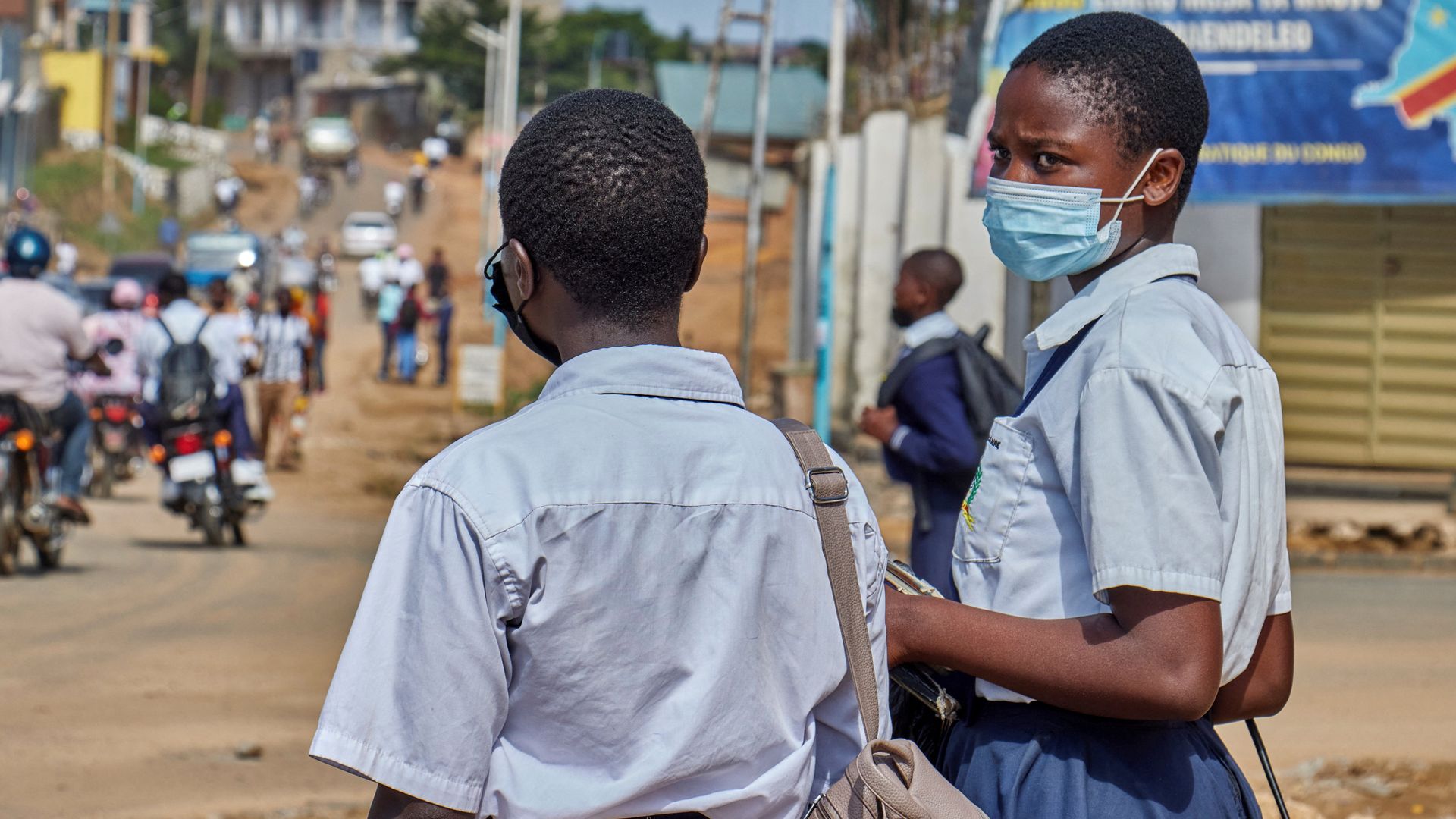
Deploying a capital allocation of up to £20 million to contain an infectious disease outbreak in a conflict-dense geography is an exercise in resource optimization under extreme uncertainty. When the UK Foreign, Commonwealth & Development Office (FCDO) committed these funds to target the emerging Bundibugyo Ebola virus strain across the eastern Democratic Republic of the Congo (DRC) and Uganda, the market interpreted the action as standard humanitarian aid. This view miscalculates the structural mechanics of pandemic defense.
Geopolitical capital injections during public health emergencies operate under a strict diminishing marginal utility curve. If funding arrives after an outbreak crosses critical epidemiological tipping points, the cost of containment escalates non-linearly. To evaluate whether a £20 million intervention can successfully suppress a transboundary pathogen, we must look past the headline figure and analyze the operational bottlenecks, logistical friction points, and epidemiological variables of the target environment.
The Containment Cost Function
The efficiency of emergency epidemiological funding is governed by a fundamental mathematical relationship: the time-to-deployment vector versus the viral reproduction rate ($R_0$). In the context of the eastern DRC's Ituri and North Kivu provinces, the containment cost function is severely pressured by three compounding operational variables.
                  [ Pathogen Inflow: Bundibugyo Strain ]
                                    │
                                    ▼
                     ┌──────────────────────────────┐
                     │   Transmission Matrix        │
                     │   • 60% Female Caregivers    │
                     │   • Mining-Driven Mobility   │
                     └──────────────┬───────────────┘
                                    │
                                    ▼
                     ┌──────────────────────────────┐
                     │   Operational Bottlenecks    │
                     │   • Active Rebel Insurgency  │
                     │   • No Validated Vaccine     │
                     └──────────────┬───────────────┘
                                    │
                                    ▼
                     ┌──────────────────────────────┐
                     │   UK Financial Allocation    │
                     │   (£20M Capital Deployment)  │
                     └──────────────┬───────────────┘
                                    │
            ┌───────────────────────┴───────────────────────┐
            ▼                                               ▼
┌───────────────────────┐                       ┌───────────────────────┐
│ Pillar 1: Non-Pharma  │                       │ Pillar 2: Ring-Fence  │
│ • Contact Tracing     │                       │ • Cross-Border Hubs   │
│ • WASH Infrastructure │                       │ • Tracing at Nodes    │
└───────────────────────┘                       └───────────────────────┘
The Vaccine Deficit and Technology Mismatch
Prior interventions in the DRC, such as the 2018–2020 Kivu outbreak, relied heavily on the Ervebo vaccine. This pharmaceutical lever drastically altered the economics of containment by establishing ring vaccination barriers around active clusters. However, Ervebo is engineered exclusively for the Ebola Zaire strain.
The current outbreak is driven by the Bundibugyo strain, rendering existing vaccine stockpiles biologically ineffective. Public health authorities estimate a minimum lead time of two months before an experimental or adapted vaccine candidate can achieve regulatory clearance and field deployment. Consequently, for the initial 60 days of this intervention, the UK allocation cannot leverage pharmaceutical shortcuts. It must fund pure, labor-intensive, non-pharmaceutical interventions (NPIs).
The Transmission Matrix in Conflict Zones
The geography of eastern DRC introducing the virus to population centers like Bunia and Goma introduces a high friction coefficient. The presence of armed rebel factions in North Kivu restricts international humanitarian access and distorts the supply chain.
When personnel cannot safely enter a hot zone to isolate a cluster, the probability of undetected transmission chains increases. This structural friction forces a reallocation of capital away from medical supplies and toward high-cost security logistics, armored transport, and remote surveillance systems, degrading the purchasing power of the £20 million fund.
Demographic Cascades
Epidemiological tracking data indicates that 60% of suspected cases are female, with the highest concentration of infections falling between the ages of 20 and 39. This distribution is not random; it reflects a specific socio-economic vulnerability. Women in these regions bear disproportionate responsibility for household healthcare and traditional post-mortem preparation.
Because Ebola is transmitted through direct contact with highly infectious bodily fluids, caregiver demographics serve as the primary amplification vector. If capital is not explicitly funneled into modifying the behaviors of this specific demographic subgroup through hyper-local, trusted community networks, standard top-down institutional messaging will fail to flatten the transmission curve.
Strategic Allocation Strategy
To extract maximum utility from a finite £20 million capital pool in the absence of a deployable vaccine, funds must be aggressively split across two core operational pillars.
                      [ Total Allocation: £20M ]
                                  │
         ┌────────────────────────┴────────────────────────┐
         ▼                                                 ▼
[ Pillar 1: High-Density NPIs ]                  [ Pillar 2: Cross-Border Nodes ]
  • 16-Ton WASH Infrastructure                     • Kampala-Bunia Transit Corridors
  • Decoupled Decentralized Triage                 • Synchronized Data Protocols
  • Real-Time Contact Tracing                      • Ring-Fenced Surveillance Points
Pillar 1: High-Density Non-Pharmaceutical Interventions
With pharmaceutical options off the table for the immediate future, containment depends entirely on breaking the transmission chain via structural environmental controls.
- WASH Infrastructure Deposition: Initial log sheets show a 16-ton consignment from UNICEF containing calcium hypochlorite, specialized personal protective equipment (PPE), and water purification systems directed to Ituri province. Funding must sustain a continuous supply chain of these consumables to medical facilities, mining hubs, and public spaces to suppress fomite transmission.
- Decoupled Triage Centers: Because early symptoms of Ebola (fever, headache, myalgia) overlap perfectly with endemic malaria and typhoid, standard healthcare facilities inadvertently act as super-spreader nodes. Capital must fund decentralized, tented triage units outside major municipal zones. This separation ensures that individuals seeking screening for general febrile illnesses are not cross-infected with Ebola.
- Granular Contact Tracing Networks: In fast-moving urban environments like Bunia and Goma, contact tracing complexity scales exponentially. The capital must absorb the operational costs of hiring, training, and protecting local track-and-trace personnel who understand localized micro-mobility patterns, particularly within artisanal mining communities.
Pillar 2: Cross-Border Node Security
The confirmation of an imported fatal case in Kampala, Uganda, proves that the outbreak has already outpaced localized geographic containment. The economic cost of an unchecked epidemic in an international transport hub like Kampala is orders of magnitude higher than in remote provinces.
A significant portion of the UK funding must be ring-fenced to secure the porous border corridors between the DRC, Uganda, and South Sudan. Rather than attempting to close borders—which drives traffic to unmonitored, informal crossings—strategic prudence dictates funding high-throughput screening infrastructure at formal entry points. This includes thermal imaging arrays, rapid-turnaround isolation units at border checkpoints, and synchronized data-sharing protocols between the DRC Ministry of Public Health and the Ugandan Ministry of Health.
Systemic Risks and Financial Vulnerabilities
A rigorous strategy assessment requires outlining where this £20 million intervention could experience systemic failure. The primary vulnerability is the allocation's vulnerability to currency erosion through local logistical monopolies. In conflict zones, the cost of securing transport assets, aviation fuel, and local contractors does not follow market norms; it is subject to rent-seeking behavior by local actors who control safe passage.
A second limitation is the human capital bottleneck. Money alone cannot generate trained epidemiological field staff willing to operate under active security threats. If the allocation cannot be paired with personnel from organizations like Doctors Without Borders (MSF) or the Red Cross—who possess established local trust frameworks—the capital will sit idle in administrative holding accounts while the virus continues its exponential doubling phase.
Finally, the timeline of this allocation presents a structural mismatch. The World Health Organization (WHO) projects that this Bundibugyo outbreak will persist for several months at a minimum. A £20 million injection provides immediate liquidity for front-line responders, but it does not represent a sustained fiscal foundation for a prolonged, multi-quarter regional containment campaign.
Tactical Execution Plan
To prevent the misallocation of the UK capital, project managers must abandon generic distribution models and implement an asset-protection framework based on measurable epidemiological triggers.
First, instantly tie tranche disbursements to verified local execution metrics rather than calendar milestones. Funding for specific health zones must be gated behind contact-tracing completion percentages: if a zone cannot demonstrate that 90% of known patient contacts are actively monitored within a 21-day incubation window, capital must be dynamically diverted to deploy external supervisory teams to overwrite the bottleneck.
Second, pivot transport security procurement immediately to a diversified logistical model. Relying on single-source local transport cartels in Ituri creates an immediate vulnerability to price gouging and operational halts. The FCDO should utilize pre-negotiated United Nations Humanitarian Air Service (UNHAS) pathways and establish multi-node distribution networks that can alter transit routes instantly when rebel movements fluctuate.
Third, execute an immediate regional data integration mandate. The current separation between DRC laboratory sequencing and Ugandan border tracking creates a dangerous visibility lag. The UK allocation must condition its institutional support on the deployment of an open-access, cross-border digital line-list. This platform must track suspected cases across transit corridors in real-time, stripping away the bureaucratic latency that allowed the Bundibugyo strain to breach Kampala undetected.