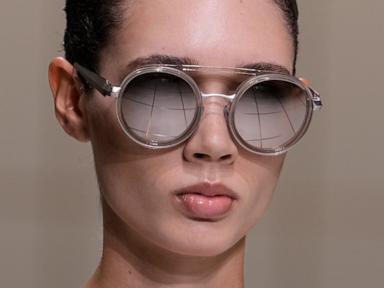
Every six months, an army of influencers, weary buyers, and sleep-deprived editors descend upon Lombardy to play dress-up in the cobblestone courtyards of Milan. They post their curated carousels, scribble notes about maximalist prints, and pretend that the spectacle on the runway bears any resemblance to how humans actually buy and wear clothes.
It is a multi-million-dollar exercise in mutual delusion.
The standard media narrative treats Milan Fashion Week like a sacred cultural altar. Glossy magazines publish breathless rundowns of the highlights, treating every polyester-blend trench coat and neon bucket hat as a visionary stroke of genius. Let us stop lying to ourselves. The entire apparatus has devolved into a marketing circus designed to feed algorithms rather than shape human style.
I have watched brands burn millions on thirty-minute runway productions that generate zero commercial conversion, all for the fleeting dopamine hit of a viral TikTok clip. The numbers tell a brutal story. Global luxury spending has flattened, consumer fatigue with micro-trends is at an all-time high, and yet the Italian Chamber of Fashion keeps pushing the same exhausted playbook.
We need to dismantle the romance surrounding these events and look at the raw mechanics of modern style.
The Illusion of Access in the Front Row
The most pervasive myth in the industry is that the runway dictates what ends up in your closet. Thirty years ago, that hierarchy held water. Designers showed collections to a tight room of department store buyers and magazine editors who held the keys to mass distribution.
Today, that pipeline is completely shattered. By the time a look makes its digital debut from the via Montenapoleone, the trend cycle has already lapped itself twice on social media.
Fast-fashion conglomerates reverse-engineer runway silhouettes and flood the market within fourteen days, rendering the six-month manufacturing lag of traditional luxury houses commercially obsolete. When you buy a high-end designer piece today, you are not paying for avant-garde innovation. You are paying a heavy marketing tax to subsidize the production costs of a celebrity-studded tent.
Consider the economics of scale. A major house will drop upwards of two million euros on a single runway presentation. That bill includes set design, PR agencies, international flights for twenty mid-tier creators, and security details for actors who would rather be anywhere else.
Where does that money come from? It gets absorbed by the markup on basic leather goods and entry-level fragrances sold to aspirational middle-class consumers. The system survives by convincing people who cannot afford couture to finance the party of people who do not care about clothes.
Why Maximalism is a Cry for Help
If you scroll through the photo galleries of recent Milan presentations, you will notice a desperate clinging to noise. Neon injections, exaggerated proportions, logos stamped onto everything from socks to water bottles—it looks less like a design movement and more like a panic attack.
When creative directors run out of ideas, they turn up the volume.
Minimalism requires confidence. It demands that a garment succeed purely on the strength of its tailoring, the weight of its fabric, and the precision of its cut. You cannot hide bad construction behind a three-foot feather headpiece or an aggressively branded puffer jacket.
The industry leans into chaotic maximalism because subtlety does not generate immediate algorithmic spikes. A quiet, perfectly executed cashmere coat does not stop a thumb mid-scroll. A model wearing a literal inflatable swan costume does.
We have traded elegance for engagement metrics. The tragedy is that consumers are catching on. Wardrobe minimalism and capsule dressing are not just aesthetic preferences; they are a direct rebellion against the exhausting churn of disposable luxury. People are tired of buying clothes that look dated by the time the next season rolls around.
The Supply Chain Reality No One Mentions
Let us talk about the dirty secret behind the Italian luxury label.
The phrase "Made in Italy" carries immense psychological weight. It conjures images of elderly artisans stitching leather by hand in sun-drenched Tuscan workshops. The reality often looks entirely different.
Investigative reports into the Lombardy and Veneto manufacturing districts have repeatedly exposed subcontracting chains that rely on underpaid migrant labor operating in unregulated sweatshops. A brand can legally stamp its garments with Italian provenance even if ninety percent of the assembly happened under conditions that violate basic labor and environmental standards, as long as the final button or hem was secured on Italian soil.
When fashion journalists swoon over the exquisite craftsmanship of a runway collection, they rarely ask who absorbed the human cost of turning that garment around in three weeks. We celebrate the surface beauty while ignoring the structural rot beneath the seams. True luxury cannot exist on the back of systemic exploitation, no matter how gorgeous the embroidery looks in a high-contrast photo gallery.
What Real Style Looks Like Now
If Milan Fashion Week is a dying relic, what replaces it?
We are witnessing the democratization of taste, and the gatekeepers are terrified. Independent designers are bypassing the traditional calendar entirely, dropping direct-to-consumer capsules through community-owned platforms, and building sustainable businesses without ever setting foot in a European tent.
True style has moved away from seasonal obedience. It belongs to the person who curates a deliberate, enduring wardrobe over a decade, prioritizing provenance, repairability, and fit over whatever color palette a PR agency declared trendy this autumn.
Stop treating fashion as a spectator sport. You do not need a ticket to the front row to dress well, and you certainly do not need a glossy recap of a billionaire's marketing budget to know what looks good on your body.
The next time an industry publication tries to sell you on the revolutionary brilliance of a celebrity wearing a wet-look plastic bodysuit down a runway, close the tab. Invest in clothes that outlive the news cycle. Wear things that actually fit.
The circus will pack up its tents eventually. Make sure your closet is built to last when it does.