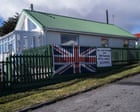
When a senior adviser to Argentine President Javier Milei claims the United Kingdom is "being colonised by Islam" while Buenos Aires ramps up pressure over the Falkland Islands, it's easy to get distracted by the shock value. Honestly, that's the whole point. Santiago Caputo tied Britain's domestic politics—specifically the election of Labour MP Sagal Abdi-Wali, a former Somali child refugee—to Argentina's claim over the islands, and Milei amplified the post.
If you're wondering what any of that has to do with a windswept archipelago in the South Atlantic, you're asking the right question. Culture-war rhetoric makes loud headlines. Offshore oil, international maritime courts, and islanders' self-determination actually decide who holds leverage. You might also find this related coverage interesting: Why China and Bhutan Border Talks Still Carry High Stakes.
Look past the viral provocation and the picture gets much sharper. Over the past few months, Milei's government has moved from speeches about "winds of change" to legal filings in Hamburg, arrest threats against oil executives, and diplomatic clashes over royal visits. Dragging British domestic demographics into a sovereignty dispute is a rhetorical detour—and a pretty revealing one about how Buenos Aires is trying to reframe an old conflict for new audiences.
How Culture War Rhetoric Meets the Falklands Dispute
Caputo's argument isn't a legal brief. It's a political narrative designed to paint Britain as culturally weakened or declining so Argentina's sovereignty push looks urgent and ideological rather than merely territorial. By pointing to Abdi-Wali's election to Parliament and claiming Islam is gaining power in Britain, the post tries to turn a South Atlantic territorial row into a broader clash over Western identity. As reported in latest coverage by Reuters, the implications are significant.
That framing falls apart quickly once you look at how international law and island politics actually work. Sovereignty over the Falkland Islands—called Islas Malvinas in Argentina—doesn't hinge on who wins a seat in Westminster or how Britain's domestic electorate shifts. Britain anchors its position on the principle of self-determination. In the 2013 referendum, 99.8% of Falkland Islanders voted to remain a British overseas territory, with only three votes cast against.
Argentina rests its case on territorial integrity and succession from the Spanish Empire. No international court has settled the core sovereignty question. Mixing domestic British politics into that dispute might energize online partisans, yet it doesn't add a single ounce of legal weight in a tribunal.
What Islanders Actually Care About on the Ground
In Stanley, life looks very different from social media threads in Buenos Aires. Islanders aren't debating Westminster culture wars as a prelude to changing flags; they're thinking about economic resilience, shipping links, fisheries, and offshore energy.
Historically, fishing has carried much of the islands' economic weight. Developing offshore hydrocarbons offers a chance to diversify public revenue and fund local infrastructure over the long haul. From the perspective of residents who voted overwhelmingly to stay British in 2013, threats from Argentina feel less like a philosophical debate about Western civilization and more like direct economic and legal pressure on their livelihood.
The Real Flashpoint Is Sea Lion Oil and Maritime Law
If you want to understand why tensions escalated sharply in late 2026, skip the slogans and follow the drilling plans. Roughly 130 miles north of the Falklands sits the Sea Lion oil field, developed through a partnership involving Navitas Petroleum and Rockhopper Exploration.
Estimates for Sea Lion vary depending on whether you're looking at recoverable reserves or broader resource categories, with figures cited around hundreds of millions of barrels and larger resource estimates in the basin. First oil has been targeted for around 2028 pending remaining regulatory steps and licences. For a small territory, even a fraction of that revenue is transformative.
Buenos Aires views the project as unlawful exploitation in disputed waters. Argentine officials have argued that oil revenues could bolster Britain's position and military presence in the South Atlantic. Rather than relying solely on speeches at the United Nations, Argentina turned to the International Tribunal for the Law of the Sea (ITLOS) under the UN Convention on the Law of the Sea, with hearings held in Hamburg in November 2026 and a ruling expected later that month.
Escalation Beyond the Courtroom
Legal filings are only half of the pressure campaign. Argentina has also ramped up threats of sanctions and legal action against companies and executives tied to offshore exploration, including warning of jail threats against a British oil executive connected to the project, prompting the UK to push back and ask Interpol to reject politically motivated arrest requests.
At the same time, diplomatic friction keeps flaring over symbolism. When Princess Anne visited the Falklands in November 2026, Argentina's foreign ministry condemned the trip as a provocation tied to what Buenos Aires calls an illegal occupation. Meanwhile, the UK government and Falklands authorities have insisted that licences granted locally remain valid and that lawful offshore development will continue with London's backing.
Why Milei Is Pushing This Now
A fair question to ask is why Milei—an avowed libertarian who campaigned heavily on economic overhaul and market reform—leans so hard into historic nationalism over the islands. Politically, the Falklands issue is one of the few causes in Argentina that cuts across deep domestic divisions. Even critics of a president's economic policies often share a strong emotional attachment to the Malvinas.
There's also a diplomatic calculation at play. Milei has repeatedly pointed to a friendlier alignment with Washington and suggested that geopolitical winds could shift in Argentina's favor. Yet Washington has historically maintained a delicate posture on the islands, and London shows zero sign of conceding sovereignty or abandoning the principle of self-determination.
Let's be real about the limits here. Loud rhetoric on social media travels fast, especially when it touches sensitive topics like immigration, religion, and national identity. Still, international disputes over offshore resources are decided by treaties, court rulings, commercial financing, and naval and diplomatic resolve—not viral posts.
Where Misconceptions Trip People Up
People following this story often fall into three predictable traps:
- Treating social media posts as policy shifts: A provocative post by an adviser or a repost by a president gets attention, yet legal arguments in Hamburg depend on maritime law and procedural rules, not culture-war talking points.
- Assuming quick military replay: The 1982 war cost 649 Argentine military lives, 255 British military lives, and three Falkland Islanders. Today's confrontation centers on legal warfare, economic pressure, and oil rights rather than an immediate return to shooting.
- Ignoring the islanders' vote: Any serious discussion of the Falklands has to account for the people who actually live there, who have consistently rejected Argentine rule.
How to Read the Next Moves Clearly
If you're tracking this dispute as it unfolds, focus on concrete signals instead of outrage bait. Watch the ITLOS proceedings and rulings in Hamburg to see whether Argentina wins any interim restrictions on offshore activity. Keep an eye on licensing and commercial milestones for the Sea Lion project, since project delays or sanctions risk tell you far more about real leverage than speeches do.
Most of all, separate domestic political theater in Buenos Aires and London from the underlying South Atlantic equation. When politicians mix unrelated cultural grievances into a territorial standoff, they're usually trying to change the subject—or rally their base—while the harder legal and economic battles play out quietly in the background.



