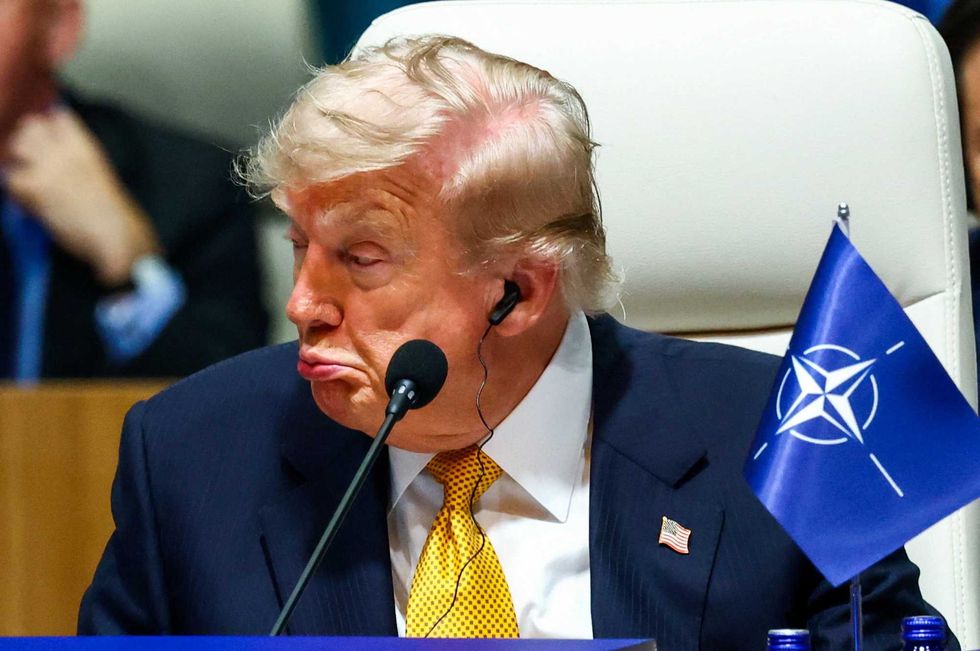
When retired flag officers start breaking ranks to criticize civilian leadership, Washington usually tries to dismiss it as political sour grapes. But when high-ranking veterans like retired Army Lt. Gen. Mark Hertling or former CENTCOM commander Gen. Frank McKenzie raise red flags about U.S. strategy in the Middle East, the critique goes far deeper than partisan bickering. It exposes a fundamental rift between military doctrine and political impulse.
Modern conflict requires a clear end state. Generals are trained from day one at West Point and Carlisle Barracks to plan backward from a strategic goal. If you don't know what victory looks like on paper, you won't recognize it on the ground. When military strikes occur without a defined political objective, commanders call it "digging the hole deeper." That isn't just a clever phrase; it's a warning about the dangerous friction between short-term tactical wins and long-term military failure. Building on this idea, you can also read: The Weaponization of Market Access and the Architecture of Secondary Tariffs.
The Gap Between Striking a Target and Winning a War
Tactical success is relatively easy for the United States. Tactical victory means launching precision munitions, taking out air defense radars, or destroying oil infrastructure on Kharg Island. American service members excel at execution. They have the best training, the best logistics, and the most capable weapon systems on earth.
Strategic success is entirely different. Strategy answers the hard questions. What happens after the radar sites are destroyed? Who governs the territory when a adversary's command structure collapses? How do you keep vital sea lanes like the Strait of Hormuz open when a regional power resorts to asymmetrical naval warfare? Experts at NBC News have provided expertise on this matter.
Tactical Level   --> Destroy enemy assets, execute strikes, win battles
Strategic Level  --> Establish long-term stability, secure peace, align military action with policy
When civilian leaders treat military strikes as a primary tool of negotiation rather than a last resort, they flip military doctrine on its head. Using air strikes to send messages often leads to predictable escalation loops. The enemy responds to save face, the U.S. responds to demonstrate resolve, and suddenly a country finds itself dragged into a major regional war without ever deciding to enter one.
What Happens When Pentagon Experience Gets Pushed Aside
military leadership relies on candid, unfiltered advice from seasoned officers who spent four decades rising through the ranks. When senior commanders like Army Gen. Christopher Donahue get pushed toward the exit for pushing back on political mandates, the decision-making pipeline breaks down.
Civilian control of the military is a cornerstone of American democracy. Nobody in uniform disputes that the president is the commander-in-chief. However, effective civilian control requires civilian leaders who actually listen to hard truths from battle-tested commanders.
When top leadership replaces seasoned advisors with loyalists who only say yes, military strategy turns into guesswork. High-ranking military officers spend their careers studying historical campaign failures. They know that ignoring operational logistics or dismissing regional dynamics leads straight to chaos.
The Problem With Quick Fixes in Complex Conflicts
Foreign policy hawks often argue that aggressive posture deters adversaries instantly. History proves it rarely works out that cleanly.
- Miscalculating enemy resolve: Adversaries rarely back down when backed into a corner; they usually double down to secure domestic survival.
- Alienating international allies: Unilateral military moves strain relationships with critical partners across Europe and the Middle East, making coalition building nearly impossible later.
- Ignoring logisitics: Sustaining naval blockades and continuous air sorties drains munitions stockpiles faster than defense industrial bases can replace them.
The Failure of Escalation Without Strategic Objectives
Look at recent operations in the Gulf. Taking control of maritime choke points or targeting foreign oil facilities sounds decisive on television. In practice, it creates massive secondary effects across global energy markets, international shipping lanes, and regional alliance structures.
If you hit an adversary's key infrastructure, you force them into a survival mindset. A regime facing an existential threat doesn't negotiate on your terms; it uses every asymmetrical asset it has. That means mine-laying in narrow waterways, proxy drone attacks on civilian shipping, and widespread cyber operations against critical infrastructure.
Military commanders understand these ripples because they run the war games. They know that every action triggers three distinct counter-actions. When politicians jump straight to offensive operations without calculating those secondary effects, they leave troops on the front lines to clean up the strategic mess.
How Citizens Can Evaluate Military Strategy
You don't need a diploma from the War College to spot a flawed military strategy. The next time Washington announces new foreign military actions, ask these practical questions to separate strategic planning from political posturing:
- Is there a clearly stated end goal? Watch out for vague language like "restoring deterrence" or "sending a message." Look for concrete objectives.
- Are allies actively participating? If key regional partners and long-standing allies refuse to open their airbases or support operations, the plan usually lacks broad strategic viability.
- Is there a plan for the day after? Striking targets is straightforward; managing the economic, political, and security fallout takes years of careful planning.
- Is military leadership in agreement? Pay close attention when recent military retirees start voicing concerns publicly. They often express the exact same worries that serving commanders are bound by protocol not to say out loud.
Understanding foreign policy isn't about taking political sides. It's about recognizing that military force is an instrument of policy, not a substitute for it. Without clear strategy, even the most capable military in the world ends up fighting endless battles without a path to lasting peace.