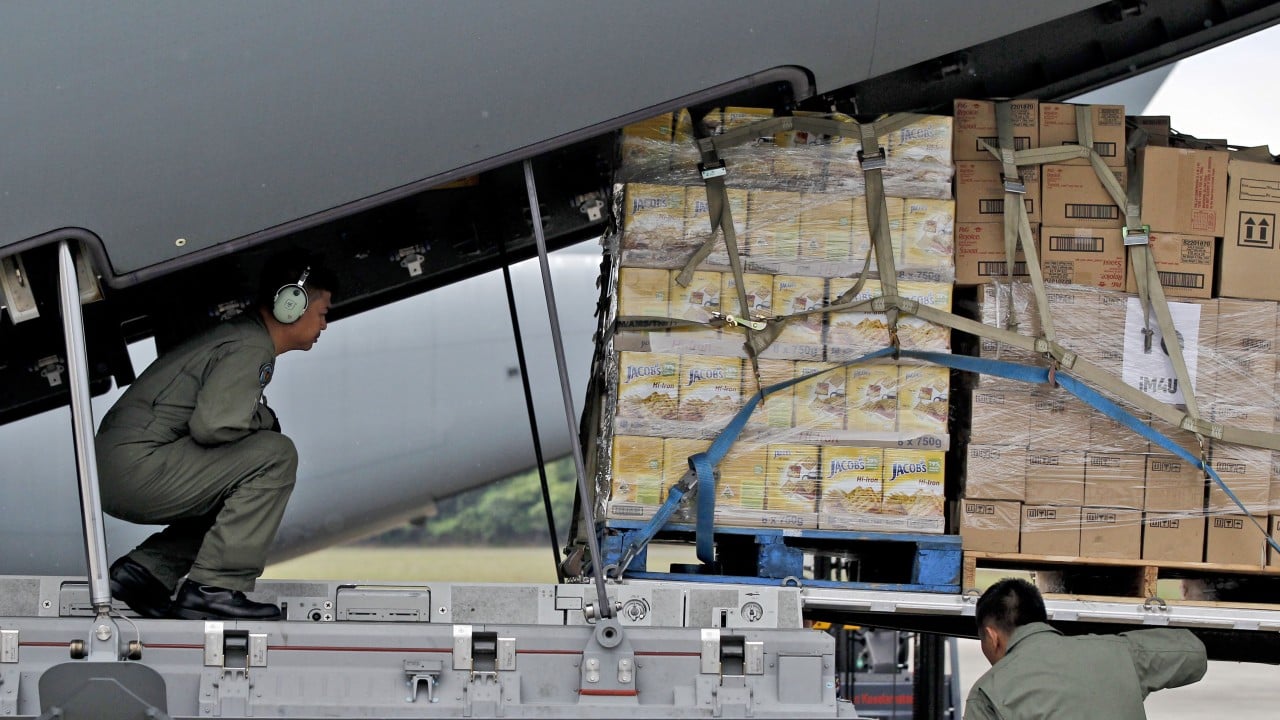
The discovery of 96.64 kilograms of illicit drugs inside five unattended cargo bags at Subang Air Base should alarm sovereign defense strategists worldwide.
This was not a minor slip by low-level border officers. Malaysian Prime Minister Anwar Ibrahim revealed that military transport aircraft were allegedly exploited not once, but as many as 20 times to move narcotics.
The seizure of methamphetamine, amphetamines, and MDMA—valued at RM4.83 million (US$1.2 million)—alongside nearly seven kilograms of liquid precursor chemicals exposed a direct pipeline running from Peninsular Malaysia into Sabah, intended for onward transit into the Philippines and Indonesia. Seven Royal Malaysian Air Force (RMAF) personnel and six civilians have been detained, with multiple officers facing charges under Section 39B of the Dangerous Drugs Act 1952, an offense that carries the death penalty.
While executive vows of an unyielding purge dominate headlines, the incident underscores a deeper vulnerability: organized syndicates infiltrating official security infrastructure by exploiting institutional trust.
The Blind Spot in Sovereign Logistics
Military logistics networks are engineered for speed, operational secrecy, and mission readiness. Cargo moving through airbases like Subang operates outside standard civilian customs protocols.
Instead of passing through multi-layered commercial airport checks—where x-ray scanners, sniffer dogs, and multi-agency border teams scrutinize every crate—military freight relies heavily on chain-of-command trust. When corrupt personnel within that chain compromise internal safeguards, the military transport apparatus inadvertently becomes an unmonitored logistics corridor for illicit trade.
Moving nearly 100 kilograms of narcotics through an active defense facility requires deliberate coordination. Airbase access control systems are designed to keep external threats out, but they rarely apply equal friction to bad actors operating from within.
By bypassing civilian oversight, criminal networks essentially used sovereign assets as a protected transit pipeline.
[Peninsular Supply Hubs]
           │
           ▼
 [Subang Air Base (RMAF)]  ◄── Internal compromise bypasses standard customs
           │
           ▼
[Military Air Transit Route] ──► Exploits airbase manifest trust gaps
           │
           ▼
 [East Malaysia / Sabah]
           │
           ▼
[Regional Export Markets] (Philippines & Indonesia)
The operation was not limited to military channels. Just months prior, a commercial flight captain from a regional carrier was arrested in Jakarta carrying 70,000 ecstasy pills. Together, these breaches highlight a broader campaign by regional drug syndicates to target aviation transport workers and defense insiders to guarantee safe transit for high-value contraband.
Why Vows to Purge Corruption Fall Short
Political leaders often respond to security breaches with public promises to dismantle corrupt networks. However, structural enforcement gaps frequently hinder these efforts.
- Siloed Agency Oversight: Military intelligence and civil law enforcement traditionally operate in separate spheres. Without unified, real-time vetting mechanisms, suspicious internal behavior can easily go unnoticed by external law enforcement agencies until a major breach occurs.
- Inadequate Logistics Auditing: Military transport assets are routinely deployed on tight operational schedules, frequently creating procedural shortcuts in cargo scanning and manifest verification at military terminals.
- Low Risk to High Reward Ratios: Syndicate payouts for facilitating airbase transit can equal years of standard military compensation, creating significant corruption risks where institutional safeguards are weak.
Addressing these vulnerabilities requires a systemic shift rather than temporary crackdowns. Establishing permanent, independent civilian oversight for non-tactical military cargo movement is essential to preventing similar breaches.
Additionally, security protocols must treat internal airbase logistics with the same analytical scrutiny applied to commercial borders. Without continuous insider-threat monitoring and automated manifest cross-checks, military infrastructure remains vulnerable to covert exploitation by organized crime.
Relying solely on institutional trust in state logistics creates severe national security blind spots. Modern counter-narcotics strategy demands that sovereign military corridors receive the same rigorous inspection protocols as any international freight terminal.