Mohenjo Daro isn't what your history textbook says it is. For decades, we've pinned the "mature" phase of this massive bronze-age metropolis to roughly 2500 BCE. That date’s basically fossilized in academic circles. But new research and carbon dating suggest we've been underselling the city's age by centuries—maybe even a millennium. It turns out the Indus Valley Civilisation didn't just pop up out of nowhere to rival Egypt and Mesopotamia. It was likely established and thriving while the builders of the Great Pyramid were still figuring out their blueprints.
If you look at the recent data coming out of sites like Bhirrana and Rakhigarhi, the timeline shifts significantly. We’re no longer talking about a civilization that hit its stride in 2600 BCE. Scientists using high-sensitivity radiocarbon dating have pushed the origins of these urban centers back to nearly 8000 years ago. That makes Mohenjo Daro part of a lineage much older than the "cradle of civilization" honors usually reserved for the Tigris-Euphrates valley. If you liked this article, you might want to look at: this related article.
The problem with the old timeline
History’s messy. Most of what we know about Mohenjo Daro comes from excavations in the 1920s. Back then, archaeologists didn't have the tech we have now. They relied on "relative dating"—comparing pottery styles or brick sizes to other sites. They saw similarities with Sumerian artifacts and just assumed they were contemporaries.
It’s a lazy way to do science, frankly. For another angle on this development, check out the recent coverage from The New York Times.
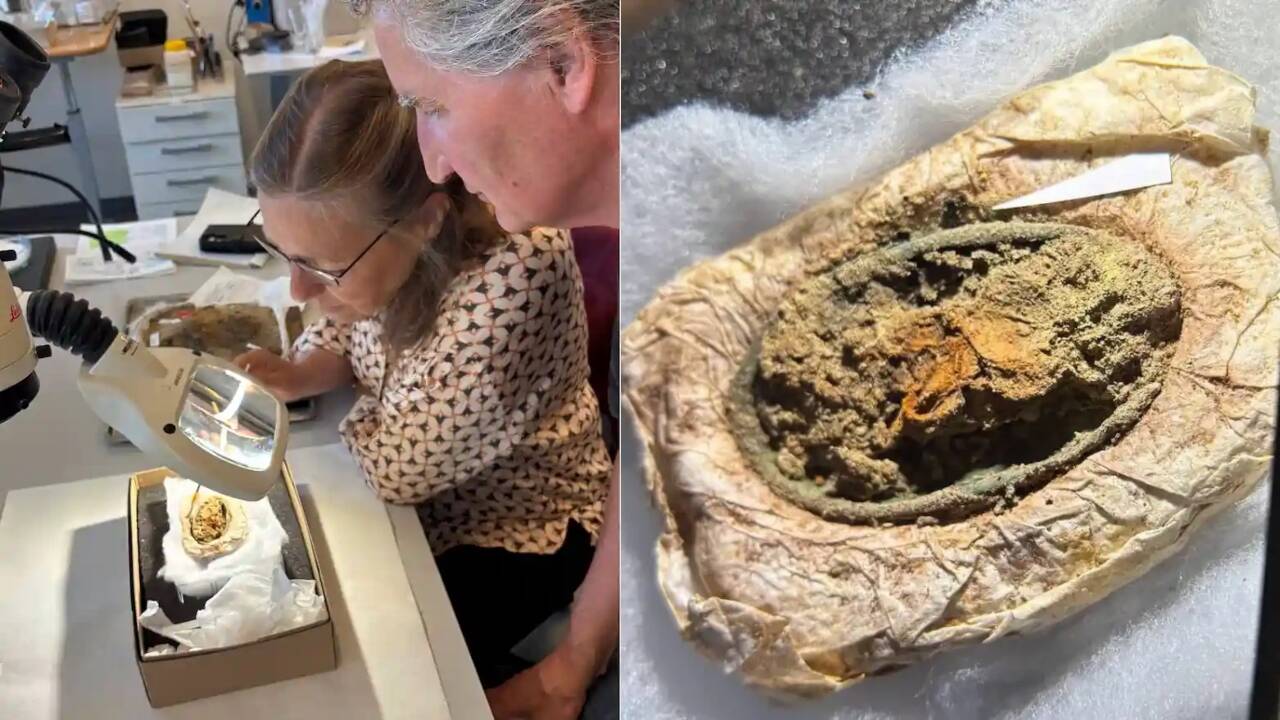
Recent studies published in journals like Nature have used oxygen isotope analysis on animal teeth and bone fragments from these sites. The results? They show that the people of the Indus were already practicing sophisticated agriculture and urban planning far earlier than the standard 2500 BCE marker. We're talking about a culture that survived radical climate shifts that would've wiped out less organized groups.
Why the age of Mohenjo Daro matters
You might think 500 or 1000 years doesn't matter much when you're looking back five millennia. You're wrong. When we realize Mohenjo Daro is older, it changes the entire map of human innovation.
This city had a sewage system that would've made 18th-century London look like a swamp. They had standardized weights. They had a grid layout that modern urban planners still drool over. If this level of sophistication existed in 3500 or 4000 BCE, it means the Indus people didn't "borrow" the idea of a city from the Middle East. They pioneered it.
The climate resilience factor
One of the most fascinating things about the new dating is how it overlaps with the "Holocene" climate changes. We used to believe the Indus Valley Civilisation collapsed because the monsoon failed. While a mega-drought did happen, the updated timeline shows these people didn't just give up and die.
They shifted. They changed their crops from large-grained wheat and barley to drought-resistant millets. This wasn't a sudden collapse; it was a long, calculated adaptation. You don't get that kind of societal resilience from a brand-new culture. You get it from a civilization that has thousands of years of institutional knowledge baked into its DNA.
Misconceptions about the Aryan Invasion
I can't talk about the age of Mohenjo Daro without mentioning the "Aryan Invasion Theory." For years, people claimed a group of nomadic warriors from the north swept in and destroyed the city.
It's a myth.
Genetic studies and skeletal remains show no evidence of a massacre. There's no "war layer" in the soil. The city wasn't conquered; it was slowly vacated as the Indus River changed its course. By pushing the dates back, we see a much longer, more stable occupation that simply doesn't fit the narrative of a violent, sudden end.
The tech inside the walls
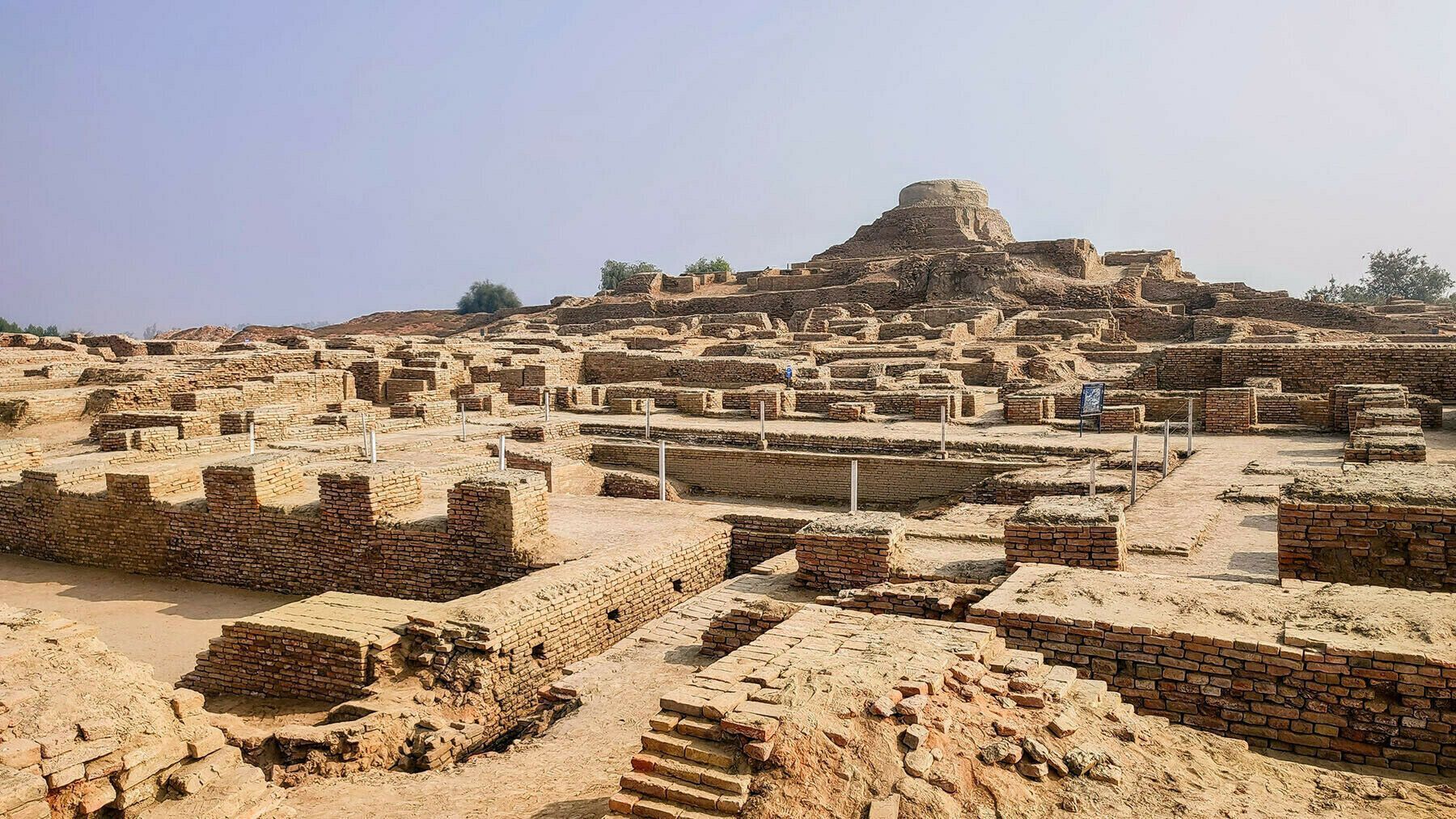
Mohenjo Daro was a city of 40,000 people at its peak. Think about that. No electricity, no steel, yet they built a "Great Bath" that was essentially a waterproofed public pool using bitumen. They had private wells in almost every house.
- The Citadel: A raised area for public buildings.
- The Lower Town: Where the actual living happened.
- Standardized Bricks: Every single brick had a 4:2:1 ratio.
The precision is staggering. If you’re building with that kind of uniformity in 3000 BCE, your culture has been around for a long time. You don't just wake up one day and decide every brick in a thousand-mile radius needs to be the same size. That takes centuries of established trade and governance.
What's actually happening at the dig sites
The truth is, we've only scratched the surface. Most of Mohenjo Daro is still underground. High water tables make it almost impossible to dig deeper without destroying what's already there. We're using non-invasive tech like LiDAR and satellite imagery now to map what's underneath.
What we're finding is that the "suburbs" of Mohenjo Daro were far more extensive than previously thought. The city wasn't an isolated island of progress. It was the hub of a massive network of over 1,000 settlements.
It's time to update the maps
The old dates are dying. They’re being replaced by a reality where the Indus Valley wasn't a "third" civilization behind Egypt and Mesopotamia, but quite possibly the first to master the art of the city.
The next time you hear someone mention Mohenjo Daro, remember that we're looking at a site that was already ancient when the Greeks were barely building huts. The scale is different. The timeline is different.
If you want to understand where we're going as a species, you've got to look at where we started. That start was much earlier than we ever dared to guess. Keep an eye on the latest reports from the Archaeological Survey of India and the heritage teams in Pakistan. The soil still has plenty of secrets, and every new carbon sample is a punch in the gut to the traditional history books.
Go read the actual research papers if you've got the stomach for the data. Don't just take the word of a textbook written in the 70s. History is being rewritten right now, and Mohenjo Daro is the pen.