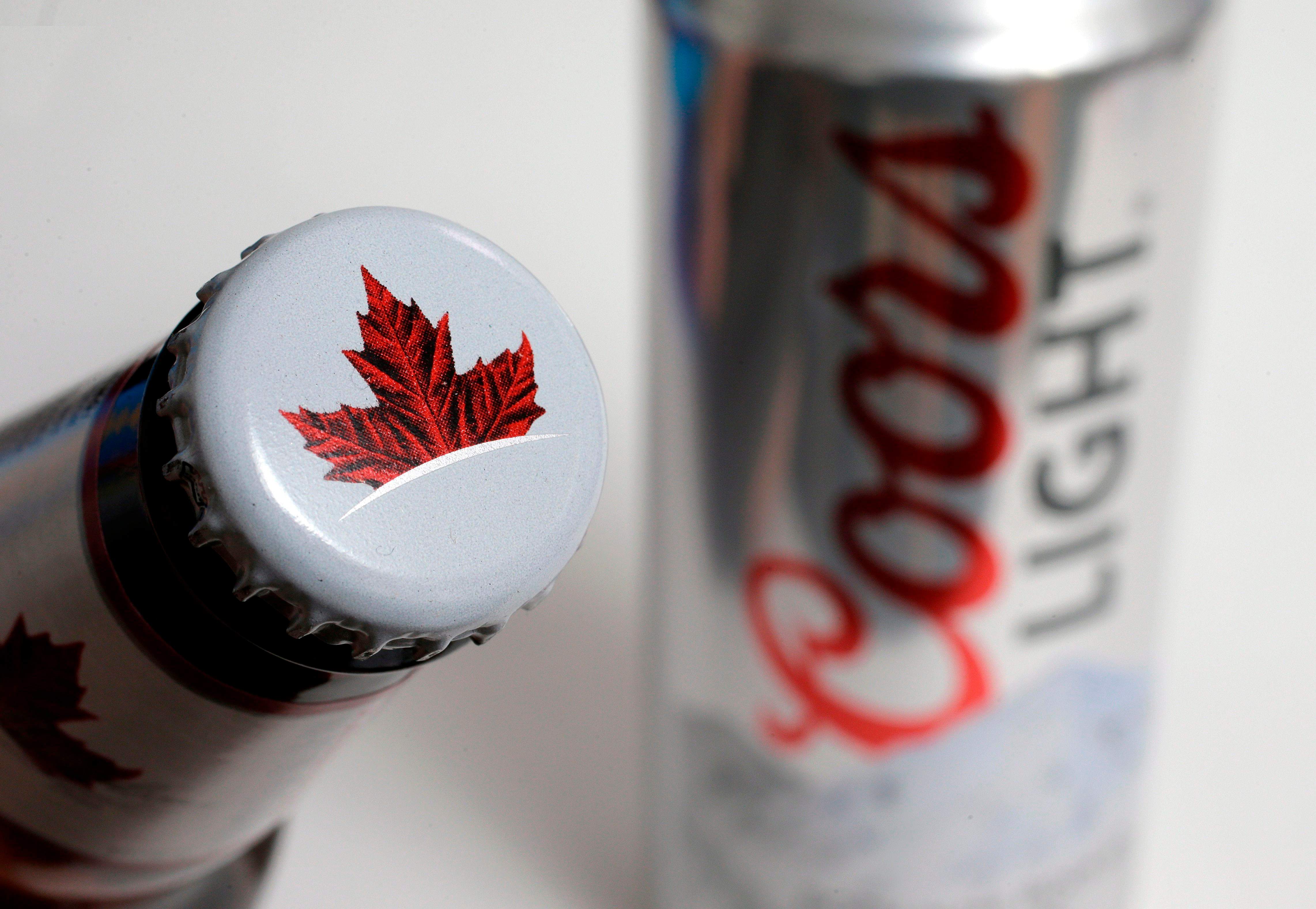
Panic clicks pay the bills in digital media. When news broke that Molson Canadian, Coors Light, and 27 other beers were pulled from shelves across Canada, the coverage followed a predictable, breathless script. Headlines screamed about contamination. Comment sections filled with armchair critics declaring the death of macro-brewing quality control.
They missed the entire story.
If you look at a massive voluntary recall from a legacy brewer and see a failing company, you do not understand industrial food safety. You are reacting to the word "recall" like a pavlovian dog conditioned by sensationalist news alerts. The reality of what happened inside those Canadian bottling and canning facilities is the exact opposite of negligence. It is proof that the quality assurance systems built by major brewers actually catch microscopic failures before a single consumer gets hurt.
The Lazy Consensus Around Macro Beer Recalls
Mainstream reporting treats every product recall as a monolithic disaster. Whether a spinach farm ships E. coli across twelve states or a brewery catches a non-hazardous packaging defect on a high-speed canning line, the coverage uses the exact same tone of moral outrage.
The lazy consensus goes like this: big corporations cut corners to maximize margins, quality slips, and consumers pay the price. Craft beer purists love this narrative. It validates their belief that mass-produced lagers are soulless chemical brews churned out by careless conglomerates.
That narrative falls apart the second you look at how modern brewing logistics actually work.
A single high-speed canning line at a major facility like Molson Coors in Toronto or Montreal runs upwards of 1,500 to 2,000 cans per minute. At that velocity, a minor mechanical variance—a slightly off-spec seamer head, a batch of faulty aluminum lids from a third-party supplier, or an improper pasteurization cycle on a single pallet—affects tens of thousands of units in less than an hour.
When a brewer recalls 29 distinct SKUs across multiple provinces, they are not admitting that their beer is poison. They are demonstrating batch traceability. They know exactly which hour, which line, and which packaging lot experienced a deviation from their internal specifications, and they are willing to eat millions of dollars in write-offs to pull that inventory back before it damages brand equity.
What Actually Triggers a 29-Brand Recall
To understand why 29 beers get pulled at once, you have to understand contract packaging and shared infrastructure. Consumers see 29 different brands—Molson Canadian, Coors Light, Carling, Rickard's, Keystone, Old Style Pilsner—and imagine 29 separate catastrophic failures.
In reality, those 29 brands share the exact same packaging lines, the same bottle suppliers, the same crown manufacturers, and the same pasteurization tunnels.
In the brewing industry, recalls almost never stem from the liquid itself being toxic. Beer is inherently hostile to human pathogens. Between the alcohol content, the low pH (typically between 4.0 and 4.4), the antimicrobial properties of alpha acids in hops, and the anaerobic environment inside a sealed can or bottle, known foodborne pathogens like Salmonella or E. coli simply cannot survive in finished beer.
When a major brewer pulls 29 brands off Canadian shelves, the culprit is almost always physical or mechanical:
- Glass delamination or chipping: A microscopic flaw in a batch of amber glass bottles from a supplier causes tiny glass fragments to break off during high-speed crowning.
- Seam integrity failure: A double-seam defect on aluminum cans allows oxygen ingress or compromises the structural integrity of the lid, leading to flat beer, spoilage organisms like Lactobacillus or Pediococcus (which ruin flavor but will not make you sick), or bursting cans.
- Allergen cross-contact or mislabeling: A flavored malt beverage or non-alcoholic SKU containing an undeclared ingredient gets packed into the wrong mother carton.
- Secondary fermentation: Incomplete pasteurization or filtration leaves live yeast in a package containing residual sugars, turning a standard can into a pressure hazard in warm storage.
Notice what is missing from that list. Nobody is dying from drinking a slightly oxidized Coors Light. Yet the Canadian Food Inspection Agency (CFIA) treats a potential glass fragment or an undeclared allergen with the exact same regulatory severity as a bacterial outbreak—and rightly so.
The Craft Beer Blind Spot Nobody Wants to Talk About
Here is the uncomfortable truth the beer industry refuses to say out loud: you are infinitely more likely to drink a defective, contaminated, or dangerous beer from a beloved local microbrewery than from Molson Coors.
I have walked the floors of dozens of regional and independent breweries over the last decade. The passion is undeniable. The sanitary design and quality assurance budgets are frequently terrifying.
A macro-brewer employs full-time microbiologists, sensory panels, inline optical inspection cameras, X-ray fill-level detectors, and automated seam tear-down equipment that checks can tolerances every thirty minutes. If a single parameter drifts outside a fraction of a millimeter, the line stops, and the product goes on hold.
Compare that to a typical 15-barrel craft brewery running a mobile canning line in an alley behind their taproom.
- No inline X-ray or optical sorting: If a bottle chips during filling, nobody knows until a customer cuts their lip.
- No tunnel pasteurization: When a small brewer makes a heavily fruited sour beer and ships it warm to retail shelves, live yeast continues eating the fruit sugars inside the can. Those cans regularly explode on liquor store shelves or in the trunks of customers' cars.
- Zero recall infrastructure: When a small brewery ships a batch of exploding cans or infected IPA, they do not issue a national CFIA recall across 29 SKUs. They quietly post an apology on Instagram, offer a free pint glass at the taproom, and sweep the mess under the rug.
Because craft breweries lack the distribution footprint and regulatory scrutiny of a giant like Molson Coors, their failures remain invisible to mainstream news desks. Meanwhile, when a macro-brewer executes a textbook, high-visibility recall to protect consumers, the press crucifies them for it.
The Economics of a Voluntary Recall
Let us talk about the financial reality of pulling 29 brands across Canada. This is not a cheap PR stunt. It is a brutal hit to quarterly operating income.
When a brewer initiates a recall of this scale, the direct costs cascade immediately:
- Lost wholesale revenue: Every case pulled from provincial liquor boards—the LCBO in Ontario, SAQ in Quebec, BC Liquor Stores—is refunded or credited back.
- Reverse logistics: Paying freight carriers to haul pallets of heavy liquid back from hundreds of distribution centers and retail locations costs nearly as much as shipping it out in the first place.
- Destruction fees: You cannot simply dump thousands of hectoliters of beer down a municipal drain. Municipalities charge massive surcharges for high Biological Oxygen Demand (BOD) wastewater, forcing brewers to pay specialized waste management facilities to separate the liquid, crush the aluminum, and recycle the glass.
- Retail slotting and out-of-stock penalties: Empty shelf space during peak drinking seasons means losing market share to Anheuser-Busch InBev or independent competitors.
A company only absorbs a multi-million-dollar financial blow like this when its internal risk-management culture overrides short-term profit pressure. I have seen mid-sized beverage companies gamble with borderline batches because they could not afford the write-off. They shipped questionable product and prayed nobody noticed. Molson Coors did not gamble. They pulled the trigger.
Dismantling the Consumer Myths Around Beer Recalls
Whenever a recall hits the news cycle, the same flawed questions dominate search engines and social media threads. Let us dismantle them directly.
"Does a recall mean the brewery's standards are dropping?"
No. In food and beverage manufacturing, an increase in voluntary recalls usually correlates with better detection technology, not worse production. Twenty years ago, a hairline crack in a glass bottle or a micro-leak in a can seam went undetected until consumers complained. Today, automated inline sensors flag anomalies retroactively across entire production runs. More recalls mean the net is catching smaller fish.
"Should I stop buying Molson Canadian or Coors Light?"
Only if you prefer drinking products from companies that hide their mistakes. If you already enjoy the crisp, consistent profile of a North American adjunct lager, a recall is actually a reason to trust the brand more, not less. It proves that the company has the financial spine and operational discipline to yank flawed inventory rather than letting you drink it.
"Why were so many different beers affected at the same time?"
Because modern brewing relies on modular, high-efficiency production hubs. Brewers consolidate packaging at mega-facilities to keep retail prices low. If a supplier delivers a defective batch of packaging material—say, bottle crowns with faulty liners—every brand bottled on that line using that lot of crowns gets swept into the recall net. It is a supply chain bottleneck, not a recipe failure.
The Real Threat to Beer Quality Isn't Recalls
If you actually care about the quality of the beer in your fridge, stop worrying about CFIA recall notices and start paying attention to the supply chain failures that never trigger a headline.
The single biggest enemy of beer quality in Canada is warm storage and age, not manufacturing defects.
Beer is a fresh agricultural product. Hop compounds oxidize rapidly, and malt flavors degrade into papery, stale notes (driven by a compound called trans-2-nonenal) when exposed to heat and time. Yet across Canada, millions of cases of both macro and craft beer sit in unrefrigerated warehouses, bake in the backs of delivery trucks, and languish under harsh fluorescent lights in retail stores for six months before anyone buys them.
Nobody issues a recall for a six-month-old IPA that tastes like wet cardboard. No regulatory agency intervenes when a retailer stores a delicate pilsner next to a heating vent. Those silent quality failures ruin infinitely more drinking experiences than a mechanical packaging defect ever will.
The Downside of Extreme Traceability
There is a legitimate trade-off to the hyper-granular quality control systems that drive massive recalls, and industry insiders rarely admit it.
When you build a manufacturing system designed to eliminate every conceivable variance, you inevitably sterilize the product itself. The relentless pursuit of zero defects and uniform consistency is the exact reason Molson Canadian and Coors Light taste identical in Halifax, Winnipeg, and Vancouver—and why they lack the vibrant, messy character of unpasteurized, unfiltered beer.
Extreme safety and absolute consistency require heavy processing: sterile filtration, flash or tunnel pasteurization, and strict automated controls. Furthermore, the cost of maintaining recall-ready traceability systems creates a massive regulatory moat. Mega-brewers can afford the million-dollar inspection machines and compliance teams; small independent brewers cannot. Over time, the rising bar for industrial food safety consolidates power in the hands of the biggest players while squeezing out smaller innovators.
How to Actually Protect Yourself as a Beer Drinker
Forget refreshing recall databases. If you want to ensure every beer you open is safe, fresh, and tastes the way the brewer intended, follow three rules that actually matter:
- Read the Julian date or packaging stamp, not just the brand. Every major brewer stamps a production code or "born on" date on the bottom of the can or shoulder of the bottle. For lagers and hop-forward beers, never buy anything more than 90 days past its packaging date, regardless of what the "best before" date claims.
- Buy from cold boxes, never warm floor stacks. Beer ages roughly three to four times faster at room temperature than it does at 38°F (3°C). If a store displays pallets of beer unrefrigerated near the front window, walk past them and grab a case from the walk-in cooler.
- Inspect the package before you pour. Do not drink straight from a glass bottle if you suspect a packaging issue—pour it into a glass. Check aluminum cans for bulging lids, sticky residue from micro-leaks, or dents along the top rim where the double seam sits.
The next time a major brewer pulls 29 beers off the shelf, ignore the clickbait panic. Save your skepticism for the brands that never issue a recall—because in manufacturing, perfection does not exist, and silence is usually the most dangerous sign of all.