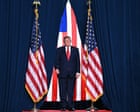
Dawn in Washington arrives quietly on certain autumn mornings, filtering gray light through the trees along 26th Street. But on one particular Monday, the quiet broke. At six o'clock, heavy knocks shattered the morning air. Federal agents stood on the porch of U.S. Representative Ilhan Omar.
For anyone who has ever watched the machinery of state turn its immense weight toward an individual, that moment carries a chilling familiarity. It is the sound of abstract political friction turning into a very concrete, heavy reality. Inside, doors opened. Outside, boxes were loaded. And within hours, the event ceased to be merely a legal proceeding and transformed into a lightning rod for a nation already bracing itself for the crucible of midterm elections. Discover more on a similar topic: this related article.
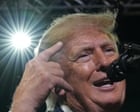
Consider what happens next in the modern political theater. The shockwaves traveled instantly from a residential D.C. neighborhood to a roaring campaign stage in Ohio. There, President Donald Trump addressed a packed arena, targeting the Minnesota congresswoman directly, labeling her a disaster and intensifying attacks against Somali immigrants just hours after the search warrant was executed. The juxtaposition was stark. On one side stood federal investigators sifting through paperwork regarding historical background files and past immigration documentation. On the other side stood a cheering crowd, fueled by a rhetoric that treats political opposition not merely as a disagreement over policy, but as an existential battleground.
To understand the weight of this moment, we have to look past the scrolling news tickers and examine the mechanics of power. Representative Omar, the first Somali American elected to Congress and a sharp, unyielding critic of the administration, immediately framed the raid as an unprecedented escalation—an attempt to weaponize federal law enforcement against political enemies. Supporters in Minneapolis rallied quickly, chanting in the crisp October air, arguing that an attack on an elected official from an immigrant background sends a terrifying message to marginalized communities everywhere. Additional analysis by The New York Times explores similar perspectives on the subject.
Yet, the administration's defenders maintain a different narrative, pointing to ongoing inquiries into historical records, citizenship documentation from childhood, and financial disclosures. They argue that no individual, regardless of office, stands above scrutiny.
This is where the line between accountability and intimidation blurs. When law enforcement actions coincide so neatly with electoral calendars and high-profile political rallies, public trust becomes the primary casualty. People watch, and they wonder: Is this justice, or is this a targeted signal?
The investigation centers on complex, decades-old questions, yet the implications ripple through the present day with startling velocity. No formal charges have been filed, leaving the situation suspended in an uncomfortable, volatile gray area. The documents remain largely sealed by judicial order, keeping the public guessing about the precise threshold that justified an early-morning federal search on a sitting member of the United States legislature.
History teaches us that democracies do not usually break all at once. They stretch. They bend under the weight of institutional friction until the extraordinary begins to look normal. When the home of an elected lawmaker becomes a site of federal execution of search warrants on the eve of a national election, the baseline shifts.
The sun set later that evening over Washington, casting long shadows across the empty street where the agents had parked their vehicles. But the questions they left behind refuse to fade into the dusk, lingering instead as a quiet warning about the fragile distance between governing a country and conquering it.
The search of Rep. Ilhan Omar's home and the subsequent political fallout