The asphalt radiates heat before the sun has even cleared the horizon. In a small neighborhood outside Havana, a rusted alarm clock shrieks at five in the morning, cutting through the heavy, humid air of a September dawn.
In this house, nine-year-old Mateo does not leap out of bed to the smell of pancakes or the distant roar of a yellow school bus idling at the corner. There are no yellow buses. There hasn't been a reliable fleet of them for years. Instead, Mateo’s grandmother, Abuela Clara, is already awake, standing over a small gas burner, boiling water for a weak cup of sugar-water coffee. She packs a single plastic bottle of lukewarm water and a piece of bread into a worn nylon schoolbag. For another perspective, see: this related article.
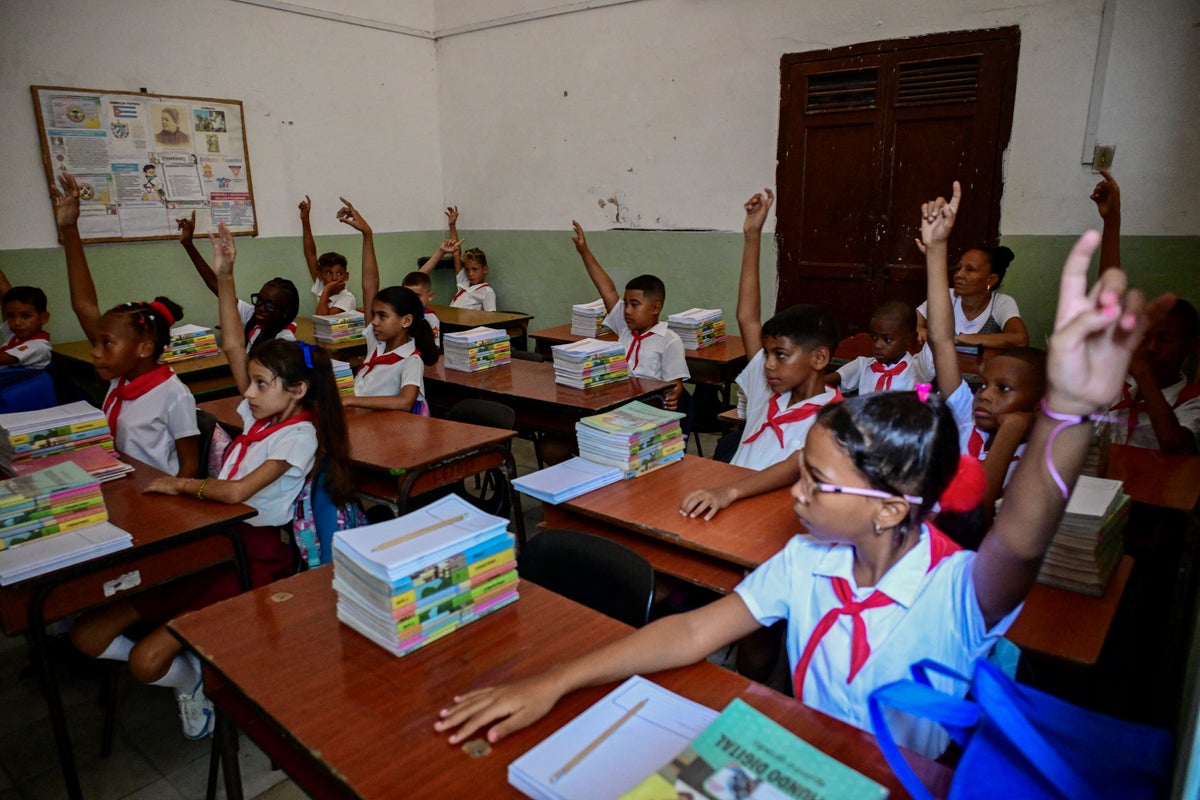
Today is the first day of the new school year. For 1.4 million students across Cuba, this milestone arrives under the crushing weight of a severe fuel crisis that has paralyzed public transportation.
Consider what happens next. Related analysis regarding this has been published by Al Jazeera.
Mateo steps out onto the cracked pavement, his pristine white-and-red school uniform freshly ironed despite the electricity blackouts that plagued the night before. His socks are pulled high. His shoes, handed down from an older cousin, are scuffed at the toes. Around him, the street comes alive with thousands of other children doing the exact same thing: walking. They march in small, determined groups, their parents hovering anxiously beside them, calculating the miles ahead.
The statistics are dry, but the reality is visceral. Cuba’s chronic fuel shortages—driven by a combination of crippled oil imports, collapsing infrastructure, and a punishing economic embargo—have starved the public transit grid. Buses sit dead in muddy lots, their batteries stripped, their engines silent monuments to logistical failure. Without diesel to burn, the wheels of the state-run transit system simply stopped turning.
For a nation that historically prides itself on universal, accessible education, the absence of transport is not a mere inconvenience. It is a structural fracture.
When you strip away the buses, the geometry of childhood changes entirely.
To understand the scale of this crisis, imagine the map of Havana or Santiago de Cuba as a giant clock, and the schools as the center. Children do not always live next door to their classrooms. Specialized academies, technical institutes, and regional schools require daily commutes that span miles. Without the customary fleet of vintage buses, crowded city trucks—known locally as camiones—and horse-drawn carts become the desperate alternative.
Families bargain with private drivers, pooling meager resources to pay exorbitant fares in pesos that lose their value by the hour. Those who cannot afford private transport lace up their sneakers. They walk three miles in the tropical heat. They arrive at the school gates with sweat-dampened shirts and dust on their ankles, carrying the exhaustion of a full workday before the first bell has even rung.
Teachers face a parallel dilemma. Educators, too, rely on the same paralyzed transit network. In many provinces, rural schools sit half-empty not because the children aren't willing to walk, but because the teachers cannot get there. Classrooms are consolidated. Schedules are compressed. Double shifts are introduced to maximize the use of daylight and whatever sporadic electricity is available.
We talk about education reform in abstract conference rooms, discussing curricula, digital literacy, and test scores. But true reform, in moments of acute crisis, comes down to physical endurance. Can a child concentrate on long division when their legs ache from a four-mile morning trek on an empty stomach? Can a teacher inspire a room full of teenagers when she spent two hours hanging onto the railing of an overloaded flatbed truck just to reach the schoolhouse door?
The resilience of the Cuban people is legendary, often romanticized by outsiders as a romantic quirk of survival. It is not romantic. It is exhausting.
Abuela Clara knows this exhaustion well. As she watches Mateo disappear down the dust-choked road, hand-in-hand with a neighbor boy, a knot tightens in her chest. She remembers her own school days, eras when buses ran on time, when fuel was abundant, when the future felt wide open and paved. Today, the future looks like a long, hot road.
Yet, as the school bell finally rings across the island—sometimes chiming from a cracked bell tower, sometimes signaled by a teacher shouting down a hallway—something remarkable happens. The noise of 1.4 million children fills the courtyards. Notebooks open. Pencils scratch against cheap paper. Despite the empty fuel tanks, despite the empty stomachs, the ritual of learning persists through sheer, stubborn human will.
The sun climbs higher into the relentless September sky, casting long shadows of children walking home.