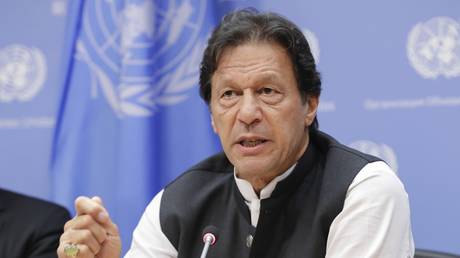
The headlines are drowning in synthetic empathy. Courts order Pakistan's jailed former prime minister moved to a medical facility, and the predictable narrative machine whirs into motion. Mainstream commentary treats this as a straightforward humanitarian breakthrough, a victory for due process, or a reluctant concession by a cornered establishment.
That interpretation is dangerously naive. If you found value in this post, you should read: this related article.
Strip away the legalistic theater and look at the raw mechanics of state survival in South Asia. Moving a high-value political prisoner out of a controlled cell environment and into a clinical setting is rarely about stethoscopes and intravenous drips. It is about narrative control, pressure diffusion, and neutralizing a symbol by changing its container.
Pakistan's political chessboard operates on entirely different rules than Western liberal democracies. Treating a court directive regarding Imran Khan as a standard judicial triumph misses the underlying power struggle entirely. For another perspective on this event, see the recent coverage from The Guardian.
The Comfort Trap Of Clinical Confinement
For months, the conventional wisdom held that keeping Khan locked away in strict isolation would either break his spirit or martyr him permanently in the public consciousness. Both assumptions are crude abstractions.
When a state apparatus agrees to hospitalize a disruptive political figure, it solves an immediate operational headache. A prison cell is a fixed coordinate of resistance. Every rumor of poor health, mistreatment, or deliberate neglect turns that cell into a megaphone. Supporters rally around the vacuum of information. Lawyers file frantic petitions. International pressure mounts based on unverified whispers leaking through prison walls.
Move that same figure to a hospital, and the dynamics flip instantly.
A medical facility is a controlled perimeter wrapped in sterile bureaucracy. Access becomes restricted not by arbitrary prison wardens, but by medical boards, security protocols, and specialized guards. The state regains narrative dominance. Bulletins replace rumors. Official medical reports supplant frantic tweets from family members.
By complying with the court order to provide medical evaluation, the establishment neutralizes the human rights outcry while simultaneously muting the physical presence of the leader. It trades a martyr in a dungeon for a patient under observation.
The Fallacy Of Judicial Independence
A recurring error in international coverage of Pakistan is the belief that courts operate as an independent referee between the political opposition and the military-backed establishment. This is a category error.
Judicial interventions in high-stakes political cases are safety valves, not checks and balances. When public temperature rises past a dangerous threshold, the judiciary steps in with relief orders that look like concessions but function as de-escalation tactics.
Ordering Khan to a hospital is a classic judicial pressure release. It gives his legal team a superficial win to parade before the media. It gives diplomats a talking point about the rule of law functioning under stress. Meanwhile, the core architecture of his legal disqualification, his detention, and the suppression of his party remains entirely intact.
Confusing a tactical relocation with structural reform is a mistake analysts make repeatedly. The court did not grant freedom; it granted a better room.
Decoding The Establishment Playbook
To understand why this move benefits the ruling structure, one must examine the utility of an incarcerated icon versus a hospitalized one.
When a leader is locked away completely, the movement they lead can mythologize their daily existence. Imagination fills the gaps. When that same leader is placed in a medical ward, the focus shifts immediately to pathology, frailty, and age. The political beast is momentarily reframed as a medical patient.
Furthermore, hospitalizations open endless avenues for procedural delay. Medical tests require follow-ups. Specialists demand consultations. Security assessments require security reviews. Weeks turn into months of legal stasis where momentum dies in administrative corridors.
The establishment understands that political movements run on emotional velocity. Stagnation is the ultimate killer of mass agitation. By shifting Khan from a concrete box to a hospital room, they inject a heavy dose of institutional friction into his party's organizational momentum.
The Real Danger Facing The Opposition
The most glaring blind spot in mainstream analysis is the assumption that Khan's party possesses a clear strategy to capitalize on his changing physical circumstances.
They do not.
For years, the political strategy has relied almost entirely on the magnetism of a single individual reacting against adversity. When the adversity is softened—even superficially—by air-conditioned hospital rooms and regulated medical access, the stark contrast that fueled the populist surge softens with it.
Real opposition requires structural organization, resilient local leadership, and a coherent economic counter-platform. Relying on judicial interventions to alter the balance of power is a losing game. Every time the courts throw a procedural bone, the opposition spends valuable political capital celebrating a crumb while the loaf remains locked away.
Beyond The Hospital Room
The obsession with where Imran Khan sleeps tonight obscures the systemic reality of Pakistan's political economy. Whether he is inside a prison cell or a guarded hospital wing, the fundamental contest over institutional dominance, economic stabilization, and state control remains unresolved.
Treating a hospital transfer as a turning point is a symptom of a media ecosystem addicted to superficial drama. Real change does not happen because a judge signs off on a medical transfer. It happens when power is genuinely contested across institutional lines.
Until the opposition stops treating procedural adjustments as victories, they will continue playing a game rigged to keep them perpetually reacting to the next courtroom decree.