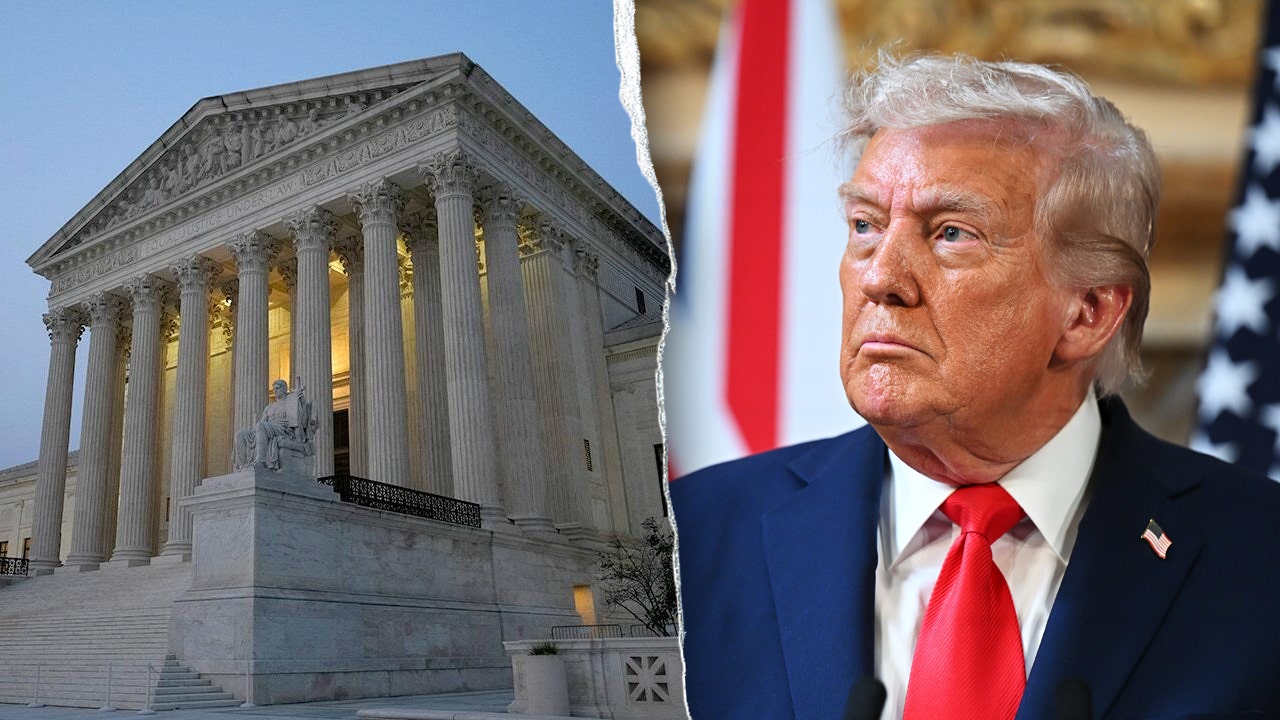
The legal dam has finally broken. For years, American importers and retailers operated under a cloud of fiscal uncertainty as the executive branch wielded trade duties like a blunt instrument. Now, following a landmark Supreme Court ruling that effectively clipped the wings of unilateral tariff imposition, a massive movement for financial restitution is gaining momentum. Congressional Democrats are no longer just complaining about trade wars; they are drafting the architecture for a massive refund program that could see billions of dollars flow back from the Treasury to the private sector.
The core of the issue rests on a fundamental question of constitutional power. Who actually controls the nation's purse strings? While the executive branch argued that national security concerns granted them near-infinite leeway to tax imports, the high court has reminded the beltway that Article I, Section 8 of the Constitution gives the power of the "lay and collect Taxes, Duties, Imposts and Excises" to Congress. This shift isn't just a win for constitutional originalists. It is a potential nightmare for a federal budget already stretched thin by deficit spending.
The Financial Fallout of Trade by Decree
When the previous administration initiated a series of aggressive tariffs on everything from industrial steel to consumer electronics, it did so by stretching the definition of "national security" under Section 232 of the Trade Expansion Act of 1962. For half a decade, American businesses paid the price. They didn't have a choice. To keep their supply chains moving, they swallowed the extra 10% or 25% costs, often passing those expenses directly to the consumer or eating the margins until their balance sheets turned crimson.
The Supreme Court’s intervention has turned these collected duties into "wrongful takings." Legal scholars argue that because the underlying justification for these specific tariffs was found to be procedurally flawed or unconstitutionally broad, the money collected belongs back in the hands of the entities that paid it. We aren't talking about pocket change. Estimates suggest that the total pool of contested funds exceeds $80 billion.
This is the mechanism that has sparked the current legislative push. Lawmakers are now faced with a logistical Herculean task: How do you return eighty billion dollars to thousands of different companies without creating a bureaucratic black hole? The proposed "Tariff Restitution Act" aims to bypass the standard, glacial pace of the Court of International Trade by establishing a direct claims office within the Department of Commerce.
Why the Refund Push is Gaining Bipartisan Quiet
While the headlines focus on Democrats leading the charge, there is a quiet, desperate nodding from across the aisle. Conservative lawmakers representing agricultural hubs and manufacturing districts have seen their constituents battered by retaliatory tariffs for years. A refund doesn't just look like a "blue state" win for coastal importers; it looks like a lifeline for a Midwestern tractor manufacturer that saw its raw material costs spike by 30% overnight.
However, the path to a check in the mail is littered with landmines. The Treasury Department is already sounding the alarm. If the government is forced to cough up $80 billion in a single fiscal year, it creates a massive hole in the projected revenue. This is money that has already been "spent" by the federal government on various programs and debt servicing. There is no vault in Washington filled with tariff gold waiting to be unlocked. Every dollar refunded must be borrowed or cut from elsewhere.
Critics of the refund movement argue that these companies have already passed the costs to consumers. They claim a refund would be a "double windfall" for corporations—they charged the public more to cover the tariff, and now they want the government to pay them back for the tax they already recovered from the customer.
The Complicated Reality of Supply Chain Math
To understand why that "double windfall" argument is often a fallacy, you have to look at the granular reality of industrial procurement. Most large-scale manufacturing contracts are signed years in advance. When a 25% tariff hits a shipment of specialized aluminum, the manufacturer can’t always change the price of the finished product they already promised to a buyer.
"The assumption that every cent of a tariff is passed to the consumer ignores the reality of fixed-price contracts and global competition. Many firms simply lost their profit margins and their competitive edge against foreign firms that weren't subject to the same tax."
A hypothetical example illustrates the pain: A medium-sized company producing medical imaging equipment relies on specific sensors only manufactured in one region. When a sudden tariff is applied, their per-unit cost jumps by $400. If they raise their prices, hospitals buy from a German or Japanese competitor instead. So, they keep their price steady and lose $400 on every sale. Over three years, that company might lose $15 million in pure profit—capital that would have gone toward R&D or hiring. For them, a refund isn't a bonus; it’s a restoration of stolen growth.
The Legal Precedent for Restitution
The Supreme Court's decision wasn't an isolated event. It was the culmination of a decade of judicial skepticism regarding "alphabet soup" agencies and executive overreach. By narrowing the scope of what constitutes a "national security" threat in trade, the court has signaled that the era of trade-by-tweet is over.
History shows us that once the judiciary labels a tax or duty "unauthorized," the government has a legal obligation to return it. We saw similar, albeit smaller, movements during the 1980s regarding certain harbor maintenance fees. The difference today is the sheer scale. The globalized nature of modern commerce means the "victim" list for these tariffs includes almost every major sector of the American economy.
The Infrastructure of the Refund
How does the money actually get back? The current draft of the refund legislation suggests a three-tier system for claims:
- Direct Importers of Record: Those who physically paid the Customs and Border Protection (CBP) entries. This is the simplest group to verify.
- Downstream Manufacturers: Companies that can prove they paid a "tariff surcharge" to a middleman or distributor. This is where the paperwork becomes a nightmare.
- Small Business Exemptions: A fast-track lane for companies with under $50 million in annual revenue to get their money back within 90 days.
This tiered approach is designed to prevent the largest corporations from sucking up all the available funds before the "mom and pop" shops can even file their paperwork. But even with a tiered system, the audit requirements will be staggering. The IRS and CBP would need to coordinate to ensure that a company claiming a refund actually paid the duty and didn't receive a prior exemption.
The Geopolitical Wildcard
There is a final, darker layer to this investigative look at the tariff refund push. Trade partners like the EU, China, and Canada are watching closely. If the U.S. government admits these tariffs were illegal and begins paying back domestic companies, international trade bodies will almost certainly demand similar "damages" for their own exporters.
The $80 billion domestic refund could be just the tip of the iceberg. If the World Trade Organization (WTO) uses the Supreme Court's ruling as a basis for sanctions, the U.S. could face a new wave of legal challenges from overseas. This is the "Pandora's Box" that the current administration is terrified of opening.
Every action in the world of global trade has an equal and opposite reaction. By attempting to right a domestic wrong, the U.S. might be handing its competitors the ultimate legal weapon to dismantle American trade barriers for the next generation. The refund isn't just a domestic accounting correction; it is a signal to the world that the American trade policy of the last several years was built on a foundation of sand.
Business owners shouldn't wait for a check to appear in the mail automatically. The window for filing "protests" with Customs and Border Protection is notoriously short, often expiring within 180 days of a shipment's liquidation. For many, the only way to join the refund queue is to proactively file "protective" claims now, even before the new legislation is fully passed. Companies that sit on their hands while the politicians argue in D.C. will find themselves at the back of a very long, very expensive line. Check your import records from the last four years and identify every "Section 232" or "Section 301" payment made. Documentation is the only currency that matters in a restitution fight.