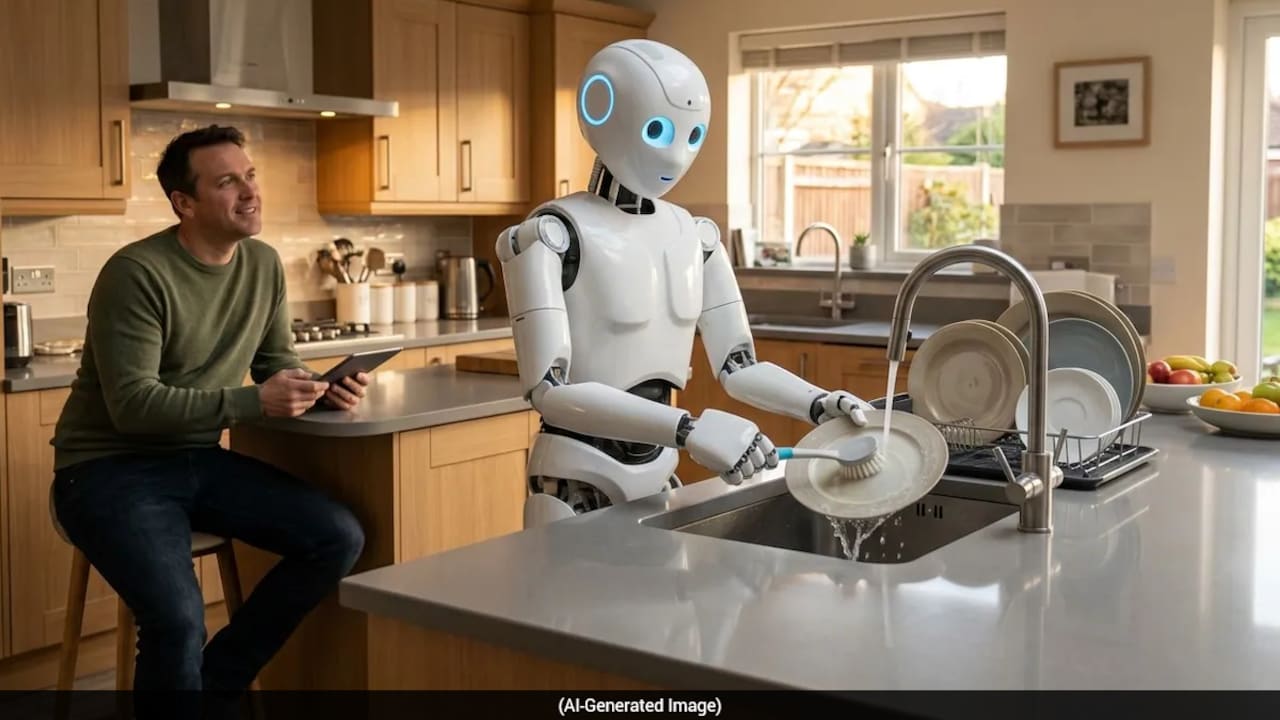
The specialized robotics industry is experiencing an expensive identity crisis. While mechanical systems routinely capture headlines by executing hyper-specific, physically demanding tasks—like pouring the perfect martini or running a marathon on two legs—they remain fundamentally incapable of executing simple, back-to-back varied tasks that a toddler handles with ease. This glaring limitation exists because current artificial intelligence models excel at static optimization but fail at dynamic context switching. Until engineers bridge the gap between narrow execution and general environmental awareness, commercial robots will remain trapped in single-role silos.
The illusion of robotic dominance is carefully curated. We watch high-definition videos of bipedal machines executing flawless backflips, navigating rocky terrain, or delicately placing a slice of lime onto a cocktail glass. These demonstrations are marvels of mechanical engineering and control theory. They prove that we can program hardware to manipulate physics with incredible precision.
But look closely at the edges of the frame.
The backflipping robot is operating in a mapped room with known traction variables. The bartending arm has been calibrated to the exact millimeter of the counter space, handling bottles of identical weight and shape. If you drop a tennis ball into the path of the marathon robot, or if a patron slides an unexpected glass toward the robotic bartender, the system does not adapt. It breaks.
The Tyranny of the Single Value Function
To understand why a machine cannot pivot from washing a dish to wiping a counter, you have to look at how these systems learn. Modern robotics relies heavily on reinforcement learning. Engineers define a specific reward function—a mathematical goalpost. For a running robot, the reward is maximizing forward velocity while maintaining balance. For a pouring robot, it is minimizing liquid spillage while hitting a target volume.
The machine runs millions of simulations to optimize for this single metric. Through trial and error, it builds a highly specialized policy.
This process creates a profound architectural vulnerability. The mathematical model optimized for running possesses zero transferable framework for grasping an object. When you ask a single-task robot to perform a second, different task, you run into the phenomenon of catastrophic forgetting. The new data overwrites the old neural pathways. The machine literally unlearns how to run in order to learn how to pour.
[Narrow Input Data] -> [Highly Specialized Optimization Model] -> [Single Precise Output]
                                                                        |
                                                 (Unexpected Environment Change = System Failure)
Building a robot that can switch between these tasks requires more than just stacking different software programs on top of each other. It requires a foundational layer of common sense that does not yet exist in commercial hardware.
The Hidden Overhead of Context Switching
Human beings switch tasks effortlessly because we maintain a continuous, generalized model of the world. When you walk from the kitchen to the living room, you do not need to reload your understanding of gravity, friction, or human anatomy. Your brain maintains a constant baseline.
Machines do not have a baseline. For a robot, changing tasks means shifting between entirely different computational states. Consider a hypothetical industrial setting where a robotic arm is tasked with sorting packages and then occasionally cleaning up packing debris.
- State A (Sorting): The vision system looks for box edges, barcodes, and weight distribution data.
- Transition: The system must flush its active memory, swap the active neural network, and recalibrate sensors for a different depth of field.
- State B (Cleaning): The system now ignores barcodes and looks for irregular scraps, changing its grip force entirely.
This transition creates massive computational latency. In the industrial sector, latency equals lost revenue. It is currently cheaper, faster, and more reliable to deploy two separate, dumb machines than it is to build one smart, multitasking platform.
The Hardware Bottleneck Behind the Software Promise
Software companies frequently claim that large language models and vision-language-action frameworks will solve the multitasking problem. They argue that if a robot can understand the world through text and images, it can figure out how to do anything. This narrative ignores the brutal realities of physical hardware.
A multitasking robot requires actuators and end-effectors that are as adaptable as the human hand. Industrial grippers are usually specialized. A suction cup gripper is perfect for boxes but useless for picking up a fallen pen. A three-fingered metallic claw can grab a wrench but will crush a paper cup.
Designing a universal hand that can handle heavy industrial loads while retaining the tactile sensitivity to handle delicate fabrics is an engineering nightmare. Human skin is packed with thousands of mechanoreceptors that provide real-time feedback on texture, slippage, and temperature. Replicating this sensory density in a durable, manufactured material remains a massive hurdle. Without this sensory feedback, even the most advanced AI brain is operating blind in the physical world.
The Economic Reality Facing Investors
The venture capital world has poured billions into humanoid robotics companies, betting that a human-shaped machine is the ultimate multitasking tool. The logic seems sound on the surface. Our world was built for humans, so a human-shaped robot should be able to navigate it and use our tools.
The business case falls apart on deployment costs.
Deploying a single-purpose automated system—like a specialized warehouse conveyor or an automated welding station—offers a predictable return on investment. The environment is locked down. The variables are controlled. The maintenance schedules are fixed.
A multitasking humanoid robot introduced into a dynamic workplace introduces infinite variables. The liability risks alone are staggering. If a manufacturing robot miscalculates its grip while moving from a heavy lifting task to a delicate assembly task, it risks destroying expensive inventory or injuring human coworkers. Insurance underwriters are inherently risk-averse. They look at the unpredictable edge cases of multitasking machines and price their premiums accordingly, wiping out the theoretical labor savings.
Shifting Focus to Generalized Subsystems
The path forward does not lie in building flashier machines that perform specialized stunts for social media. True progress is happening in the less glamorous field of generalized foundational models for physical action.
Instead of programming a robot to perform a specific task, researchers are starting to train models on vast libraries of diverse physical movements. The goal is to build a library of primitive skills—pushing, pulling, lifting, rotating—that the machine can string together dynamically based on what it sees.
This approach requires moving away from rigid programming and toward probabilistic behavior. The robot must become comfortable with imperfection. It needs to know how to recover when it drops an object, how to adjust its footing when it slips, and how to alter its objective when the environment changes.
We are still years away from seeing this capability deployed reliably in commercial settings. The next time you see a video of a robot performing an extraordinary, highly specific feat, remember that you are watching a mechanical savant. It is a monument to what can be achieved when engineers eliminate all variables. The real revolution will begin when a robot can walk into a messy room it has never seen before, pick up an unfamiliar tool, and simply figure out what to do next.