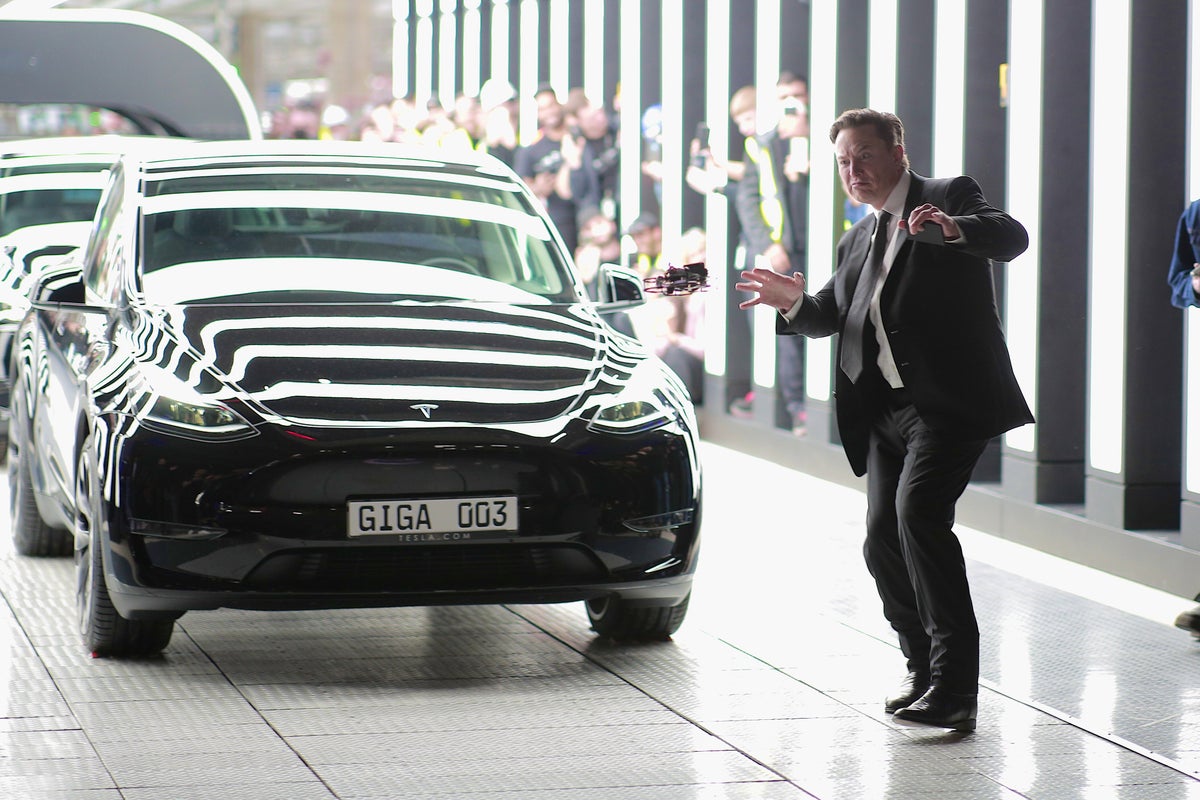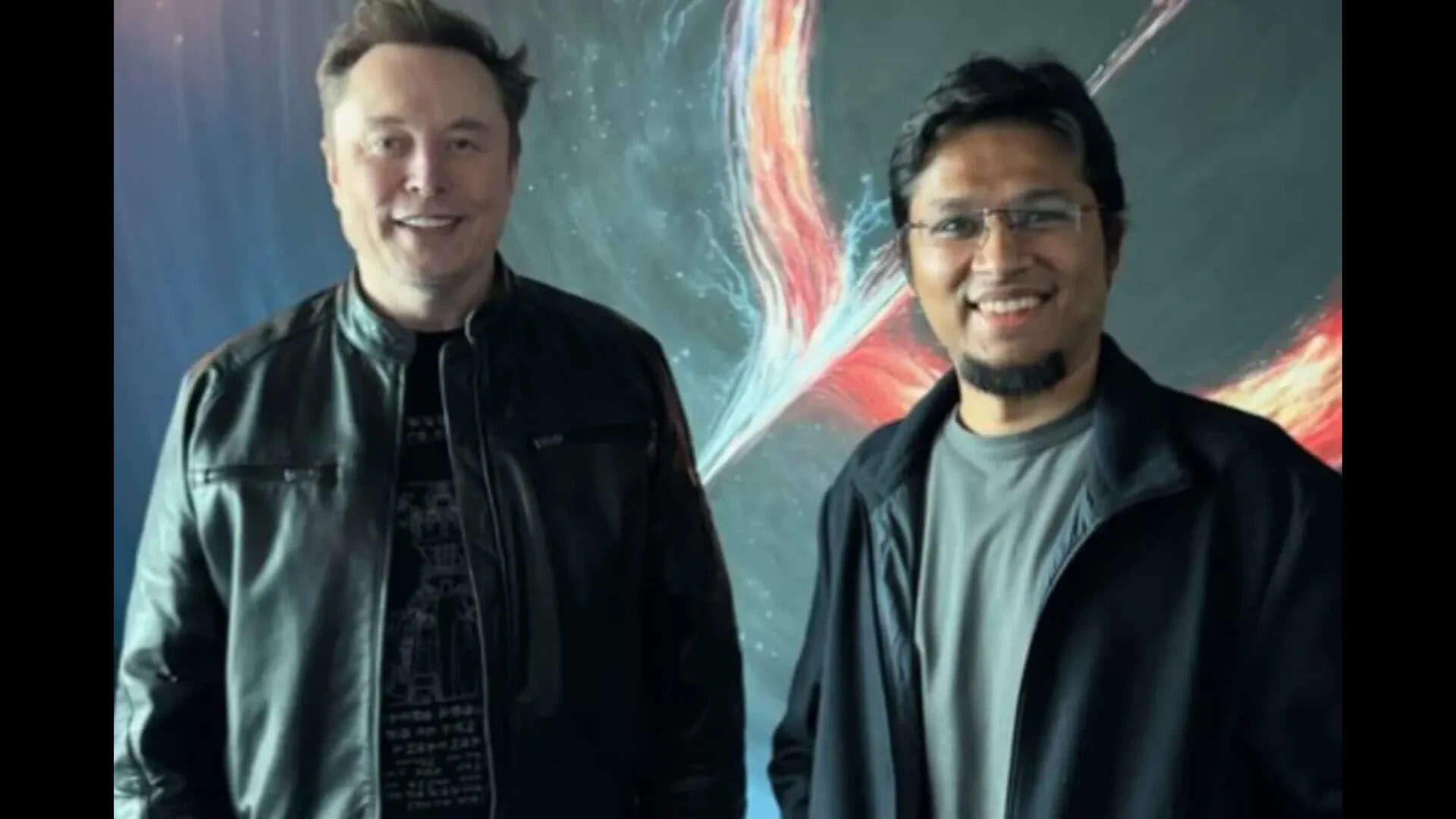
Elon Musk does not hire for optics, despite what the social media cycle might suggest. The recent appointment of Devendra Chaplot to a dual role across SpaceX and xAI is not a response to online criticism or a pivot in diversity politics. It is a calculated grab for one of the most specific skill sets in the modern engineering world. Chaplot, an alum of Mistral AI and Google DeepMind, represents the bridge between two of Musk’s most ambitious bets: autonomous robotics and large-scale reasoning. While the internet fixates on the timing of the hire relative to Musk's public comments, the technical reality is far more significant. Musk is consolidating a "brain trust" capable of making hardware think like humans, and Chaplot is a primary architect of that future.
The Convergence of Silicon and Steel
For years, the tech industry treated AI and physical engineering as separate disciplines. You had the "bits" people building chatbots and the "atoms" people building rockets. That wall is crumbling. Chaplot’s expertise sits at the exact intersection of reinforcement learning and spatial intelligence.
At Mistral, he worked on the frontiers of efficient language models. At DeepMind, his research focused on how agents navigate complex environments. When you look at the current trajectory of the Tesla Bot (Optimus) and the flight control systems at SpaceX, the need for this specific expertise becomes clear. Musk isn't just looking for someone to write code. He needs someone who understands how an artificial mind interprets a three-dimensional, unpredictable world.
Why Mistral Lost a Key Asset
Mistral AI has been the darling of the European tech scene, positioned as the lean, open-source-friendly alternative to the giants in San Francisco. Losing a researcher of Chaplot’s caliber to the Musk ecosystem is a blow to the narrative that Europe can retain its top-tier talent. It highlights a brutal truth about the current AI arms race. Compute power and capital are no longer the only bottlenecks. The real scarcity is the handful of people who actually know how to scale these systems.
Musk’s advantage is the "closed loop" ecosystem. A researcher at a standard AI lab works in a vacuum. At xAI, that same researcher can test theories on a fleet of millions of vehicles or within the telemetry of a Starship launch. This feedback loop is an irresistible siren song for high-level engineers. Chaplot isn't joining a company; he is joining a planetary-scale laboratory.
The Myth of the Tactical Hire
The narrative that this hire was a quick fix for a PR headache ignores the reality of executive recruiting at this level. You do not bring a former DeepMind lead into the fold over the course of a weekend. These negotiations involve complex equity structures, intellectual property discussions, and long-term strategic alignment.
Chaplot’s move was likely months in the making. The fact that it coincided with a period of intense public scrutiny regarding Musk's stance on global talent is a coincidence that masks the deeper structural shift. Musk is aggressively de-risking his AI ambitions. By pulling talent from the very firms he competes with—Google, Meta, and now Mistral—he is performing a talent drain that serves a dual purpose: strengthening his own hand while weakening the institutional knowledge of his rivals.
Intelligence Beyond the Chatbox
Most people view AI through the lens of ChatGPT or Gemini. They see a tool that generates text or images. Musk sees something else entirely. He sees AI as the operating system for physical reality.
If you want a robot to navigate a factory floor without a map, it needs "embodied AI." This is Chaplot's playground. His past research into "Semantic Curiosity" and "Learning to Explore" is foundational for machines that can learn from their surroundings rather than just following a pre-programmed script.
The Infrastructure of xAI
To understand where Chaplot fits, look at the Colossus supercomputer. This massive cluster of H100 GPUs isn't just there to make Grok funnier. It is a training ground for the neural networks that will eventually run every piece of Musk-controlled hardware.
- SpaceX: Using AI to optimize trajectory corrections in real-time, reducing fuel consumption.
- Tesla: Moving beyond supervised learning for Full Self-Driving (FSD) into end-to-end neural networks.
- Neuralink: Decoding complex neural signals into actionable data.
Chaplot acts as a connective tissue between these entities. His dual role suggests that xAI is becoming the centralized R&D hub for the entire Musk empire.
The Geopolitics of Engineering
There is an underlying tension in the tech world regarding the flow of talent from India to the United States. India produces more engineers than almost any other nation, yet the highest-level architectural roles in AI have often been concentrated in Silicon Valley.
Chaplot is part of a generation of researchers who are not just participants in the system but are defining its direction. His move underscores the reality that for the foreseeable future, the "gravity" of the AI world remains centered around the massive compute clusters and the aggressive, risk-tolerant culture of American startups. For India, the pride of seeing a native son in such a high-profile role is tempered by the reality of "brain drain" that continues to pull the best minds toward the most well-funded projects in the West.
The Technical Debt of Ethics and Safety
Every time Musk hires a heavyweight, the conversation turns to safety. Can a lean team at xAI really implement the guardrails necessary for a super-intelligent system?
Chaplot’s background at DeepMind—a company that practically invented the modern AI safety discourse—suggests a desire for more rigor. However, the "move fast and break things" ethos of SpaceX is the polar opposite of the academic caution found in London or Paris. This friction will be the defining internal struggle of Chaplot’s tenure. He is being asked to build systems that are both incredibly powerful and inherently stable, a feat that has yet to be achieved at scale.
The Real Cost of Being Second
In the world of high-stakes technology, being second is often the same as being last. Musk knows that the window for achieving "General Physical Intelligence" is closing. Every month that passes without a breakthrough in embodied AI is a month where competitors like Figure AI or Boston Dynamics can gain ground.
By securing Chaplot, Musk has effectively bought time. He has acquired the experience of someone who has already seen what doesn't work. That kind of negative knowledge is worth more than a thousand successful simulations.
The Logistics of a Dual Role
Working across SpaceX and xAI is a logistical nightmare that few can handle. It requires a mental agility to switch from the physics of orbital mechanics to the abstractions of a transformer-based neural network.
This isn't a job for a specialist; it’s a job for a polymath. The industry is watching to see if this model of "cross-pollination" actually works. If Chaplot can successfully port advancements from xAI into the flight computers of Starship, it will validate Musk's theory that all engineering problems are ultimately data problems.
Moving Beyond the Hype
We should stop looking at these hires as individual wins and start looking at them as the construction of a new type of industrial complex. A hundred years ago, companies like General Electric or Bell Labs dominated because they owned the entire stack of innovation. Musk is attempting a modern version of this.
He is building a world where the software (xAI), the hardware (Tesla/SpaceX), and the connectivity (Starlink) are all part of a single, self-reinforcing loop. Devendra Chaplot is simply the latest, and perhaps most vital, component to be plugged into that system.
If you are tracking the progress of autonomous systems, ignore the tweets and focus on the commits. Watch how the navigation logic of the next Starship iteration changes. Observe the fluidity of the next Optimus demonstration. That is where you will find the real evidence of Chaplot’s influence. The noise of the internet will fade, but the code being written today will determine the physical limits of the next decade.
Keep a close eye on the next technical white paper released by xAI; it will likely contain the fingerprints of this transition toward a more grounded, spatial form of artificial intelligence.