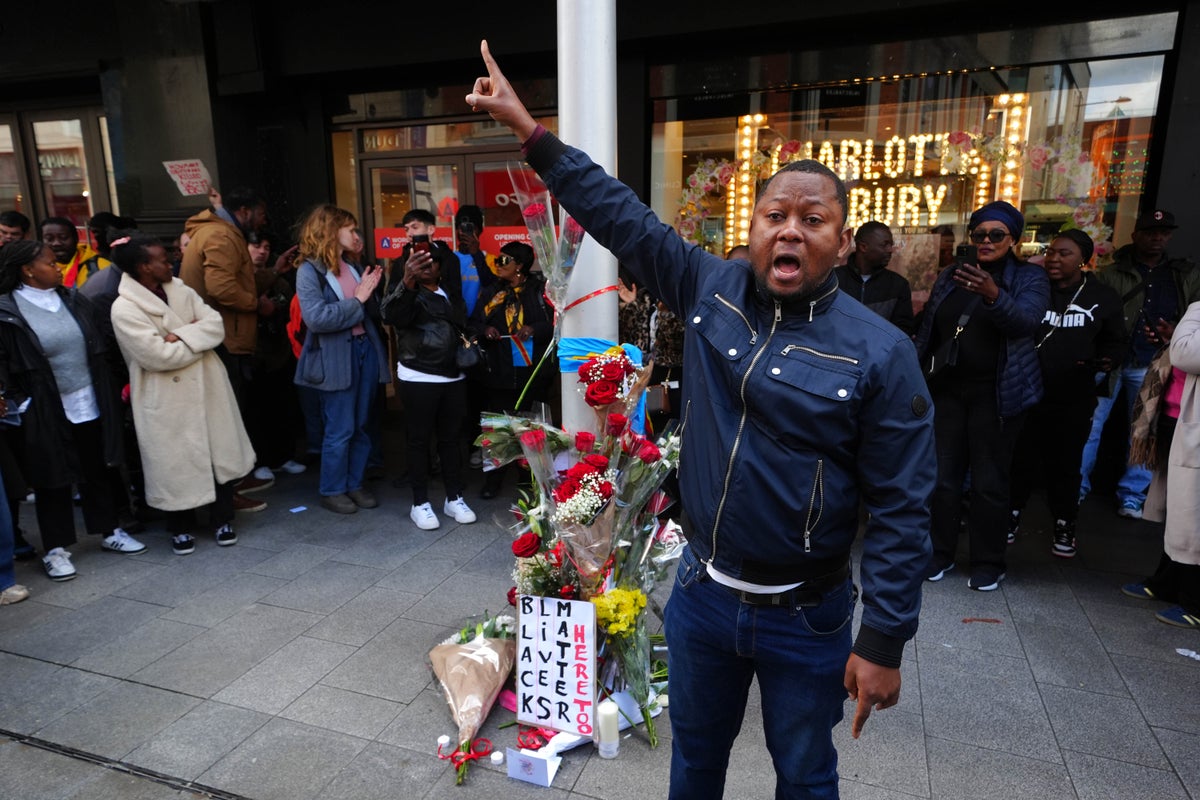
The corporate media has a script for street tragedies, and they read from it with exhausting predictability. Following the tragic death of Yves Sakila on Henry Street in Dublin, the mainstream machinery immediately defaulted to its preferred narrative structure: a hyper-fixation on race, a rush to paint a complex urban struggle as a neat morality play, and an immediate demand for performative political investigations.
This lazy consensus frames the horror entirely through the lens of import-grade identity politics. The standard coverage reduces a multi-layered failure of retail security systems, public safety infrastructure, and basic street-level de-escalation into a simple headline engineered to generate maximum racial friction. It is a formula designed for clicks, not clarity.
When you strip away the knee-jerk rhetoric, you find a far more uncomfortable truth. The tragedy on Henry Street is not an isolated symptom of systemic racial warfare imported from American news feeds. It is the direct, predictable outcome of an unregulated, undertrained private security apparatus tasked with managing high-stakes urban chaos on behalf of massive retail corporations that want to protect profit margins without paying for actual expertise.
The Illusion of Corporate Law Enforcement
Private security guards are not police officers. Yet, across Western Europe and North America, commercial districts have quietly outsourced public order to minimum-wage workers wearing high-visibility vests. I have spent years analyzing operational risk in corporate environments, and the systemic vulnerabilities here are glaring.
Retail giants expect underpaid staff to act as front-line defenders against theft and urban disorder, yet they fail to provide the extensive tactical and psychological training required to handle high-adrenaline physical encounters safely.
When a shoplifting incident spills onto a busy public thoroughfare like Henry Street, a dangerous vacuum opens. Security personnel—lacking the structured, state-regulated command protocols of formal law enforcement—frequently rely on raw adrenaline and crowd dynamics. In the case of Yves Sakila, reports indicate that up to six individuals became involved in a prolonged, five-minute physical restraint.
[Retail Theft Incident]
       │
       ▼
[Private Security Intervention] ──► (Lack of State-Regulated Protocols)
       │
       ▼
[Adrenaline-Driven Escalation] ──► (Dangerous Crowd Dynamics / Multi-Person Restraint)
       │
       ▼
[Positional Asphyxia / Tragedy]
Any expert in physical intervention knows that multi-person ground restraint is incredibly dangerous. The danger is structural, not personal. When multiple bodies pile onto an individual, the risk of positional asphyxia skyrockets.
Positional asphyxia occurs when the mechanics of breathing are disrupted by the positioning of the body or external pressure on the torso, neck, or head. It is a well-documented medical hazard that requires constant vigilance, verbal communication, and immediate release the moment a suspect is contained.
When an intervention turns into a chaotic melee on a concrete pavement, proper monitoring becomes impossible. The tragedy is born from a catastrophic failure of physical technique and operational oversight, not a pre-meditated act of malice.
Dismantling the Flawed Premise
The loudest voices in the aftermath of this incident are demanding sweeping inquiries into the "growing hostility" of the nation's social climate. They are asking the wrong question entirely. By focusing exclusively on ideological abstractions, they completely bypass the material failures that actually cost a human life.
Let us address the typical arguments directly:
- Does this incident prove that Dublin streets are systematically unsafe for specific minority communities? No. Framing this as a targeted racial assault ignores the immediate mechanics of the event. The altercation began as a direct response to a suspected retail theft and subsequent physical flight, during which an elderly bystander in his 80s was injured. To divorce the restraint from its immediate, chaotic catalyst is intellectually dishonest.
- Should we blame the individual security guards entirely? While individual accountability must be determined by a court of law, placing the blame solely on the men on the ground missing the broader picture. The root failure lies with the employers and the regulatory frameworks that deem a few hours of basic certification sufficient to authorize individuals to use physical force in public spaces.
Imagine a scenario where a private venue hires untrained bouncers, gives them no clear rules of engagement regarding restraint, and a patron dies during a scuffle. We would immediately point our fingers at management and the regulatory body. Yet, because this tragedy involved a minority individual, political commentators have hijacked the grief to score points on immigration policy and national identity.
The Cost of Performative Outrage
The rush to turn a operational tragedy into a culture war flashpoint has real, damaging consequences. When politicians like Taoiseach Micheál Martin or local activists demand inquiries based on social media outrage, they prioritize optics over structural reform.
The focus shifts from revising physical restraint protocols and tightening private security licensing requirements to managing community public relations. The underlying vulnerability remains completely unaddressed.
If the goal is to prevent another death on a busy shopping street, the solution is practical, boring, and highly regulatory. It requires:
- A total ban on prolonged prone restraint by private citizens and corporate security personnel.
- Mandatory, state-certified training in verbal de-escalation that must be exhausted before physical intervention is attempted.
- Legal accountability for retail corporations that pressure low-wage staff to physically detain suspects outside store property limits.
Until we treat these incidents as systemic failures of private security regulation rather than fuel for the culture war, the underlying mechanics will not change. The media will get their headlines, politicians will give their speeches, and the structural flaws will wait quietly for the next tragedy to unfold.
Vigil held for man who died following alleged shoplifting incident in Dublin
This news report provides direct visual context and local coverage regarding the public reaction and community vigils held in Dublin following the death of Yves Sakila.