The defense establishment is panicking again, and the media is buying it hook, line, and sinker. The current narrative dominating the headlines claims that the United States has dangerously depleted its stockpile of air defense missiles—specifically SM-3 and SM-6 interceptors—to shield Israel from Iranian ballistic missile barrages. National security pundits are wringing their hands, warning that Washington is leaving itself exposed in the Indo-Pacific just to manage a Middle Eastern regional conflict.
This narrative is not just wrong. It is a fundamental misunderstanding of modern military logistics, procurement strategy, and global deterrence.
The defense industrial complex loves a scarcity scare. It drives stock prices up and forces Congress to sign blank checks for defense appropriations. But the idea that the US Navy is suddenly "out of bullets" because of a few high-profile engagements in the Red Sea and the Levant is a myth.
The Flawed Premise of Stockpile Depletion
Mainstream analysis treats missile defense like an inventory spreadsheet for a retail store. They count the number of Standard Missiles fired, compare it to estimated production rates, and declare a crisis. This ignores how global deterrence actually operates.
First, let's address the math. Defense analysts frequently point to the production caps of RTX (formerly Raytheon) for the SM-3 Block IB and IIA variants, noting that churning out roughly a dozen missiles a month cannot keep pace with wartime expenditure. What they fail to mention is that missile defense is never an isolated, one-to-one exchange.
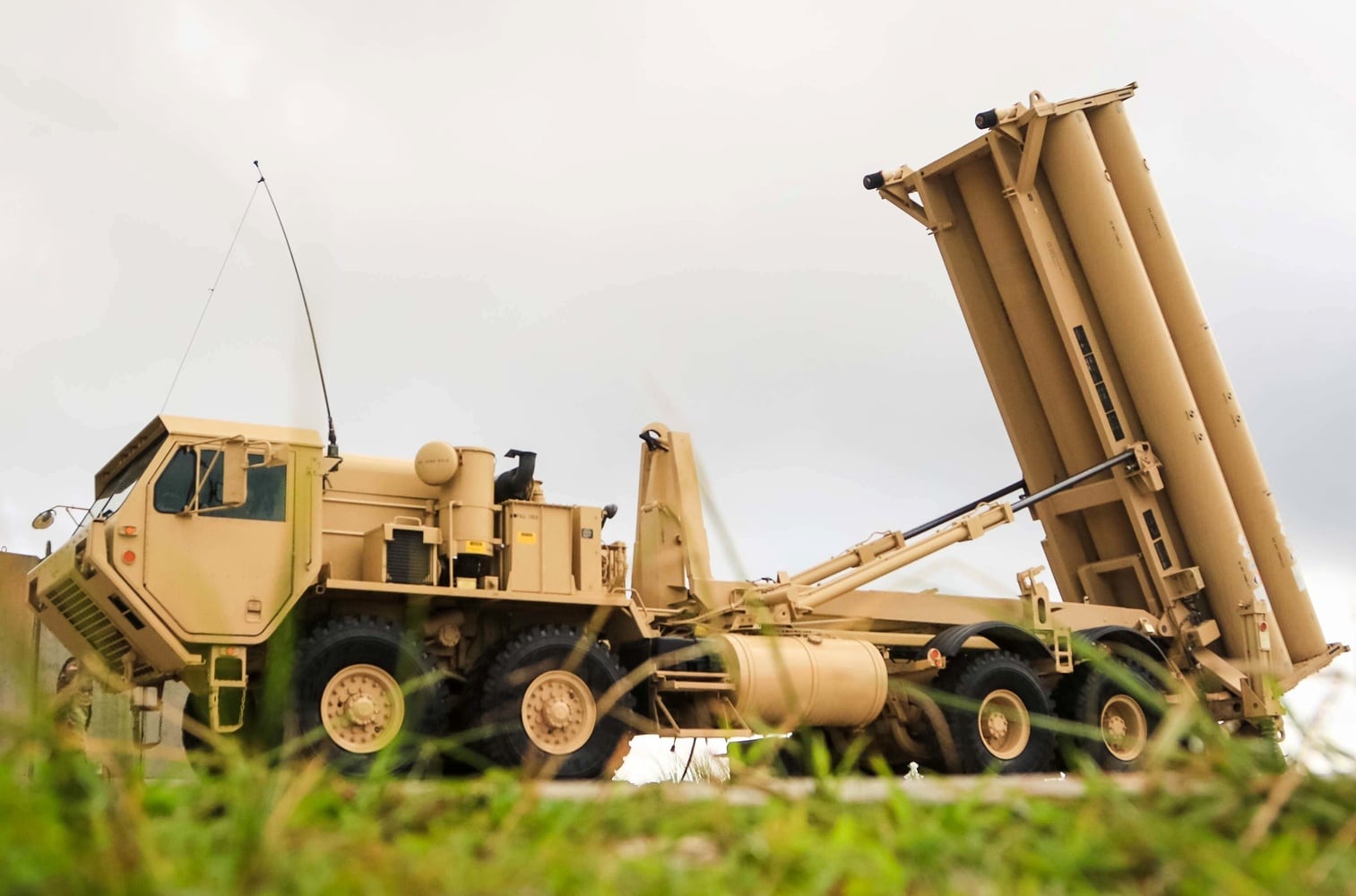
The United States does not defend assets by merely matching an interceptor to every incoming threat. Modern integrated air defense relies on a layered architecture. High-altitude intercepts via the Aegis Combat System are the top tier, but they exist alongside theater-level assets like THAAD (Terminal High Altitude Area Defense) and localized systems like Patriot batteries.
When the US Navy deployed its warships to intercept Iranian liquid-fueled ballistic missiles, it was not burning through its entire global reserve. It was utilizing theater-specific forward-deployed inventory specifically earmarked for contingency operations in the Central Command (CENTCOM) area of responsibility. To argue that these actions leave the Pacific completely defenseless assumes the Pentagon treats its entire global inventory as a single, static bucket of ammunition. It does not.
Why the Pacific Threat Profile is Entirely Different
The lazy consensus warns that every SM-3 fired in the Mediterranean is one less missile available to deter a conflict over Taiwan. This is a false equivalence that ignores geography and physics.
The threat profile in the Indo-Pacific, specifically regarding China's People's Liberation Army Rocket Force (PLARF), is entirely different from the threat posed by Iran.
- The Iranian Vector: Iran relies heavily on older, liquid-fueled ballistic missiles and first-generation solid-propellant systems. These follow predictable, high-arcing ballistic trajectories. They are the exact targets the SM-3 was engineered to destroy in its midcourse phase.
- The Chinese Vector: The PLARF relies on hypersonic glide vehicles (HGVs) like the DF-17 and anti-ship ballistic missiles with maneuverable re-entry vehicles (MaRVs) like the DF-21D.
An SM-3 operates in the vacuum of space, using a kinetic kill vehicle to smash into ballistic missiles at the peak of their trajectory. It is completely useless against a hypersonic weapon traveling at Mach 5 within the upper atmosphere, beneath the operational envelope of exo-atmospheric interceptors.
Defending against the Pacific threat profile requires different tools: SM-6 interceptors operating in the terminal phase, electronic warfare, directed energy, and offensive counter-force strikes to destroy launchers before they fire.
Claiming that burning through SM-3s in the Middle East ruins American deterrence in Asia is functionally illiterate. The missiles being used against Iran are not the primary weapons that would win a conflict in the Taiwan Strait.
+------------------+---------------------------+----------------------------------+
| Attribute        | Middle East Threat Profile| Indo-Pacific Threat Profile      |
+------------------+---------------------------+----------------------------------+
| Primary Weapons  | Traditional Ballistic     | Hypersonic Glide Vehicles, MaRVs |
| Primary Defense  | Exo-atmospheric (SM-3)    | Endo-atmospheric (SM-6, Directed)|
| Geography        | Compact, Land-Adjacent    | Vast Maritime Theater            |
+------------------+---------------------------+----------------------------------+
The Real Bottleneck is Not Capacity, It is Doctrine
I have spent years analyzing defense procurement pipelines and watching the Pentagon misallocate capital. The real issue is not that factory lines are too slow; it is that the military-industrial complex is addicted to expensive, exquisite solutions for cheap, asymmetric problems.
An SM-3 costs upwards of $12 million to $30 million depending on the variant. Firing a multi-million-dollar interceptor to down a drone or a low-tech ballistic missile is financially unsustainable in the long run. The defense establishment looks at this cost asymmetry and cries ruin.
But the solution is not to build ten times more multi-million-dollar missiles. The solution is accelerating the deployment of soft-kill options, high-energy lasers, and high-power microwave systems that reduce the cost per engagement to pennies.
The current live-fire engagements in the Middle East are not a disaster; they are the most valuable stress test the US military has received in thirty years. For decades, missile defense was theoretical. Computer simulations guided procurement. Now, the Navy is gathering real-world data on radar tracking, target discrimination, and crew endurance under actual combat conditions.
The insights gained from these engagements regarding the integration of the Aegis weapon system and real-time data sharing across allied networks are worth far more than the replacement cost of the hardware expended.
The Flawed Assumptions of "People Also Ask"
The public discourse surrounding this topic is driven by fundamentally flawed questions. If you look at standard inquiries regarding military readiness, the underlying assumptions crumble under scrutiny.
"Is the US running out of missiles?"
No. The United States maintains classified war reserves that are legally protected from being fully depleted during peacetime or regional skirmishes. Procurement rates are ramping up, but the inventory is managed across distinct geographical commands. A drawdown in CENTCOM does not automatically trigger an inventory collapse in INDOPACOM.
"Can China exploit US missile shortages?"
Beijing does not base its strategic timeline on how many interceptors are sitting in a magazine in the Mediterranean. China’s military planning is dictated by internal modernization milestones, domestic economic stability, and the overall readiness of its amphibious invasion fleet. To think the Central Military Commission is waiting for the US Navy to drop below a specific number of interceptors before making a move is a simplistic, video-game view of global geopolitics.
The Hard Truth of Strategic Trade-offs
Every strategy involves risk. The contrarian reality is that the United States cannot afford to hoard its weapons in a hypothetical vault forever, waiting for a perfect peer-competitor war that may never happen. Deterrence is active, not passive.
If the United States had stood by and allowed Iranian missile salvos to overwhelm regional defenses, the blow to American credibility would have been catastrophic. Allies worldwide would have concluded that US security guarantees are meaningless when faced with massed rocket fire. That loss of credibility would have accelerated aggression in both Eastern Europe and the Pacific far faster than any temporary dip in missile inventories.
The downside to using these interceptors is real: it strains the immediate supply chain and forces ship crews into exhausting operational tempos. But treating hardware like a sacred relic to be preserved rather than a tool to be used is the fastest way to lose a global conflict.
Stop viewing defense logistics through the lens of artificial scarcity. The United States is not disarming itself. It is proving its systems work under fire, refining its doctrine, and clearing out old inventory blocks to make way for the next generation of atmospheric and directed-energy defense systems. The arsenal isn't empty; it's adapting.