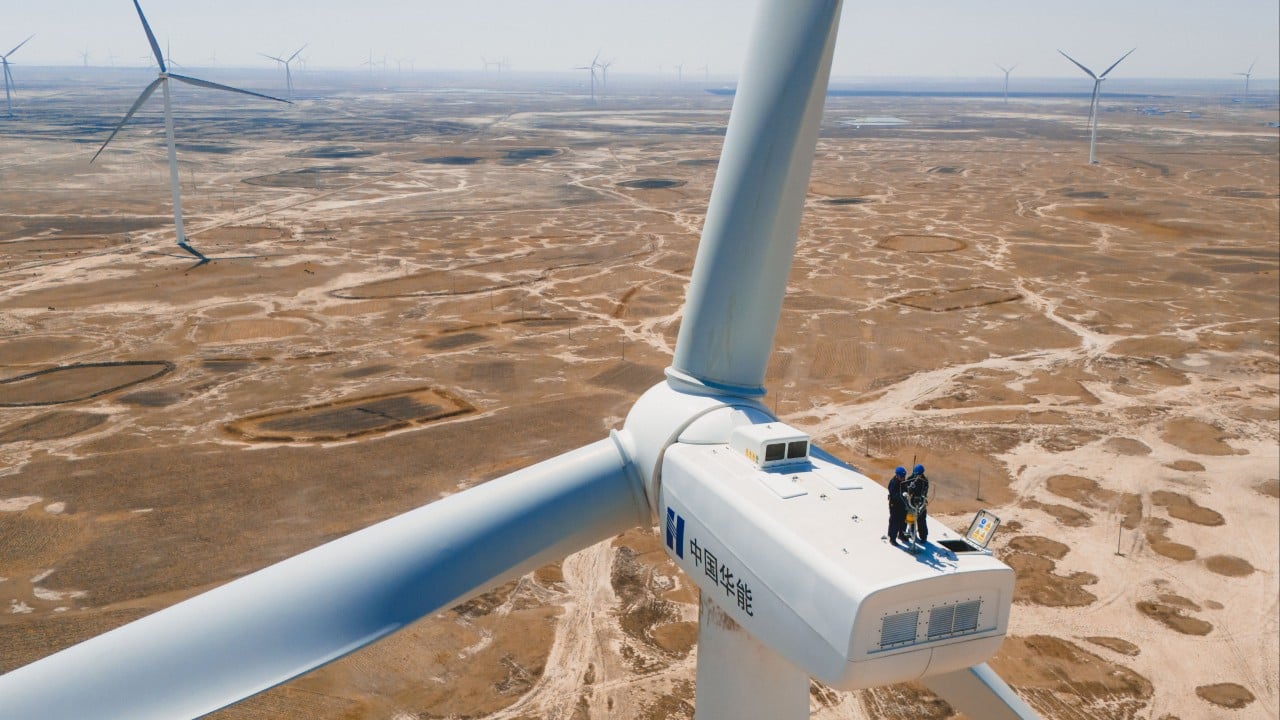
The consensus narrative framing the geopolitical arena is clear, clean, and completely wrong.
Turn on any news channel or read any standard defense brief, and you will see the same thesis repeated ad nauseam: the United States and China are locked in a zero-sum, Titanic struggle for global energy dominance. The pundits claim that whoever controls the supply chains for lithium, controls the grid scale batteries, and commands the manufacturing lines for photovoltaic cells will dictate the terms of the next century. They view energy as the ultimate weapon of statecraft—a traditional resource war dressed up in green tech clothing.
It is a comforting story for bureaucrats who think in 20th-century terms. It is also fundamentally flawed.
This is not a race for dominance. It is a race to a commodity trap. While Washington scrambles to subsidize domestic manufacturing to compete with Beijing, and China burns through billions in state capital to maintain its production monopoly, both players are ignoring a brutal economic reality. Energy is rapidly becoming hyper-abundant, hyper-deflationary, and structurally localized.
The conventional wisdom treats electrons like oil barrels. But electrons do not behave like oil. The old geopolitical playbook is dead, and the current strategy of treating clean energy manufacturing as a proxy for military hegemony is a multi-trillion-dollar mistake.
The Manufacturing Trap: Why Scaling Infrastructure is Not a Victory
The core error of the current analysis lies in confusing manufacturing scale with strategic leverage.
For decades, energy security meant controlling geography. You needed to secure the choke points—the Strait of Hormuz, the Malacca Strait—or maintain deep diplomatic alliances with cartel leaders. If you controlled the oil fields, you controlled the economic lifeblood of your adversaries. If you cut off the supply, their economies ground to a halt.
Now, look at how analysts view China’s current dominance in solar panel manufacturing and critical mineral refining. The standard argument insists that because China refines roughly 60% of the world's lithium and controls over 80% of certain solar supply chain segments, it holds a knife to the throat of the Western economy.
This analogy collapses under the slightest intellectual scrutiny.
If an oil exporter cuts off your crude supply, your existing cars stop running immediately. If China stops shipping solar panels to the United States tomorrow, the solar panels already installed on American roofs do not suddenly stop generating electricity. They keep humming along, producing power for decades. A disruption in the supply chain halts the growth of future capacity; it does not cripple existing infrastructure.
By treating manufacturing capacity as a geopolitical spigot that can be turned off to choke an adversary, Western policymakers are chasing a phantom threat. I have spent years analyzing capital allocation in heavy industries, and the pattern here is undeniable: governments are pouring billions into duplicating supply chains for a technology that is undergoing a massive deflationary curve.
Solar modules have dropped in cost by nearly 90% over the last decade. Batteries are following a similar trajectory. When you subsidize the domestic production of a rapidly depreciating commodity, you are not building a strategic fortress. You are buying an expensive ticket to a race where the prize is razor-thin profit margins and systemic overcapacity.
The False Promise of Critical Mineral Dominance
"Lithium is the new oil." It is the favorite catchphrase of every venture capitalist and energy podcaster looking for an easy headline.
It is also nonsense. Lithium is one of the most abundant elements on earth. The current bottlenecks are not caused by geological scarcity; they are caused by the time lag required to scale up extraction and processing facilities.
When prices spiked in recent years, the market did exactly what Adam Smith predicted it would do: capital flooded the sector, new extraction methods like Direct Lithium Extraction (DLE) advanced, and supply caught up. By 2024 and 2025, markets saw massive supply gluts, causing prices to crash.
Furthermore, the obsession with specific mineral supply chains ignores the fundamental nature of technological innovation. Oil cannot be substituted. You cannot run an internal combustion engine on copper or zinc. But battery chemistry is highly mutable.
The moment a specific material becomes a geopolitical liability or too expensive, engineers innovate around it. Look at the rapid rise of Lithium Iron Phosphate (LFP) batteries, which eliminate the need for cobalt and nickel—two minerals that Western strategists spent a decade worrying about. Now, sodium-ion batteries are entering commercial production. Sodium is derived from common salt. It is cheap, abundant, and impossible to cartelize.
Imagine a scenario where the US government spends $50 billion building domestic supply chains for specific nickel-manganese-cobalt chemistries, only to find that by the time the factories are operational, the market has moved entirely to sodium-ion or solid-state architectures that require none of those inputs. This is not a hypothetical risk; it is the inevitable outcome of state-directed industrial policy trying to skate to where the puck was five years ago.
Dismantling the "People Also Ask" Consensus
To understand how deep this misconception goes, look at the common questions driving the public debate. The premises themselves are rotten.
Can the US catch up to China in green technology manufacturing?
This is the wrong question. The real question is: why would the US want to spend hundreds of billions of dollars to replicate low-margin, capital-intensive assembly lines that China is currently subsidizing at a loss?
China's dominance in solar manufacturing is not an act of supreme strategic genius; it is a symptom of domestic overinvestment and a lack of alternative capital outlets. The Chinese state has pumped billions into solar factories, creating an immense supply glut that has destroyed profitability for their own domestic firms. For Western consumers and utilities, this is effectively a massive transfer of wealth from Chinese taxpayers to the rest of the world, who get to buy energy-generating hardware at below-cost prices.
Trying to "catch up" by matching those subsidies is an exercise in value destruction. The real economic value does not lie in bending the metal or assembling the cells. It lies in the software that manages the grid, the deployment architectures, the proprietary project development, and the high-value system integration.
Will energy dependence on foreign supply chains cause the next major economic crisis?
No. The risk profile of a renewable-heavy economy is completely different from a fossil-fuel economy.
A fossil-fuel economy requires continuous, daily inputs of fuel to survive. A renewable economy requires upfront capital expenditure for equipment, followed by near-zero marginal costs for fuel (sunlight and wind). The vulnerability shifts from an ongoing operational risk to a one-time capital deployment risk. You can block a tanker ship; you cannot block the sun. Once the infrastructure is built, the country possesses the energy generation capability internally, immune to foreign blockades or overseas price shocks.
The Real Energy Crisis: Grid Obsolescence and Regulatory Inertia
While Washington and Beijing beat their chests over who controls solar panel manufacturing, the actual bottleneck to energy security is rotting from within. It isn't a lack of panels or batteries; it is the inability to plug them in.
In the United States, the interconnection queues are a bureaucratic disaster. There are thousands of gigawatts of clean energy projects sitting in limbo, waiting years just to get permission to connect to the transmission grid. The regulations governing regional transmission organizations are archaic, designed for a time when centralized coal plants sat next to railway lines.
We are building a 21st-century generation fleet on top of a 19th-century regulatory and transmission framework.
If you want to secure an economic advantage in the coming decades, you do not need more factory floors making silicon wafers. You need to reform permitting laws, rebuild transmission networks, and deploy advanced grid-software systems that can handle bidirectional, distributed power flows. China understands this internally; they are investing heavily in ultra-high-voltage (UHV) direct current transmission lines to move power from the windy deserts of the west to the manufacturing hubs of the east.
The Western focus on manufacturing tariffs and trade barriers does nothing to solve the structural grid lock at home. It actually makes it worse by artificially raising the cost of the inputs needed to upgrade the system.
The Blind Spot of Geopolitical Analysts
The traditional national security establishment loves the US-China energy conflict narrative because it fits neatly into their existing frameworks. It allows them to apply old Cold War doctrines to modern technology markets. They can talk about "friend-shoring," strategic reserves, and trade restrictions.
But technology markets move faster than geopolitical consensus. The moment you treat a technology like a static commodity, you lose the ability to understand its trajectory.
The real disruption will not come from a state actor controlling a mine or a factory. It will come from exponential cost curves and decentralized deployment models that make centralized energy cartels obsolete. When power generation becomes cheap enough and localized enough, energy stops being a tool of geopolitical coercion. It becomes infrastructure, akin to roads or clean water—vital, but no longer an effective weapon of economic warfare.
Stop looking at the energy transition through the lens of twentieth-century scarcity. The nations that thrive in the coming century will not be those that spent billions trying to hoard the machinery of production, but those that cleared the regulatory clutter to let cheap, abundant energy flood their economies without friction.
The current contest is an expensive distraction. The real victory belongs to the side that stops fighting the last war.