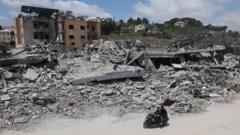
The media loves a predictable rhythm. The recent reporting on the deaths of two individuals in southern Lebanon following a supposed "lull" in cross-border exchanges fits a tired, dangerous template. Mainstream desks treat military friction like a thermostat—assuming that when the noise dials down, the underlying mechanics have paused.
This is a fundamental misunderstanding of modern asymmetric warfare.
There is no such thing as a "lull" in active conflict zones. What external observers call a quiet period is almost always an operational recalibration, a intelligence-gathering window, or a deliberate tactical pause designed to reset positioning. When hostilities resume with lethal force, it isn't a disruption of peace; it is the logical continuation of an ongoing sequence. Viewing these events through a lens of sporadic outbursts misses the structural reality of the conflict entirely.
The Mirage of the Quiet Border
Mainstream reporting operates on a flawed premise: peace is the default state, and violence is an unexpected spike. In contested border regions like the one between Israel and Lebanon, this framework fails.
When wire services report that two people were killed after a period of relative calm, they imply that the calm was meaningful. It wasn't. In low-intensity, high-stakes attrition, "quiet" is a resource. It is the time spent processing drone footage, mapping underground infrastructure, and verifying human intelligence.
If you treat a week of silence as a ceasefire, you will inevitably interpret the next strike as an escalation. Analysts who have spent decades tracking these movements know better. Military forces do not stop operating just because they stop firing. They are adjusting targeting packages.
Dismantling the De-escalation Narrative
International observers frequently ask: How do we return to the previous period of calm?
This is the wrong question. It assumes the previous calm was stable. It asks how to patch a symptom rather than addressing the strategic architecture.
When an airstrike or a cross-border engagement occurs after a period of quiet, the press scrambles to identify the immediate trigger. Was it a specific political speech? A retaliation for a minor cross-border incursion? Usually, it is none of the above. The timing of a strike is dictated by asset availability, clear weather windows, and the verification of high-value targets.
To suggest that a military force acted simply because a "lull ended" removes the agency and long-term planning inherent to defense operations. It turns highly calculated military strategy into a series of reactive, emotional tantrums.
The Logistics of Attrition
Let's look at the actual mechanics of what occurs during these perceived breaks in fighting.
- Reconnaissance Density: Unmanned aerial vehicles (UAVs) do not ground themselves because artillery stops firing. Surveillance flights often increase during quiet periods to catch adversaries moving supplies while they think the pressure is off.
- Supply Chain Reset: Both state armies and non-state actors utilize periods of reduced kinetic activity to reposition hardware, fortify firing positions, and rotate personnel out of frontline bunkers.
- Target Verification: High-value targeting requires a high degree of certainty. The data used to authorize a strike today is often collected during the "quiet" days of the previous week.
The downside to acknowledging this reality is stark: it means admitting that standard diplomatic interventions aimed at temporary pauses are largely performative. They offer political breathing room, but they do not alter the trajectory of the confrontation. It is an uncomfortable truth that many stakeholders prefer to ignore because it requires acknowledging that a complete diplomatic overhaul, rather than a temporary band-aid, is the only way to shift the status quo.
Stop Asking for Pauses
The international community routinely calls for immediate halts to violence, celebrating brief windows of silence as diplomatic victories. This approach achieves nothing of substance. A pause without a structural political resolution merely guarantees that the next engagement will be more precise, more lethal, and better planned.
If the goal is to understand the security dynamics of the region, stop reading the headlines that treat every strike as an isolated event breaking an imaginary peace. Start looking at the structural preparation that happens when the cameras stop rolling.
The next time a report claims a strike occurred "after a lull," disregard the word lull. Replace it with "preparation." Only then will you understand the timeline of the conflict.