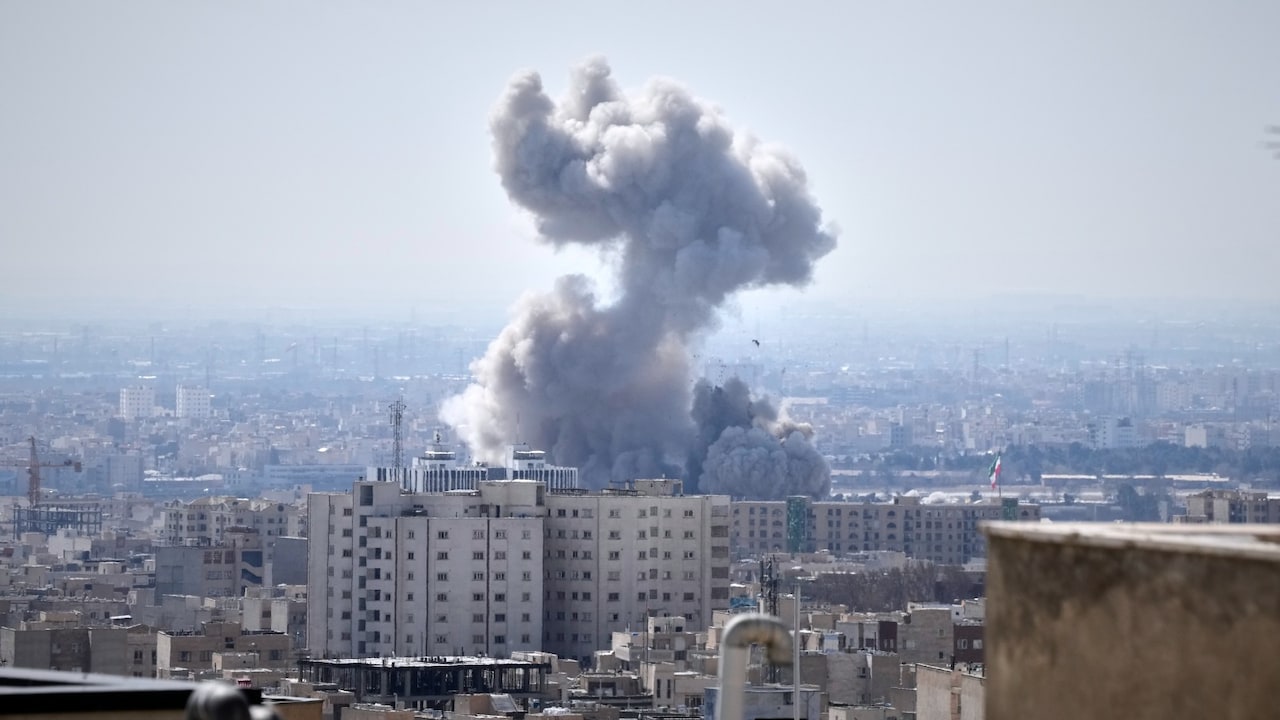
The media wants you to believe that Middle Eastern conflicts operate on a ledger of rational, negotiable interests. Open any major analysis today and you will find the same lazy consensus. They map out the "stakes" like a corporate merger. Side A wants security and borders. Side B wants sovereignty and land. The pundits frame it as a tragic misunderstanding, a mathematical equation where the variables just need to be balanced by the right Western diplomats.
This framework is completely broken. It is a comforting fiction designed for readers who cannot stomach the brutal reality of deeply entrenched ideological warfare. Having spent two decades analyzing regional security architectures and watching billions of dollars in diplomatic capital burn to ash, I can tell you that the conventional narrative is not just wrong; it makes peace impossible by misdiagnosing the disease.
The current flare-up is not about a clash of interests. It is a clash of irreconcilable existential imperatives. You cannot negotiate a compromise when both sides view compromise itself as an act of absolute self-destruction.
The Fallacy of the Rational Actor Model
Mainstream reporting suffers from a severe case of mirror-imaging. Western analysts assume that because they value economic stability, de-escalation, and international commerce, the combatants must secretly want the same things. They treat rockets and airstrikes as mere bargaining chips used to achieve a better seat at the negotiating table.
This is a dangerous delusion.
When you examine the actual strategic behavior of the regional powers, the rational actor model collapses. Consider the economic metrics. Decades of sanctions, blockades, and infrastructure destruction have not caused either side to recalibrate their objectives. A purely rational materialist actor would look at a collapsing GDP, hyperinflation, or a crippled supply chain and sue for peace. Instead, economic ruin is accepted as a necessary cost of doing business.
The stakes are not material. They are metaphysical.
- The Territorial Illusion: The conflict is routinely framed as a real estate dispute. "If we just draw the lines here, everyone wins." This ignores that the land in question is invested with sacred, non-negotiable value. You cannot split a holy site 50/50 and expect a durable equilibrium.
- The Security Paradox: Both sides pursue security through methods that guarantee long-term insecurity. Massive retaliation and asymmetric warfare do not deter; they radicalize the next generation of combatants. Yet, both leaderships double down on these failed strategies because their internal legitimacy depends entirely on maintaining a posture of total resistance.
- The Myth of the Third-Party Broker: The international community believes it can incentivize peace with foreign aid and security guarantees. This assumes the local actors value Western approval more than their core ideological convictions. They do not.
Dismantling the Competitor Consensus
Let’s dismantle the specific arguments dominating the airwaves right now. The standard view splits the conflict into a neat binary of grievances. It tells you that one side is motivated entirely by the trauma of historical persecution and the necessity of deterrence, while the other is driven purely by the agony of displacement and the desire for national liberation.
This analysis is childishly simplistic. It mistakes official public relations for actual strategic drivers.
Why Deterrence is a Dead Doctrine
The establishment loves the word "deterrence." They argue that a sufficiently violent show of force will force an adversary to back down. This works when you are dealing with state actors who have something to lose, like a manufacturing base or a standing army. It fails utterly when applied to asymmetric non-state actors or highly ideologized regimes.
Imagine a scenario where a military force eliminates 80% of an insurgent group's leadership. The standard Western military model calls this a decisive victory. In reality, it merely flattens the hierarchy, opens the door for younger, more radical commanders, and validates the group's narrative of martyrdom. You cannot deter an opponent who views death in battle not as a strategic failure, but as the ultimate spiritual victory.
The Industry of Perpetual Conflict
There is a massive, unspoken incentive structure that keeps this war going, and it has nothing to do with the stated goals of either population. The political elites on both sides are locked in a symbiotic relationship. They need the threat of the external enemy to justify their own authoritarian grip on power, suppress domestic dissent, and divert attention from systemic corruption.
If peace miraculously broke out tomorrow, the current leadership structures on both sides would collapse within six months. The wartime economy, the international funding pipelines, and the emergency powers that shield these leaders from accountability would vanish. The stakes are not about national survival; they are about elite survival.
The Flawed Questions Everyone Keeps Asking
Go to any foreign policy panel, and you will hear the same tired questions. The premise of these questions is fundamentally flawed, and answering them honestly requires tearing down the assumptions of the people asking them.
Question: "How do we get both sides back to the negotiating table?"
Answer: You don't. The table is a mirage. Entering negotiations under the current parameters is a performative exercise used by both sides to buy time, rearm, and blame the other for the inevitable breakdown. True diplomacy only works when both parties face an existential threat that is greater than the threat of making concessions. Right now, both sides believe that making a concession is the ultimate existential threat.
Question: "What is the roadmap to a two-state solution?"
Answer: There isn't one. The two-state solution is a diplomatic zombie—a corpse kept animated by think tanks and state departments because they have no alternative framework. The facts on the ground, from settlement expansion to the total fragmentation of political leadership among the opposition, have rendered the traditional two-state model obsolete. Continuing to preach it is an act of intellectual laziness.
The Brutal Trade-Offs of the Only Real Options
If we reject the comfortable lies, we are left with a set of deeply uncomfortable truths. There are no clean, peaceful, win-win scenarios here. The future will be dictated by raw power and endurance, not by international law or human rights resolutions.
There are only three realistic trajectories for this conflict, and each one is catastrophic for the status quo.
| Trajectory | Operational Reality | The Cost |
|---|---|---|
| Systemic Attrition | A permanent state of low-to-mid intensity warfare punctuated by explosive escalations every few years. | Total economic stagnation, permanent militarization of society, and a generational drain of human capital. |
| Decisive Domination | One side abandons all international constraints and uses overwhelming, unrestricted force to permanently neutralize or expel the threat. | Global pariah status, massive civilian casualties, and the guaranteed destabilization of surrounding nations. |
| Internal Collapse | One or both regimes implode from within due to economic rot, civil unrest, or a collapse of the security apparatus. | A massive power vacuum that will immediately be filled by even more radical, unpredictable factions. |
Admitting these options are the only real ones on the table is painful. It requires acknowledging that the billions of dollars spent on peace initiatives over the last thirty years were completely wasted. It means accepting that some problems cannot be solved; they can only be managed, endured, or violently concluded.
Stop Looking for a Middle Ground
The desire to find a middle ground is a psychological coping mechanism for outsiders who cannot look into the abyss of a total war. You cannot split the difference between a side that believes it has a divine right to a specific piece of earth and a side that believes its very existence requires the erasure of that right.
The stakes are absolute. The conflict will continue until one side lacks the material capacity or the psychological will to fight any longer. Everything else is just noise. Turn off the news, ignore the diplomatic communiqués, and stop waiting for a breakthrough. There is no breakthrough coming.