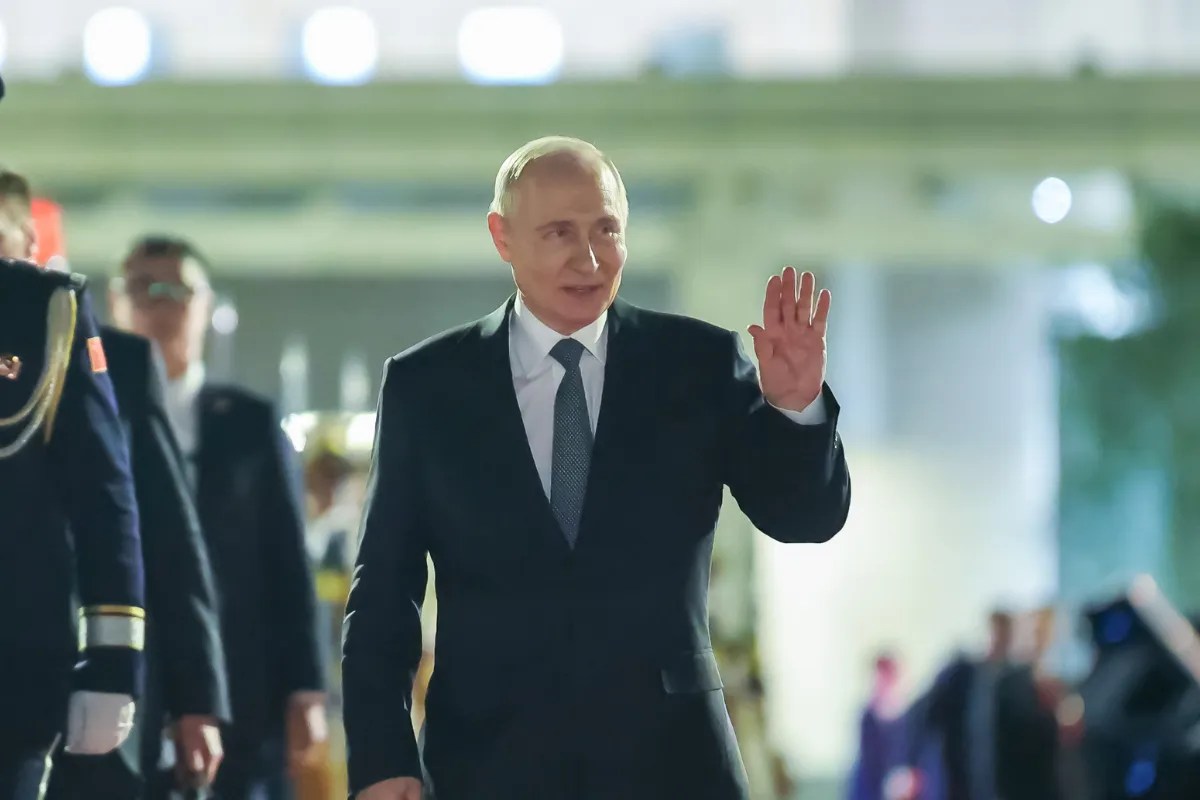
The headlines are dripping with panic. Mainstream media outlets are screaming that Russia is gearing up to launch a direct military assault on NATO countries within the next 36 months. European capitals are supposedly on high alert, frantically stockpiling munitions and preparing for a conventional, World War III-style invasion.
It is a terrifying narrative. It is also an intellectually lazy illusion. You might also find this similar coverage useful: The Fractured Future of American Sports After the Supreme Court Transgender Ruling.
The consensus view that Russia will roll tanks across the Polish or Baltic borders by 2029 misdiagnoses the entire nature of modern geopolitical conflict. It projects 20th-century warfare onto a 21st-century reality. I have spent years analyzing security architecture and military logistics, and watching analysts mistake saber-rattling for genuine operational capability is exhausting.
Russia is not going to launch a conventional ground invasion against a nuclear-armed NATO alliance in three years. They cannot afford it, they do not have the logistical capacity for it, and more importantly, they do not need to do it to achieve their goals. The real threat is far more subtle, and Europe is completely unprepared for it because it is looking the wrong way. As reported in recent reports by USA Today, the results are worth noting.
The Logistical Absurdity of the Three-Year Timeline
Let us look at the hard data, not the fear-mongering press releases. To mount a credible conventional attack against NATO, a nation requires massive surplus economic capacity, an unyielding logistical tail, and overwhelming conventional superiority.
Right now, Russia’s economy is heavily militarized, but it is running red-hot and burning through resources just to sustain its current attrition-based warfare. Citing data from the Stockholm International Peace Research Institute (SIPRI), Russian military spending has surged to historically high percentages of its GDP. However, this is replacement spending, not expansion spending. They are replacing shattered armor, expending decades of artillery stockpiles, and burning through human capital.
Military logistics are unforgiving. To reconstitute a force capable of threatening a collective defense alliance like NATO—which possesses a combined GDP over twenty times larger than Russia's—requires decades, not thirty-six months. The Russian defense industrial base can churn out artillery shells, but it relies heavily on imported machine tools and Western microelectronics acquired through gray markets.
Imagine a scenario where a manufacturing plant in the Urals tries to scale up production of advanced main battle tanks while facing severe domestic labor shortages and strict sanctions on precision components. The math simply does not track. You cannot build a multi-front invasion force on a three-year timeline while actively draining your reserves in a localized war of attrition.
The Flawed Premise of NATO's Collective Panic
The question people constantly ask is: "Is NATO ready for a Russian invasion?"
This is the wrong question entirely. By answering it with troop deployments to the Suwalki Gap, Western leaders are playing into a classic misdirection. The premise assumes that Vladimir Putin wants to fight NATO on terms where NATO holds every single card.
NATO possesses overwhelming air superiority. The alliance has a massive technological edge in precision-guided munitions, network-centric warfare, and naval dominance. The Kremlin's military planners are not stupid. They watched the opening months of the Ukraine conflict blockaded by logistical bottlenecks and stiff resistance. They know exactly what a confrontation with NATO's combined air forces would look like. It would be short, brutal, and disastrous for Moscow.
So why the constant threat inflation from European defense ministries? Because fear sells. It passes defense budgets. It justifies political pivots. While European nations absolutely need to rebuild their depleted ammunition stocks, framing the problem as an imminent conventional invasion creates a blind spot wide enough to drive a cyber-battalion through.
The Real Strategy: Subversion Over Sovereignty
If Russia intends to weaken NATO, it will not use tanks. It will use the tools it has perfected over the last two decades: asymmetric warfare, gray-zone operations, and strategic fragmentation.
The goal is not to conquer Warsaw or Vilnius; the goal is to make Article 5 irrelevant without firing a single conventional shot.
- Weaponized Migration: Engineering border crises on the edges of Poland, Finland, and the Baltics to strain local economies and inflame domestic political divisions.
- Critical Infrastructure Sabotage: Disabling undersea data cables, disrupting Baltic gas pipelines, and launching deniable cyberattacks against Western power grids.
- Political Decoupling: Funding fringe political movements within European democracies to ensure that if a minor border provocation ever does occur, the political will within NATO to respond collectively is entirely paralyzed.
If a nation state hacks a Baltic power grid during a freezing winter while simultaneously flooding the internet with deepfakes, is that an Article 5 event? The ambiguity is the point. By preparing for a massive tank battle that will never come, Europe is leaving its digital and political back doors wide open.
The Downside of This Contrarian Reality
Admitting that a conventional invasion is a fantasy does not mean Europe can relax. In fact, the reality is much more uncomfortable.
The downside of acknowledging the gray-zone threat is that it requires a complete overhaul of Western legal and political frameworks. A conventional threat is easy to rally against—you build more tanks and buy more jets. An asymmetric threat requires policing finance streams, cracking down on political corruption, securing supply chains, and censoring foreign disinformation without destroying civil liberties. It is messy, expensive, and politically toxic.
Western politicians would much rather talk about an imaginary Russian blitzkrieg because it lets them look tough on defense without having to fix the deep, structural vulnerabilities inside their own societies.
Stop looking at the borders for rolling armor. Start looking at the vulnerabilities in your power grids, your financial institutions, and your political cohesion. That is where the war is being fought, and that is where Europe is currently losing.