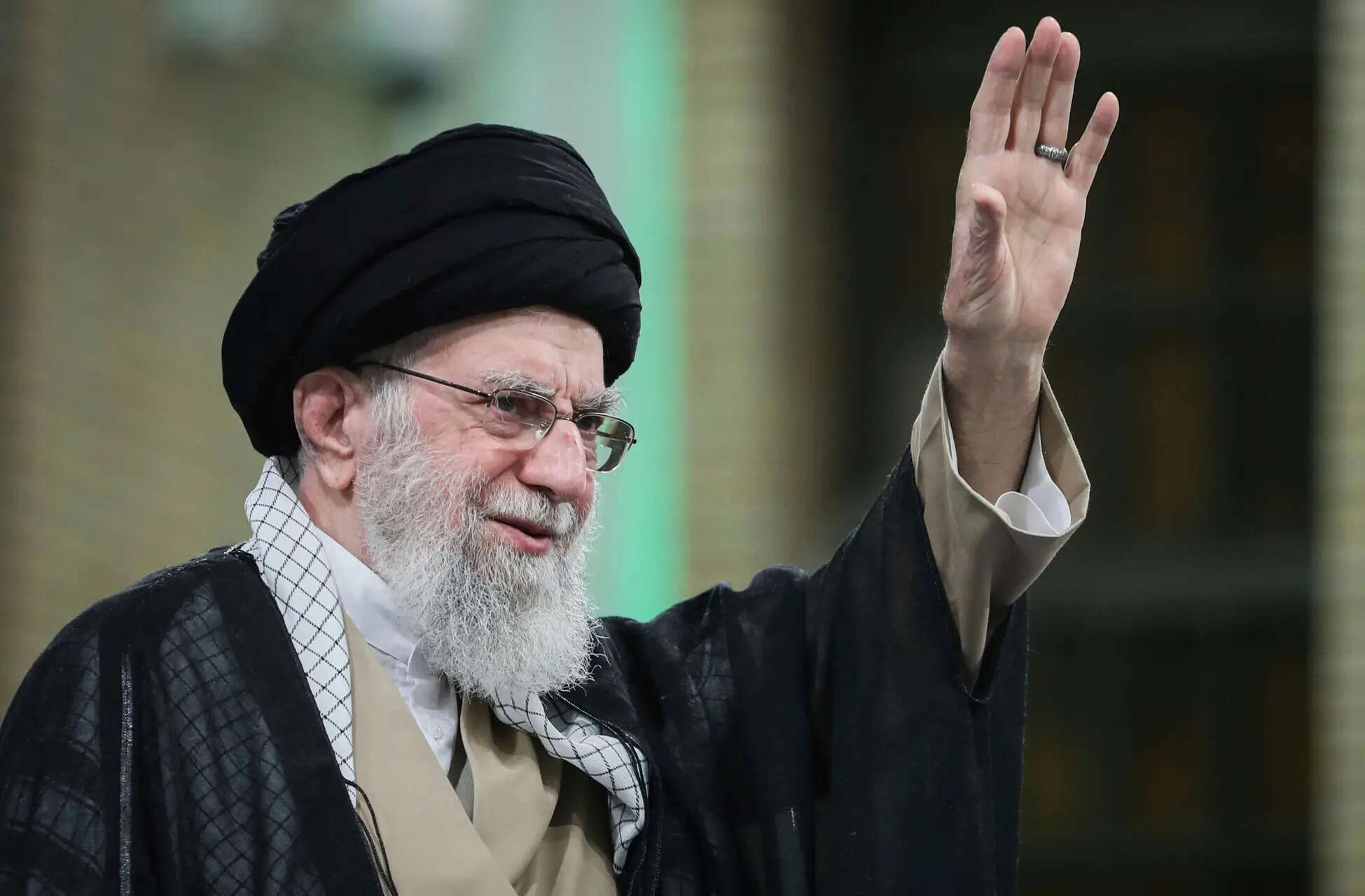
The dust hasn't even settled in Tehran, but the political theater in Washington is already at a boiling point. Following the confirmed death of Iranian Supreme Leader Ali Khamenei, the reaction from Capitol Hill wasn't just about foreign policy. It turned into a raw, jagged display of the tribalism that defines modern American governance. Representative Nancy Mace didn't just issue a standard press release. She took a direct, incredibly sharp aim at Representative Ilhan Omar, telling her to "don't drink too much" while claiming her heart goes out to the Minnesota Congresswoman during this time of mourning for the Iranian regime.
It's a brutal comment. It's the kind of rhetoric that makes C-SPAN look like a middle-school cafeteria, but it reveals the deep-seated animosity regarding how various factions of the U.S. government view the Middle East. When a figure like Khamenei falls, you'd expect a unified stance on what comes next for global security. Instead, we got a localized explosion of personal grievances and ideological warfare.
The core of the friction isn't just a random insult. It’s rooted in years of diametrically opposed views on the Iran Nuclear Deal, sanctions, and the "Squad’s" frequent criticism of U.S. interventionism. Mace isn't just trolling; she's signaling to her base that she views Omar as an agent or sympathizer of a hostile foreign power. Whether you think that's a fair assessment or a dangerous smear, it's the reality of how discourse is functioning right now.
Why the Death of Khamenei Triggered a Domestic Civil War
When news broke that the Supreme Leader was dead, the immediate concern for the State Department was the power vacuum in Iran. For the halls of Congress, however, the focus shifted to who could score the most points against their colleagues across the aisle. Nancy Mace’s "don't drink too much" comment wasn't a slip of the tongue. It was a calculated jab aimed at Omar’s historical stance on Iranian sanctions.
Mace’s rhetoric leans heavily on the idea that the progressive wing of the Democratic party has been "soft" on the Islamic Republic. By offering "condolences" to Omar, Mace is essentially accusing her of being in mourning for a dictator. This kind of high-stakes trolling has become the primary currency of political relevance. It’s no longer about debating the merits of the maximum pressure campaign. It’s about who can craft the most viral, most cutting insult that characterizes the "other side" as un-American.
The reaction from Omar’s camp has been predictably dismissive of the personal attack, focusing instead on the potential for renewed conflict. But the damage to the "collegial" nature of the House is long gone. We are past the point of polite disagreement. When a world leader—especially one responsible for decades of regional instability—dies, the American response is a fractured mirror of our own internal divisions.
The Strategy of the Punchy One-Liner
Politicians like Mace have realized that nuanced policy papers don't get clicks. Snark does. By telling a colleague not to overindulge in grief over a dead tyrant, Mace bypasses the need to explain her actual foreign policy goals. It’s shorthand. It tells her followers that she's "tough" and that she "sees the truth" about her opponents.
This isn't just about Mace and Omar, though. It’s a symptom of a broader trend where foreign policy is used as a tool for domestic character assassination. Think back to the rhetoric surrounding the withdrawal from Afghanistan or the initial stages of the Ukraine conflict. The pattern is identical. One side calls for caution or diplomacy; the other side calls that treason.
Breaking Down the Implications
- Political Polarization: Comments like these ensure that no bipartisan consensus on Iran can ever be reached. If you're seen talking to the "other side," you're seen as talking to the "enemy."
- Voter Engagement: This rhetoric works. It fires up the base. It raises money. Mace knows that a "heart goes out to you" tweet directed at a political rival will outperform a 20-minute speech on Iranian succession laws every single time.
- Global Perception: While Washington bickers, the rest of the world watches. The Iranian opposition, those actually on the ground risking their lives for a new government, see the U.S. leadership devolving into a spat about drinking habits and personal insults. It doesn't exactly project strength.
What the Media Missed in the Mace Omar Spat
Most news outlets focused on the "shocking" nature of the insult. They missed the timing. This exchange happened exactly as reports surfaced about the Iranian Revolutionary Guard Corps (IRGC) scrambling to maintain order. While the world was wondering if Iran would spiral into a civil war or a military junta, two of our lawmakers were fighting over a sarcastic condolence.
The real story isn't that Mace was mean. The real story is that we have lost the ability to treat massive geopolitical shifts with the gravity they deserve. Khamenei’s death is arguably the most significant event in the Middle East in the last two decades. It changes the calculus for Israel, Saudi Arabia, and every proxy group from Hezbollah to the Houthis.
Instead of a debate on whether the U.S. should support a specific transitional government, we are stuck in a loop of "did she really say that?" Honestly, it’s exhausting. The public deserves a breakdown of how the succession of the Assembly of Experts works, not a play-by-play of Twitter beef.
Understanding the Successor Crisis in Iran
To understand why Mace’s jab felt so pointed, you have to look at what’s actually happening in Tehran. The vacancy left by Khamenei isn't easily filled. Mojtaba Khamenei, the son, has been positioned for years, but the optics of "hereditary" rule in a "republic" are terrible for the regime's legitimacy.
This uncertainty is what makes the U.S. response so critical. If the U.S. looks distracted by internal bickering, the IRGC has a freer hand to crack down on protesters. They can paint the U.S. as a declining power that can't even agree on whether a dead dictator is a good thing. Mace’s comment, while satisfying to her followers, feeds into a narrative of American instability.
Moving Beyond the Soundbite
If you're tired of the circus, you have to look at the voting records and the actual policy proposals. Nancy Mace has consistently pushed for a more aggressive posture toward Tehran. Ilhan Omar has consistently warned against the humanitarian costs of broad-based sanctions. Those are two valid, albeit opposing, viewpoints that deserve a real stage.
Instead, we get the "don't drink too much" headline.
If you want to actually stay informed on this, stop looking at the social media feeds of the House of Representatives. Look at the reports from the Institute for the Study of War or the Council on Foreign Relations. They’re tracking the movement of IRGC divisions and the price of oil, which will actually affect your life far more than a snarky comment from a Congresswoman from South Carolina.
The next few weeks will determine the trajectory of the Middle East for the next thirty years. We can't afford to spend that time focused on whether a politician's "heart goes out" to someone she clearly dislikes. We need to watch the border of Iraq. We need to watch the Straits of Hormuz.
Start by tracking the actual movements of the Iranian interim council. Look for shifts in Chinese and Russian diplomatic rhetoric regarding Tehran. These are the indicators that matter. Ignore the noise on Capitol Hill and focus on the power shift in the East. That’s where the real history is being written, regardless of who's "mourning" or who's "celebrating" in Washington.