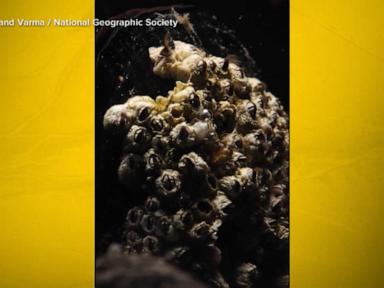
Most wildlife documentaries feel heavily staged. You get dramatic orchestral swells, slow-motion tracking shots filmed from five-ton research vessels, and a voiceover telling you exactly how to feel about every single frame.
National Geographic’s Moment on the Earth series threw that entire playbook out the window. Meanwhile, you can read related developments here: Why the 1914 Hotel Clark comeback in downtown L.A. took decades of false starts.
When they released their snorkel cam showcase, people expected another standard ocean highlight reel. Instead, we got raw, close-quarters underwater perspectives that feel less like a big-budget Hollywood production and more like you actually slipped on a mask and jumped off the back of a boat. It's intimate. It's slightly chaotic. Honestly, it's a breath of fresh air for nature filmmaking.
What Makes the Moment on the Earth Snorkel Cam Different
Traditional underwater cinematography relies on massive, pressurized camera housings and rebreathers. Scuba gear lets divers stay down for hours, sure, but bubbles scare off skittish marine life. Heavy rigs also force filmmakers to move slowly, keeping a polite distance from the action. To understand the bigger picture, check out the detailed article by Condé Nast Traveler.
Snorkeling changes the physics of the encounter completely.
By stripping away the tanks and sticking to freediving and surface-level snorkel setups, the camera operators in Moment on the Earth moved at the speed of the ocean itself. You see the natural light filtering through the top few feet of the water column—something deep-water rigs completely miss because red and yellow wavelengths disappear fast once you drop below thirty feet.
Look closely at the footage and you'll notice the difference immediately:
- Unfiltered ambient light: Shallow water acts like a giant prism, scattering sunlight across reefs and marine animals in shifting, natural patterns that artificial dive lights usually wash out.
- Zero bubble interference: Marine mammals and schooling fish react differently to a silent swimmer than they do to a diver exhaling loud bursts of compressed air.
- Dynamic buoyancy: A snorkeler can duck-dive, pivot, and match the erratic swimming patterns of fast-moving sea creatures without adjusting buoyancy compensators or dragging heavy hoses.
It puts the viewer right in the splash zone. You aren't watching nature from behind a glass wall anymore. You're floating right alongside it.
The Technical Reality Behind Shallow-Water Filming
People assume shallow-water filming is easier than deep-sea diving. It isn't. In fact, if you've ever tried holding a camera steady three feet below the surface, you know it's an absolute nightmare.
Surge and swell are strongest right near the top. Every passing wave pushes the camera operator backward and forward by several feet. Without a heavy tripod or the natural stability of deeper, calmer water, keeping a horizon level requires serious core strength and breath-hold discipline.
Camera crews shooting for National Geographic in these conditions typically rely on compact cinema bodies—like RED or Sony FX series cameras—housed in lightweight underwater casings with wide-angle dome ports. The dome port isn't just for protection. Water magnifies everything by roughly 33 percent, which ruins wide shots and distorts edges. A curved acrylic or glass dome corrects that refraction, restoring the lens's true field of view and allowing the operator to get inches away from a subject while keeping both the animal and the background reef in sharp focus.
Then there's the breath-hold factor. You can't frame a shot, adjust your exposure for shifting cloud cover, and track a moving sea turtle while panicking about oxygen. Filmmakers training for this kind of snorkel work spend months practicing static apnea and underwater relaxation so their heart rates stay low. When your heart rate drops, your movements smooth out. That's why the footage looks effortless even when the ocean is actively tossing the camera operator around.
Why Short-Form Nature Clips Are Winning
Let's be real about how people actually watch things now. Not everyone has three hours on a Sunday night to sit through a multi-part planetary survey.
Moment on the Earth works because it respects your attention span without dumbing down the science or the visual craft. By focusing on brief, hyper-specific slices of natural behavior—a pod of dolphins cruising a shallow sandbar, sunlight hitting a kelp forest, or a reef buzzing at dawn—National Geographic taps into the exact reason people travel to the coast in the first place.
You don't go snorkeling to see every species in the Pacific Ocean at once. You go for that one twenty-second interaction where a curious sea lion checks you out or a school of jacks parts right around your fins. Capturing that specific energy on camera is way harder than filming a staged feeding frenzy.
How to Capture Better Snorkel Footage Yourself
Watching National Geographic's snorkel cam usually triggers the exact same impulse: you want to grab an action camera on your next beach trip and try it yourself. Most people come back with two hours of shaky blue video that makes them dizzy to watch.
If you want footage that actually looks decent, stop pointing your camera straight down at the seafloor. Shooting downward flattens the image and makes everything look murky. Instead, dive down to the same eye level as the fish and shoot slightly upward toward the surface. That simple angle change puts the bright water surface behind your subject, creating natural contrast and showing off the sunbeams breaking through the waves.
A few other habits make an immediate difference in the water:
- Lock your elbows to your ribs. Holding a camera out at arm's length multiplies every tiny wave movement. Tucking your arms into your torso turns your body into a natural stabilizer.
- Ditch the red filter in shallow water. Beginners slap red filters onto their lenses because they read online that underwater video looks too blue. Above fifteen feet, there's plenty of natural red light left—a filter will just turn your footage an ugly, unnatural pink.
- Move slower than you think you need to. Fast panning creates terrible motion blur underwater. Pick a line, glide smoothly with your fins, and let the marine life swim through your frame rather than chasing after them.
- Clean the lens port constantly. Tiny micro-bubbles cling to plastic and glass housings the second you enter the water. Wipe the front of the lens with your finger every time you duck below the surface, or you'll ruin your sharpest shots with blurry spots.
Where to Watch and What to Look For
You can find the Moment on the Earth snorkel cam segments across National Geographic’s official YouTube channel and social platforms, where they regularly drop bite-sized visual dispatches from their field photographers.
Next time you pull up the clip, mute the audio for thirty seconds. Watch how the camera operator uses the surface reflection as a mirror, how they time their dives with the rhythm of the swells, and how close they get without ever touching the reef. Grab a decent mask, practice holding your breath in the shallow end, and pay attention to the light next time you're in the water—you'll never look at a simple snorkel session the same way again.