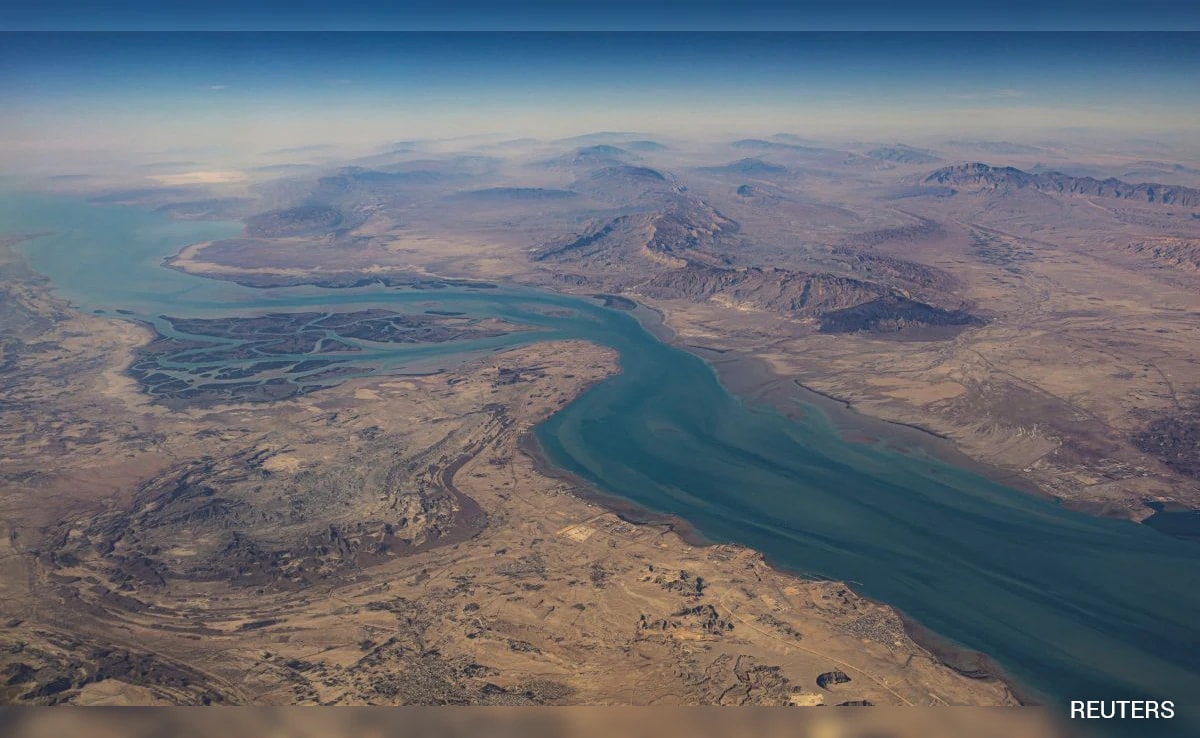
The mainstream defense press is having a collective panic attack over reports that NATO is discussing troop deployments to the Strait of Hormuz if Iran keeps it choked off past July. They treat this like a logistical chess move. They write about "deterrence signals" and "freedom of navigation operations" as if moving carrier strike groups around the Persian Gulf is still a viable flex.
It is not. The entire premise of a NATO-led intervention to "open" the Strait of Hormuz relies on an obsolete, mid-twentieth-century playbook that ignores modern asymmetrical warfare.
I spent over a decade analyzing maritime supply chains and energy risk for institutional funds. I have watched Western governments simulate these exact choke-point scenarios in war games. The public results are always scrubbed to look reassuring. The private results are bloodbaths for the West.
NATO cannot open the Strait of Hormuz by force because the physical and economic reality of modern anti-access/area-denial (A2/AD) technology makes conventional naval dominance inside the Gulf a suicide mission. The talk of a July deadline is not a display of strength. It is a confession of strategic bankruptcy.
The Flawed Premise of Freedom of Navigation
The lazy consensus among beltway pundits is simple: Iran threatens the strait, the West sends in the Navy, the shipping lanes clear, and oil prices stabilize.
This view assumes that naval power is still defined by tonnage and hull counts. It completely misunderstands the mechanics of the modern visual and electronic radar horizon in narrow waterways. The Strait of Hormuz is roughly 21 miles wide at its narrowest point. The actual shipping lanes inside that space are only two miles wide in either direction, separated by a two-mile buffer zone.
Imagine a scenario where you try to protect a slow-moving, 300-meter-long crude carrier through a corridor that sits entirely within the range of shore-based, mobile anti-ship cruise missiles like the Noor or Ghadir system.
You do not need a blue-water navy to close a two-mile lane. You need a few dozen truck-mounted launchers hidden in the rugged, mountainous terrain of the Iranian coastline.
When NATO planners talk about deploying assets, they are thinking about Aegis combat systems intercepting incoming threats. But the math does not work in confined waters. Saturation attacks break the defense. If an adversary launches thirty low-altitude, high-speed anti-ship missiles simultaneously from different coastal vectors, the radar reaction time for an escort destroyer inside the Persian Gulf drops to seconds.
The defense inventory is finite. A single destroyer carries a limited number of interceptors. The adversary's shore-based inventory of cheap, mass-produced drones and cruise missiles is effectively limitless. NATO is proposing to risk billion-dollar destroyers and tens of thousands of sailors to protect commercial assets that insurers will refuse to cover the moment the first missile fires anyway.
The Insurance Illusion
Let us address the fundamental economic ignorance driving this military posturing. The assumption is that if NATO warships escort the tankers, global trade continues.
It does not. Global shipping is governed by Lloyd’s Joint War Committee (JWC). The moment a shooting war begins in the Persian Gulf, the JWC designates the entire region an Listed Area. War risk premiums skyrocket to astronomical percentages of the hull value.
During previous flare-ups in the region, war risk premiums soared by thousands of percent in a matter of days. If NATO enters the strait under a combat mandate, commercial underwriters will simply pull coverage entirely. No coverage means no financing. No financing means the ships stay anchored in the Gulf of Oman or the UAE, regardless of how many flags NATO waves.
The hard truth nobody admits is that the international shipping industry will shut down the route themselves long before Iran or NATO fires enough ordnance to physically block it. A naval escort cannot shoot down the financial risk of an uninsurable hull.
Why Ground Troops Are a Strategic Joke
The report suggests NATO is discussing deploying troops. Where, exactly?
If the plan is to station marine expeditionary units on regional islands or establish footholds on the Arabian peninsula to secure the coastline, it ignores basic military geography. The northern coast of the strait is sovereign Iranian territory characterized by the steep, easily defensible Zagros Mountains. You cannot occupy that coastline without launching a full-scale ground invasion of a nation of 85 million people.
If the plan is to put troops on the southern side—Oman or the UAE—they are merely static targets for ballistic missiles. Stationing a few thousand Western soldiers on a beachhead across the water does absolutely nothing to stop an asymmetric swarm of fast-attack craft or underwater uncrewed vehicles (UUVs) launched from the northern coves.
The Energy Weapon Redefined
The conventional wisdom says a closed Hormuz triggers a global oil shock that destroys the Western economy, so the West must fight.
This is old thinking. The global energy market has mutated.
Yes, roughly 20% of the world’s petroleum liquids pass through the strait. But a prolonged closure hurts the East far more than the West. The primary destinations for crude flowing out of the Persian Gulf are China, India, Japan, and South Korea. The United States is now a net exporter of crude oil and petroleum products due to shale production.
By threatening to militarily force open the strait, NATO is effectively volunteering Western lives and capital to secure the energy supply chains of its primary geopolitical competitors, specifically Beijing. If China wants the oil flowing through Hormuz, let Beijing send its own PLAN type 055 destroyers to run the gauntlet of Middle Eastern coastal defense batteries.
The downside of my perspective is clear: letting the strait close without a Western military response means a temporary, violent spike in Brent crude prices, global inflationary pressure, and severe economic pain for European allies who failed to diversify their energy infrastructure quickly enough. It means accepting that globalization is dead in deep water.
But the alternative is worse. Entering a shooting war in a geographical bottleneck against a state that has spent forty years optimizing its military specifically to fight inside that bottleneck is strategic madness.
Dismantling the Defense Premise
The questions being asked in the media are fundamentally flawed.
- Can NATO keep the Strait of Hormuz open? No. Physical geography and missile proliferation mean the cost of keeping it open exceeds the value of the cargo passing through it.
- Will a NATO deployment deter regional aggression? No. It provides a target-rich environment for asymmetric forces looking to prove that Western technological superiority is a myth in confined littoral waters.
Stop looking at naval charts through the lens of Desert Storm. The era of the United States and its allies dominating shallow seas through sheer presence is over. If the Strait of Hormuz closes in July, the solution is not to send the fleet into a shooting gallery. The solution is to let the regional powers who depend on that oil deal with the fallout, while the West builds the domestic infrastructure required to survive in a balkanized world.
Move the ships out of the Gulf. They are targets, not solutions.


