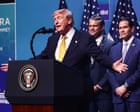
Donald Trump just turned the NATO summit in Ankara into a masterclass in geopolitical whiplash. One minute he's tearing into allies, calling Iran's leadership "scum," and demanding control of Greenland. The next, he's bragging about the "tremendous love" in the room, claiming he's "No. 1 on TikTok," and offering Ukraine a surprise deal to manufacture Patriot missile systems.
It looks completely chaotic from the outside. If you only read the headlines, you'd think the transatlantic alliance is on the verge of total collapse. But if you look at how these summits actually play out, there's a distinct method to the madness. Trump uses public humiliation as a leverage tool, and NATO leaders have finally figured out exactly how to play along to get what they want.
The Morning Rage and the Price of Admission
The final hours of the Ankara summit started with pure theater. Trump walked in furious, heavily venting about the fact that European allies—except for the UK—refused to let the US use their airbases for bombing missions against Iran after the recent breakdown of the ceasefire. He lambasted the alliance for costing America too much money, even threatening to cut off trade with Spain over defense spending.
To top it all off, European officials had spent the previous evening terrified that Trump was in a foul mood because the US men's soccer team lost 4-1 to Belgium in the World Cup. They literally agreed among themselves not to mention the match.
This isn't just an angry guy blowing off steam. It's a calculated negotiation tactic designed to make everyone else in the room feel incredibly insecure. By the time Trump sits down at the table, the other leaders aren't fighting for complex policy goals anymore. They're just trying to survive the meeting without the US pulling out of Article 5.
Moving the Financial Goalposts
Look at the numbers. Last year, every NATO member except Spain agreed to raise national defense budgets to 3.5% of their gross domestic product by 2035. That is a massive shift, designed specifically to match US spending proportions and appease Washington.
Yet, Trump still showed up complaining that "we pay far, far too much." By refusing to acknowledge past victories, he ensures that the pressure on Europe never drops. He keeps the alliance permanently on its back foot.
How Mark Rutte Cracked the Code
If former NATO chief Jens Stoltenberg was the master of managing Trump during his first term, current Secretary General Mark Rutte has perfected the art. Rutte understands that you don't counter Trump's rants with policy white papers or lectures on international law. You counter them with flattery and ego management.
During a tense morning session, Rutte stepped in with a high-energy sales pitch. He pointed out that European allies and Canada are projected to spend almost $300 billion more on defense over a two-year period.
"You did what President Dwight Eisenhower tried to do," Rutte told Trump directly. "It's your win."
Trump immediately interrupted: "That's why I like him."
It's a brilliant piece of diplomatic theater. Rutte gave Trump the exact narrative he needed for his base: the tough-talking American businessman forcing lazy foreigners to pay their bills. Once Trump got his public victory, the mood completely flipped.
The Pivot to Tremendous Love
By late morning, the erratic storm had passed. In a private meeting with 32 NATO leaders, the threats disappeared. Greenland wasn't mentioned. Instead, Trump told the room, "We want to remain with you."
During a subsequent meeting with Ukrainian President Volodymyr Zelenskyy, the tone shifted so radically it surprised everyone. Trump dropped his usual skepticism regarding Ukraine's war effort and offered a major concession: licensing the manufacturing of US Patriot air defense missiles directly to Ukraine.
This came alongside a massive €70 billion ($80 billion) military support package for Ukraine funded jointly by NATO allies and an EU loan program. By the time Trump held his final, rambling press conference, he was declaring the summit a triumph of "unification." He spent time praising Turkish President Recep Tayyip Erdoğan, bragging about the US economy, and declaring his social media dominance.
The Real Cost of the Spectacle
While NATO leaders are hailing the summit's joint communique as a win because the US reaffirmed its commitment to mutual defense, this strategy carries severe risks.
The biggest issue isn't Trump's rhetoric itself; it's the message it sends to adversaries. When the US president spends the morning trashing his allies, leaders in Moscow and Beijing see an alliance held together by scotch tape and flattery. It undermines the core concept of deterrence, which relies on the absolute certainty that NATO will act as a single, unbreakable unit.
There's also a logistical price. Bloomberg reported that NATO might completely skip holding a summit in 2027 just to avoid another round of this high-stakes drama. When a military alliance has to alter its calendar simply to avoid triggering the mood swings of its primary partner, the institutional damage is real.
Navigating the New Transatlantic Reality
For European nations, the playbook going forward is incredibly clear. Relying on traditional diplomatic norms or sentimental appeals to the "post-war international order" is a waste of time.
If you want to keep the US committed to European security, you have to do two things. First, you must aggressively hit your spending targets; empty promises don't work anymore. Second, you have to let Trump take 100% of the credit for your actions.
Europe is learning to build a stronger defense apparatus under the guise of giving the American president a win. It's an exhausting, unpredictable way to run a global security alliance, but right now, it's the only option on the table. Keep your defense budgets moving up, keep the flattery coming, and whatever you do, don't mention the soccer score.


