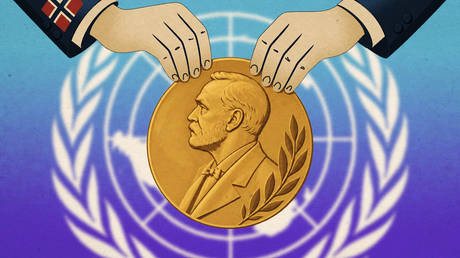
Giving the 2026 Nobel Peace Prize to Navi Pillay wasn't a polite pat on the back for a retired jurist. It was a blunt message from Oslo aimed squarely at governments that treat international law like a menu they can pick and choose from.
When the Norwegian Nobel Committee named Navanethem Pillay as the 2026 laureate for her work advancing peace and international law, they handed a spotlight to a woman who has spent her entire adult life forcing powerful actors to confront legal rules they'd rather ignore. And honestly, the timing couldn't be sharper. International courts and human rights bodies are taking heavy political fire right now, from threats of sanctions against judges to outright refusal to comply with orders. You might also find this related coverage useful: Why The Diplomatic Patronage System Is Broken And Firing Ambassadors Is Just Theater.
Let's be real about what this award actually does. A medal doesn't stop artillery or force a rogue regime into a courtroom. Still, naming Pillay signals that independent legal standards still carry moral weight even when geopolitics turns ugly.
Why Navi Pillay and International Law Are Front and Center
If you've watched the headlines around The Hague and Geneva lately, you already know why this prize hit a nerve. Pillay isn't a distant academic writing law-review articles from a quiet office. She has sat inside the machinery of global justice for decades—as a defense lawyer during South Africa's apartheid era, a judge and president at the International Criminal Tribunal for Rwanda (ICTR), a judge on the International Criminal Court (ICC), UN High Commissioner for Human Rights, chair of a UN commission of inquiry on the Occupied Palestinian Territory, and an ad hoc judge at the International Court of Justice (ICJ) in The Gambia v. Myanmar. As highlighted in latest reports by The Guardian, the results are notable.
Every single one of those roles put her right in the crosshairs of state power.
During the Akayesu case at the ICTR in 1998, Pillay helped push international law into territory prosecutors had long neglected by recognizing that rape and sexual violence could constitute acts of genocide. Later, as UN High Commissioner for Human Rights from 2008 to 2014, she routinely called out governments across the board when she saw abuses, rarely winning popularity contests in diplomatic lounges. More recently, her work chairing the UN commission that concluded Israel's actions in Gaza amounted to genocide—alongside her judicial role in the Myanmar proceedings—has drawn fierce pushback from Washington and Jerusalem, including warnings and debate around potential sanctions against ICJ judges.
That friction is the whole story. International law only works if rules apply evenly, even when they inconvenience your friends or your own military. When officials accuse judges of "weaponizing" the law or hint at sanctioning jurists over rulings they dislike, they're testing whether courts can stay independent under pressure.
What Critics Get Wrong About Her Record
Whenever a high-profile jurist gets an award like this, the commentary splits fast. Some people treat Pillay like a saint who can do no wrong, while critics paint her as a partisan activist bending legal tests to fit a political agenda. Both caricatures miss how international courts actually work.
First, critics sometimes claim that Pillay's commission work or her role as an ad hoc judge at the ICJ is a backdoor attempt to lower the high bar for proving genocidal intent, supposedly setting up future rulings in other conflicts. In reality, proving genocide under the Genocide Convention has always been notoriously tough. Courts have historically required strict proof of specific intent—often looking at whether genocidal intent is the only reasonable inference from a pattern of conduct—rather than treating heavy civilian casualties alone as automatic proof. You can disagree with how a commission weighs evidence or applies legal standards without inventing a plot to rewrite treaties behind closed doors.
Second, there's a common misconception that the ICJ and the ICC are the same thing or that an ICJ case automatically puts individual leaders in handcuffs. They aren't, and it doesn't. The ICJ settles disputes between states—such as The Gambia v. Myanmar—while the ICC deals with individual criminal responsibility. Knowing that difference saves a lot of confusion when reading news about rulings, advisory opinions, and arrest warrants.
Third, honoring Pillay doesn't mean every reader has to agree with every report she ever signed or every policy stance she took over forty-plus years. Legal systems survive scrutiny and debate, not blind obedience. What matters is that judges and investigators be allowed to examine evidence and apply the law without intimidation.
The Real Stakes for a Strained Global Legal Order
Let's be honest: the global legal order has plenty of real flaws, and pretending otherwise makes defenders of international law sound naive. Enforcement is weak. Powerful states regularly shield themselves or their allies with Security Council vetoes or diplomatic muscle. And when international bodies move slowly—like the years Rohingya survivors have waited for final answers at the ICJ—people understandably lose patience.
Yet the alternative to imperfect legal rules isn't some magical era of peaceful cooperation. Usually, when international law retreats, raw force steps into the vacuum. UN Secretary-General António Guterres and the Nobel Committee both pointed to that basic truth: lasting peace is shaky when accountability is treated as optional.
Look at how Pillay herself has described the history of human rights protections. When the United Nations started, it was largely a club of states, and major breakthroughs in rights and accountability didn't happen just because governments suddenly had a change of heart. They happened because lawyers, survivors, journalists, and citizens pushed from the outside and refused to let atrocities fade into silence.
A quick comparison of the main institutions tied to Pillay's career helps clarify where power and limits actually sit:
- International Court of Justice (ICJ): Hears legal disputes between states and issues advisory opinions; its judgments are binding on participating states in contentious cases, though enforcement can still run into political roadblocks.
- International Criminal Court (ICC): Investigates and tries individuals for genocide, crimes against humanity, and war crimes when national courts are unwilling or unable to act, relying heavily on state cooperation to make arrests.
- UN Human Rights Bodies & Commissions of Inquiry: Document abuses, investigate violations, and press governments publicly, shaping diplomatic pressure even without issuing binding criminal sentences.
Practical Ways to Follow and Support Accountability
If you care about human rights and the rule of law—whether you're a student, a voter, an educator, or just someone trying to cut through cable-news noise—you don't need a law degree to pay attention well.
- Read primary filings and official summaries, not just hot takes. When a major case is decided at the International Court of Justice or highlighted by the Nobel Prize or UN Human Rights, skim the actual court summaries or press releases before trusting viral claims about what a ruling supposedly said or meant.
- Track domestic laws alongside international ones. International courts are often a last resort. Pay attention to how your own country handles war crimes statutes, arms exports, refugee protection, and compliance with treaty obligations.
- Support credible documentation and civil society. Independent human rights groups, legal aid clinics, and investigative reporters often gather the early evidence that courts rely on years later. Backing transparent, fact-checked organizations does far more good than shouting in comment sections.
- Apply the same standard across borders. Double standards are what hollow out international law fastest. If you demand accountability when an adversary breaks the rules, hold allies and your own government to that same yardstick when tough questions come up.
Pillay's Nobel Prize won't settle every argument over war, sovereignty, or judicial overreach. It does, however, remind the world that holding the line on basic legal principles—even when it's unpopular and hard—is still worth fighting for.